
English
English Chinese Simplified Chinese Traditional French German Portuguese Spanish Russian Japanese Korean Arabic Irish Greek Turkish Italian Danish Romanian Indonesian Czech Afrikaans Swedish Polish Basque Catalan Esperanto Hindi Lao Albanian Amharic Armenian Azerbaijani Belarusian Bengali Bosnian Bulgarian Cebuano Chichewa Corsican Croatian Dutch Estonian Filipino Finnish Frisian Galician Georgian Gujarati Haitian Hausa Hawaiian Hebrew Hmong Hungarian Icelandic Igbo Javanese Kannada Kazakh Khmer Kurdish Kyrgyz Latin Latvian Lithuanian Luxembou.. Macedonian Malagasy Malay Malayalam Maltese Maori Marathi Mongolian Burmese Nepali Norwegian Pashto Persian Punjabi Serbian Sesotho Sinhala Slovak Slovenian Somali Samoan Scots Gaelic Shona Sindhi Sundanese Swahili Tajik Tamil Telugu Thai Ukrainian Urdu Uzbek Vietnamese Welsh Xhosa Yiddish Yoruba Zulu Kinyarwanda Tatar Oriya Turkmen Uyghur Abkhaz Acehnese Acholi Alur Assamese Awadish Aymara Balinese Bambara Bashkir Batak Karo Bataximau Longong Batak Toba Pemba Betawi Bhojpuri Bicol Breton Buryat Cantonese Chuvash Crimean Tatar Sewing Divi Dogra Doumbe Dzongkha Ewe Fijian Fula Ga Ganda (Luganda) Guarani Hakachin Hiligaynon Hunsrück Iloko Pampanga Kiga Kituba Konkani Kryo Kurdish (Sorani) Latgale Ligurian Limburgish Lingala Lombard Luo Maithili Makassar Malay (Jawi) Steppe Mari Meitei (Manipuri) Minan Mizo Ndebele (Southern) Nepali (Newari) Northern Sotho (Sepéti) Nuer Occitan Oromo Pangasinan Papiamento Punjabi (Shamuki) Quechua Romani Rundi Blood Sanskrit Seychellois Creole Shan Sicilian Silesian Swati Tetum Tigrinya Tsonga Tswana Twi (Akan) Yucatec Maya
请留言
    

Single-Layer Chamber Clay Bricks Drying Machine Tunnel Dryer - Efficient Solution by China Suppliers & Factory

,

The **Single-Level Chamber Dryer** is an innovative and space-efficient drying system widely utilized in China’s brick manufacturing factories. Renowned among suppliers for its advanced automation capabilities, this drying solution outperforms traditional multi-level drying racks and tunnel drying systems in several crucial aspects. With enhanced control precision, superior space utilization, reduced energy consumption, and excellent product adaptability, the Single-Level Chamber Dryer stands out as a top choice for modern brick factories seeking to optimize their production processes and efficiency.

,

    Structural Features

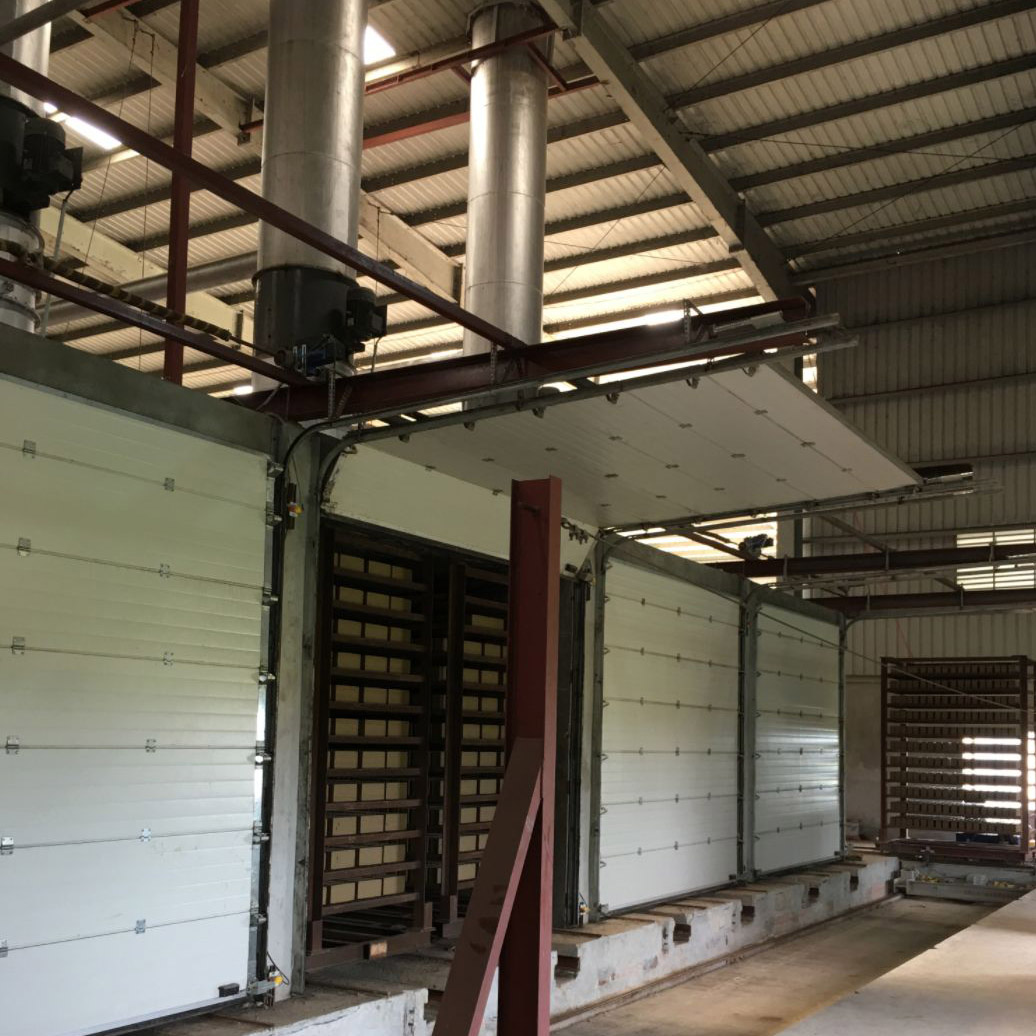
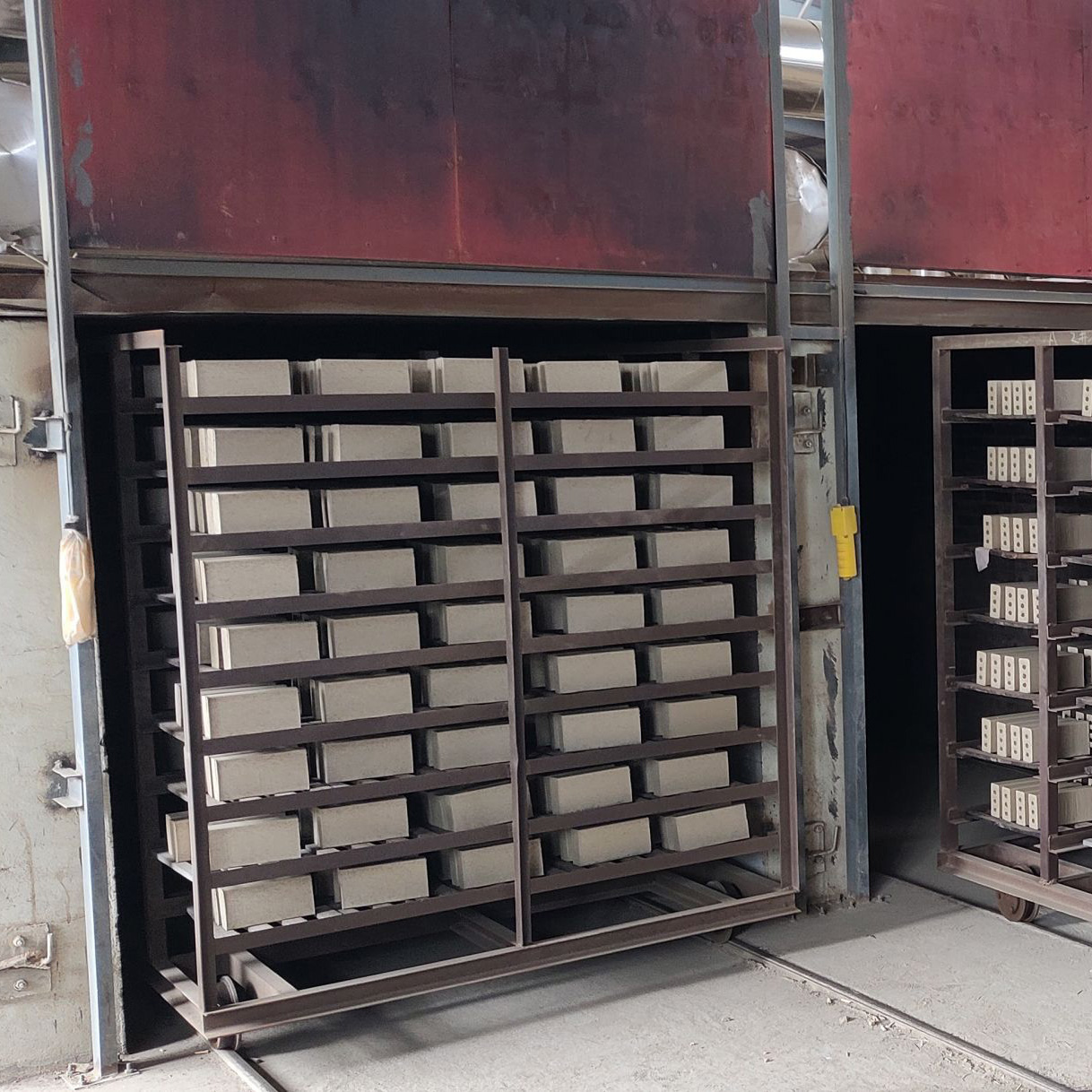
    Channel-type tunnel structure with a single-layer track inside. Hot air is supplied by dedicated heat sources (such as kiln waste heat, hot air furnaces) and blown uniformly along the tunnel direction through fans. Brick green bodies advance at a constant speed on kiln cars, sequentially undergoing preheating, drying, and cooling stages.

    🏭
    Through-Type Single-Layer Tunnel Dryer

    Features low equipment investment and simple operation, making it suitable for medium and small brick factories with relatively fixed processes.

    🔄
    Recirculating Single-Layer Tunnel Dryer

    Characterized by higher equipment complexity and investment, but offers better drying performance and energy efficiency, suitable for large brick factories and diversified product production.


    Block drying rooms are key equipment in brick production, primarily used to remove moisture from brick blanks to prevent cracking or deformation during the firing process. Depending on structural form, heat source type, and degree of automation, common block drying rooms mainly include the following categories:

    I. Classification by Structural Form
    🚇 1. Tunnel Dryers
    Continuous Operation

    Characteristics: Brick blanks are pushed into the dryer by drying cars and move slowly along tracks, undergoing four stages: preheating, heating up, high-temperature drying, and cooling.

    • Short drying cycle (generally 8–24 hours)
    • Uniform hot air distribution, low energy consumption
    • Suitable for large-scale production of sintered bricks, load-bearing hollow bricks
    🏗️ 2. Chamber Dryers
    Intermittent Operation

    Characteristics: Batch feeding and batch discharging, simple structure, low investment.

    • Suitable for small and medium-sized enterprises
    • Ideal for trial production of special varieties
    • Flexible operation

    Limitations: Lower thermal efficiency, higher risk of uneven drying.

    ⬇️ 3. Vertical Dry Kilns
    Space-Saving Design

    Characteristics: Vertically arranged, utilizing gravity to allow material to flow downward from top to bottom, saving floor space.

    Application: Mostly used for powder or granular materials; less commonly used for brick blanks, but with attempts in specific processes.


    II. Classification by Heat Source
    ♻️
    1. Waste Heat Utilization Dryers

    Utilize waste heat from the exhaust and cooling sections of the firing kiln as the heat source, resulting in significant energy savings. Common in modern brick factories, often used in conjunction with tunnel dryers, reducing operating costs by over 20%.

    💨
    2. Steam Heated Dryers

    Use saturated steam as the heating medium, heating the kiln air through aluminum fin heaters. Temperature control is stable, suitable for red bricks or special bricks with high requirements for temperature and humidity.

    🔥
    3. Coal / Gas Direct-Fired Dryers

    Heat air directly through a combustion furnace, with rapid temperature rise and low initial investment. The disadvantage is higher pollution, and they are gradually being replaced by environmentally friendly equipment.


    III. Core Components

    A complete block drying room typically consists of the following systems:

    🧱 Kiln Structure

    Brick-concrete or metal structure with an insulation layer to reduce heat loss.

    🔆 Heating System

    Includes fire pits, furnaces, chimneys, or steam pipelines.

    🌀 Ventilation System

    Equipped with high-temperature resistant fans to achieve hot air circulation, commonly featuring combinations of under-air supply, side-air supply, and upper-moisture exhaust.

    💧 Moisture Removal System

    Regulates humidity by adjusting through roof exhaust ports or side wall air inlet holes to ensure timely removal of moisture.

    🖥️ Control System

    Primarily manual control (for ordinary dryers) or equipped with temperature and humidity sensors and PLC automatic regulation (for modern dryers).


    IV. Selection Recommendations
    📦
    Production Volume Orientation

    For daily output exceeding 100,000 blocks, prioritize tunnel dryers; for small batches, chamber dryers can be selected.

    ⚡
    Energy Saving Requirements

    It is recommended to adopt a kiln waste heat recovery system to reduce fuel consumption and lower overall operating costs.

    🤖
    Automation Level

    Large production lines should be equipped with variable frequency fans + intelligent temperature control systems to improve drying stability.


    Frequently Asked Questions
    What is the main purpose of a block drying room in brick production?
    A block drying room is used to remove moisture from brick blanks before firing. This step is critical to prevent cracking or deformation during the high-temperature sintering process, ensuring the structural integrity and quality of the finished bricks.
    What is the typical drying cycle for a tunnel dryer?
    Tunnel dryers generally complete the drying process within 8 to 24 hours, depending on the type of brick, moisture content of the green body, and the capacity of the heat source. Their continuous operation design allows for efficient large-scale production.
    Which type of dryer is best suited for small or medium-sized brick factories?
    Chamber dryers are generally the best choice for small and medium-sized enterprises. They feature simple structure, low investment, and flexible batch operation, making them ideal for factories with lower output volumes or those producing special brick varieties.
    How does a waste heat utilization dryer help reduce operating costs?
    Waste heat dryers recover thermal energy from the exhaust and cooling sections of the firing kiln and redirect it as the heat source for drying. This recycling of energy can reduce fuel consumption and lower overall operating costs by more than 20% compared to conventional heat sources.
    What are the key components of a modern automated block drying room?
    A modern automated drying room includes five main systems: the kiln structure (with insulation), the heating system (furnaces or steam pipelines), the ventilation system (high-temperature resistant fans), the moisture removal system (roof and side-wall vents), and an intelligent control system featuring temperature and humidity sensors with PLC automatic regulation.
    Why are coal and gas direct-fired dryers being phased out in the brick industry?
    Although coal and gas direct-fired dryers offer rapid temperature rise and low initial investment, they produce higher levels of pollution and emissions. As environmental regulations become stricter worldwide, the brick industry is increasingly replacing these systems with cleaner, more energy-efficient alternatives such as waste heat recovery and steam-heated dryers.