
English
English Chinese Simplified Chinese Traditional French German Portuguese Spanish Russian Japanese Korean Arabic Irish Greek Turkish Italian Danish Romanian Indonesian Czech Afrikaans Swedish Polish Basque Catalan Esperanto Hindi Lao Albanian Amharic Armenian Azerbaijani Belarusian Bengali Bosnian Bulgarian Cebuano Chichewa Corsican Croatian Dutch Estonian Filipino Finnish Frisian Galician Georgian Gujarati Haitian Hausa Hawaiian Hebrew Hmong Hungarian Icelandic Igbo Javanese Kannada Kazakh Khmer Kurdish Kyrgyz Latin Latvian Lithuanian Luxembou.. Macedonian Malagasy Malay Malayalam Maltese Maori Marathi Mongolian Burmese Nepali Norwegian Pashto Persian Punjabi Serbian Sesotho Sinhala Slovak Slovenian Somali Samoan Scots Gaelic Shona Sindhi Sundanese Swahili Tajik Tamil Telugu Thai Ukrainian Urdu Uzbek Vietnamese Welsh Xhosa Yiddish Yoruba Zulu Kinyarwanda Tatar Oriya Turkmen Uyghur Abkhaz Acehnese Acholi Alur Assamese Awadish Aymara Balinese Bambara Bashkir Batak Karo Bataximau Longong Batak Toba Pemba Betawi Bhojpuri Bicol Breton Buryat Cantonese Chuvash Crimean Tatar Sewing Divi Dogra Doumbe Dzongkha Ewe Fijian Fula Ga Ganda (Luganda) Guarani Hakachin Hiligaynon Hunsrück Iloko Pampanga Kiga Kituba Konkani Kryo Kurdish (Sorani) Latgale Ligurian Limburgish Lingala Lombard Luo Maithili Makassar Malay (Jawi) Steppe Mari Meitei (Manipuri) Minan Mizo Ndebele (Southern) Nepali (Newari) Northern Sotho (Sepéti) Nuer Occitan Oromo Pangasinan Papiamento Punjabi (Shamuki) Quechua Romani Rundi Blood Sanskrit Seychellois Creole Shan Sicilian Silesian Swati Tetum Tigrinya Tsonga Tswana Twi (Akan) Yucatec Maya
请留言
    

China Suppliers Single-Layer Chamber Dryer for Efficient Clay Brick Drying in Factory Operations

,

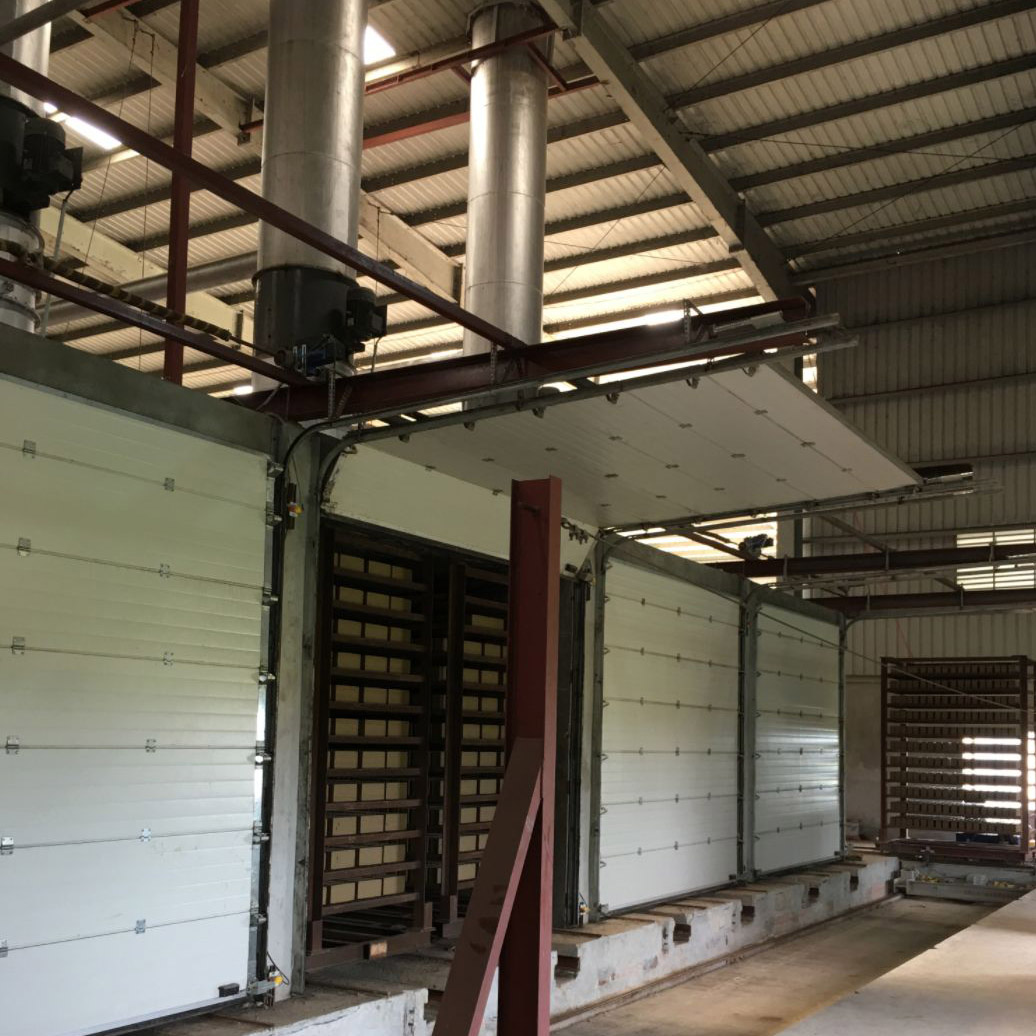
The **'Single-Level Chamber Dryer'** is an advanced drying solution designed for modern clay brick sintering production processes. As one of the leading choices among brick factories in China, this compact and highly efficient system stands out due to its high levels of automation. Compared to traditional multi-level drying racks and overhead/side-blow tunnel drying systems, the Single-Level Chamber Dryer provides substantial benefits, including enhanced control precision, optimal space utilization, reduced energy consumption, and excellent product adaptability. By choosing this dryer, suppliers can significantly improve operational efficiency and product quality in their factories.

,

    I. Structural Features
    • Channel-type tunnel structure with a single-layer track inside.
    • Hot air is supplied by dedicated heat sources (such as kiln waste heat, hot air furnaces) and blown uniformly along the tunnel direction through fans.
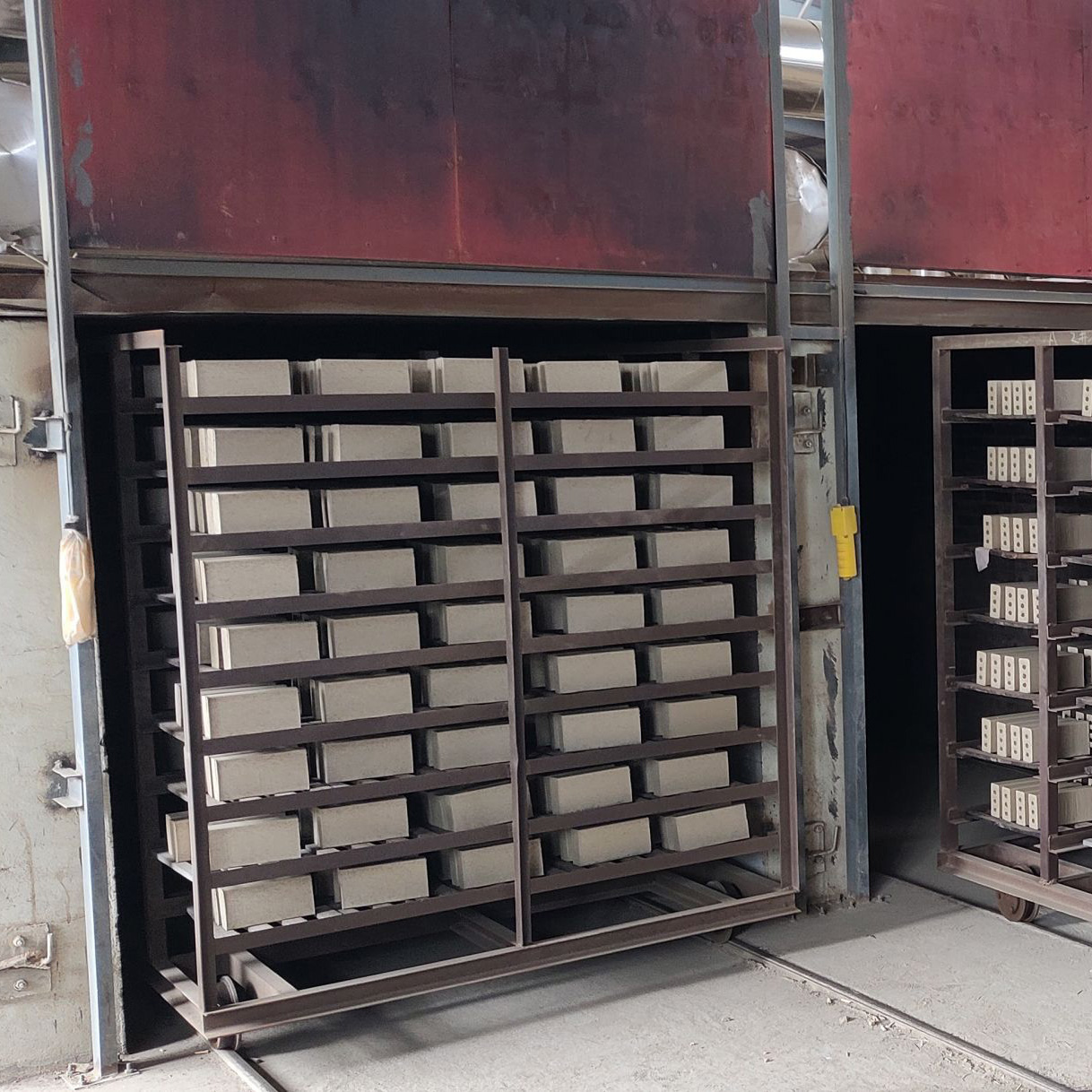
    • Brick green bodies advance at a constant speed on kiln cars, sequentially undergoing preheating, heating up, high-temperature drying, and cooling stages.
    Through-type Single-Layer Tunnel Dryer

    Features low equipment investment and simple operation, making it suitable for medium and small brick factories with relatively fixed processes.

    Recirculating Single-Layer Tunnel Dryer

    Characterized by higher equipment complexity and investment, but offers better drying performance and energy efficiency, suitable for large brick factories and diversified product production.


    Block drying rooms are key equipment in brick production, primarily used to remove moisture from brick blanks to prevent cracking or deformation during the firing process. Depending on structural form, heat source type, and degree of automation, common block drying rooms mainly include the following categories:


    I. Classification by Structural Form
    🏗️
    1. Tunnel Dryers

    Characteristics: Continuous operation, suitable for large-scale production. Brick blanks move slowly along tracks, undergoing four stages: preheating, heating up, high-temperature drying, and cooling.

    Advantages: Short drying cycle (8~24 hours), uniform hot air distribution, low energy consumption.

    Applicable Scenarios: Large-scale production of sintered bricks, load-bearing hollow bricks, etc.

    🏠
    2. Chamber Dryers

    Characteristics: Intermittent operation, batch feeding and discharging, simple structure, low investment.

    Advantages: Suitable for small and medium-sized enterprises or trial production of special varieties, flexible operation.

    Limitations: Lower thermal efficiency, higher risk of uneven drying.

    🏭
    3. Vertical Dry Kilns

    Characteristics: Vertically arranged, utilizing gravity to allow material to flow downward from top to bottom, saving floor space.

    Application: Mostly used for powder or granular materials; less commonly used for brick blanks, but with attempts in specific processes.


    II. Classification by Heat Source
    ♻️
    1. Waste Heat Utilization Dryers

    Utilize waste heat from the exhaust and cooling sections of the firing kiln as the heat source, resulting in significant energy savings. Common in modern brick factories, often used in conjunction with tunnel dryers, reducing operating costs by over 20%.

    💨
    2. Steam Heated Dryers

    Use saturated steam as the heating medium, heating the kiln air through aluminum fin heaters. Temperature control is stable, suitable for red bricks or special bricks with high requirements for temperature and humidity.

    🔥
    3. Coal/Gas Direct-Fired Dryers

    Heat air directly through a combustion furnace, with rapid temperature rise and low initial investment. The disadvantage is higher pollution, and they are gradually being replaced by environmentally friendly equipment.


    III. Core Components

    A complete block drying room typically consists of the following systems:

    • Kiln Structure: Brick-concrete or metal structure with an insulation layer to reduce heat loss.
    • Heating System: Includes fire pits, furnaces, chimneys, or steam pipelines.
    • Ventilation System: Equipped with high-temperature resistant fans to achieve hot air circulation, commonly featuring combinations of under-air supply, side-air supply, and upper-moisture exhaust.
    • Moisture Removal System: Regulates humidity by adjusting through roof exhaust ports or side wall air inlet holes to ensure timely removal of moisture.
    • Control System: Primarily manual control (for ordinary dryers) or equipped with temperature and humidity sensors and PLC automatic regulation (for modern dryers).

    IV. Selection Recommendations
    📦
    Production Volume Orientation

    For daily output exceeding 100,000 blocks, prioritize tunnel dryers; for small batches, chamber dryers can be selected.

    ⚡
    Energy Saving Requirements

    It is recommended to adopt a kiln waste heat recovery system to reduce fuel consumption.

    🤖
    Automation Level

    Large production lines should be equipped with variable frequency fans and intelligent temperature control systems to improve drying stability.


    Frequently Asked Questions (FAQ)
    What is the main purpose of a block drying room in brick production?
    A block drying room is used to remove moisture from brick blanks before firing. This prevents cracking or deformation during the high-temperature kiln process, ensuring the structural integrity and quality of the finished bricks.
    What is the typical drying cycle for a tunnel dryer?
    Tunnel dryers generally have a drying cycle of 8 to 24 hours. Their continuous operation design, uniform hot air distribution, and efficient heat management make them significantly faster than chamber dryers for large-scale production.
    Which type of dryer is best suited for small or medium-sized brick factories?
    Chamber dryers are the most suitable option for small and medium-sized enterprises. They feature simple structures, low investment costs, and flexible batch operation, making them ideal for smaller production volumes or trial production of special brick varieties.
    How much energy can a waste heat utilization dryer save compared to conventional systems?
    Waste heat utilization dryers, which recover heat from the exhaust and cooling sections of firing kilns, can reduce operating costs by over 20% compared to conventional direct-fired systems. They are now a standard feature in modern, energy-efficient brick factories.
    What control systems are available for block drying rooms?
    Block drying rooms can be equipped with either manual control systems for standard operations or advanced PLC automatic regulation systems that incorporate temperature and humidity sensors. Modern large-scale production lines also use variable frequency fans combined with intelligent temperature control for enhanced drying stability.
    What factors should be considered when selecting a block drying room?
    Key selection factors include daily production volume (tunnel dryers are recommended for output exceeding 100,000 blocks per day), energy saving requirements (kiln waste heat recovery is highly recommended), and the desired automation level. Large production lines should prioritize intelligent control systems and variable frequency fans for optimal efficiency.