0102030405
Semi-Automatic vs Fully Automatic Brick Lines: ROI Analysis, Pros and Cons for Plant Investors
2026-07-14
The selection of brick production line automation mode determines the long-term profitability and risk control level of brick plant projects. For new brick factory investors and operational managers, distinguishing the advantages, disadvantages and return on investment of semi-automatic and fully automatic brick lines is the premise of scientific project layout. Many investors face decision-making confusion in equipment procurement: semi-automatic lines are affordable but worry about insufficient capacity expansion potential, while fully automatic lines are efficient but fear long cost recovery cycles. This article focuses on actual brick plant operation data, deeply analyzes the pros and cons, applicable business scenarios and real ROI cycle of the two automation modes, helping investors make data-backed investment decisions.
1. Advantages and Disadvantages of Semi-Automatic Brick Production Lines
1.1 Core Competitive Advantages
Semi-automatic brick production lines have low investment thresholds and controllable operational risks. The equipment procurement, installation and commissioning costs are low, with no excessive capital pressure on startup projects. It is very suitable for market trial operation and small-batch trial production. Secondly, the equipment boasts strong production flexibility and diverse product adaptability. It can freely switch the production of hollow bricks, solid bricks, interlocking paver bricks, curb stones and other products, quickly responding to scattered and diversified small orders. Thirdly, the operation and maintenance difficulty is low with weak technical dependence. The equipment has a stable structure and ultra-low failure rate. Daily maintenance and routine inspection can be completed by ordinary workers without long-term professional technical support, adapting to the construction and operation of brick plants in technically underdeveloped areas.
1.2 Inherent Limitations
The biggest limitation of semi-automatic brick lines is limited production capacity, which cannot support large-scale bulk order production and long-distance large-quantity supply. Manual auxiliary operation leads to unstable production efficiency and occasional product quality fluctuations, making it difficult to form high-standard unified product output. In addition, with the continuous rise of global labor costs, the long-term cumulative labor expenditure of semi-automatic brick plants will continue to increase, compressing corporate profit margins and making it hard to form scale advantages and brand competitiveness in the fierce market competition.
2. Advantages and Disadvantages of Fully Automatic Brick Production Lines
2.1 Core Competitive Advantages
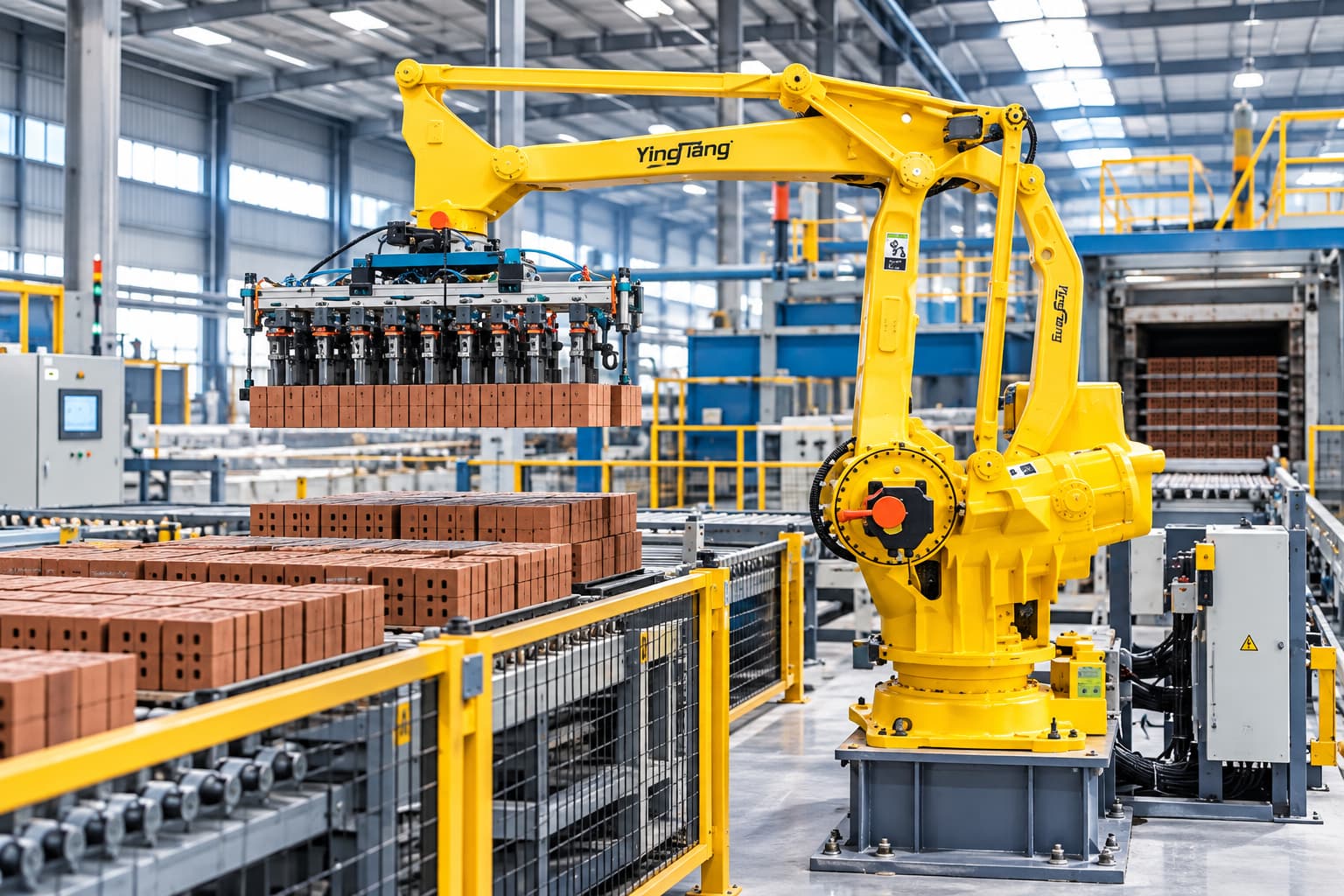
Fully automatic intelligent brick lines have ultra-high and stable production efficiency. The whole-process intelligent control eliminates manual operation interference, realizing 24-hour stable and efficient production all year round, which can fully meet the delivery cycle requirements of large engineering orders and long-term cooperative customers. Secondly, the product quality is highly standardized with strong market recognition. Accurate intelligent parameter control ensures zero deviation in brick specifications, strength and appearance, meeting the bidding qualification standards of large infrastructure and construction projects, helping enterprises seize high-end market resources. Thirdly, the long-term comprehensive operating cost is lower. Although the upfront investment is high, it saves a large amount of recurring labor costs, reduces defective product loss and on-site management costs, and the long-term comprehensive profit margin is far higher than that of semi-automatic equipment. Fourthly, the equipment supports intelligent upgrading and scale expansion, which can be matched with automatic curing systems and intelligent warehouse management systems to realize rapid capacity expansion and intelligent factory transformation.
2.2 Inherent Limitations
Fully automatic brick production lines require high one-time capital investment, putting forward higher requirements for project capital reserve. Meanwhile, the equipment has strict standards for factory floor area, power supply stability, environmental protection supporting facilities and site layout. In addition, the operation, debugging and maintenance of intelligent equipment rely on professional technical teams, and early staff training and technical docking will generate additional operating costs. For brick plants with insufficient order volume and unsaturated production capacity, equipment idle problems will occur, leading to prolonged ROI cycles and low capital utilization efficiency.
3. ROI Cycle Comparison of Two Brick Production Line Modes
Based on global brick plant big data and actual operation cases, the ROI cycle of semi-automatic brick production lines is stable at 12 to 18 months. With low upfront investment, low daily operating cost and flexible order adaptation capability, semi-automatic brick plants can realize rapid capital recovery and stable profits, with extremely low investment risks, becoming the preferred equipment for novice investors and small and medium-sized brick projects.
The ROI cycle of fully automatic brick lines is closely related to production scale and order stability. For brick plants with stable large orders and a daily output of more than 30,000 standard bricks, the investment return cycle is controlled at 18 to 24 months. Large-scale full-automatic production bases with a daily output of more than 50,000 bricks can further shorten the ROI cycle to 16 to 20 months relying on scale effects. However, if the production capacity cannot be fully released due to insufficient orders, the return cycle will be extended to more than 3 years, resulting in wasted equipment resources and low investment returns.
4. Standardized Scenario Selection for Brick Line Automation
Semi-Automatic Brick Line Application Scenarios
Semi-automatic brick production lines are applicable to new investors with limited startup funds, brick plants focusing on local small-scale construction and retail orders, production projects with daily order demand below 10,000 bricks, regions with sufficient labor resources and low labor costs, and investors who need to test the local market first and reserve later expansion space.
Fully Automatic Brick Line Application Scenarios
Fully automatic brick production lines are suitable for investment projects with sufficient capital reserves and long-term strategic plans, brick enterprises with stable large engineering orders and bulk supply demands, factories pursuing high-quality product competitiveness and long-term brand development, regions with high labor costs and labor shortage problems, and standardized intelligent brick factory construction projects adapting to industrial upgrading trends.
5. Professional Suggestions for Phased Automation Upgrade of Brick Plants
Blind full-automatic configuration in the early stage of brick plant construction will bring unnecessary investment risks. Phased automation upgrading is the most scientific development mode for most brick manufacturing enterprises. New brick plants can adopt cost-effective semi-automatic production lines in the initial stage to quickly open the local market, accumulate customer resources and realize stable short-term profits. After the order volume is stable and the annual output exceeds 3 million standard bricks, supporting equipment can be gradually upgraded to realize iterative upgrading to full-automatic intelligent production lines. This step-by-step operation mode can effectively avoid investment risks, balance short-term profitability and long-term scale development, and is the optimal development path for most small and medium-sized brick plants.