
0102030405
Production Benefits and Operation Rules of Raw Material-Matched Hot Air Temperature for Fired Brick Drying
2026-08-07
Precise matching of drying hot air temperature according to raw material characteristics is not only a core technical standard for fired brick production, but also a key measure to reduce defective rate, save energy and improve economic benefits. Many brick enterprises adopt fixed temperature drying uniformly, which leads to frequent drying cracks, brick resurgence, long production cycles and high energy consumption, restricting factory output and product quality upgrading.
Adopting differentiated temperature control for different raw materials can maximize production advantages. Low-temperature drying (60-80℃) for clay hollow bricks and fly ash fired bricks avoids surface over-drying and internal dampness; medium temperature (80-100℃) for sensitive hollow bricks and high temperature (100-120℃) for sensitive solid bricks realize precise dehydration matching; ultra-high temperature (120-125℃) for low-sensitivity shale and coal gangue bricks greatly shortens the production cycle and improves equipment utilization rate.
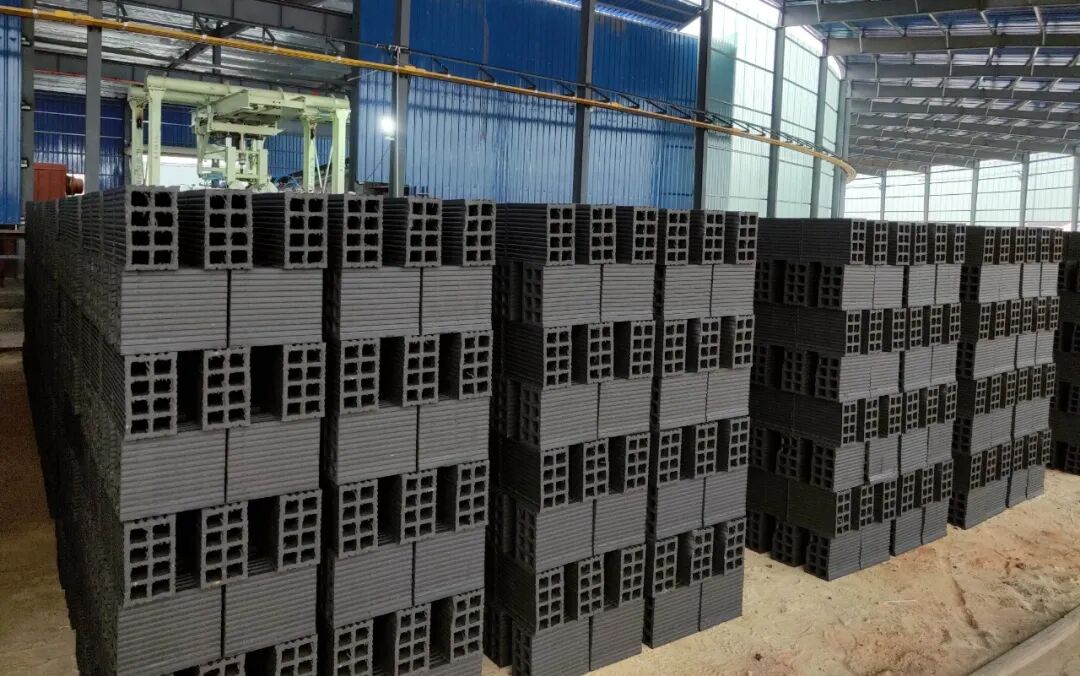
In actual drying process control, temperature adjustment must cooperate with the overall thermal engineering law of drying. Standard fired brick drying includes four stages: heating, constant speed drying, decelerated drying and balance drying. Differentiated hot air temperature is the core to form reasonable temperature, dehydration and pressure curves in the drying chamber, ensuring that green bricks complete stable dehydration stage by stage without internal structural damage.
Strict parameter coordination is required in the whole drying system. On the basis of raw material temperature matching, stabilize the exhaust gas humidity and temperature (35-45℃ temperature, 90%-95% relative humidity), control the indoorair flow rate at 1.5-4.5m/s, and optimize the mud heating temperature at 45-60℃. At the same time, ensure the green brick inlet temperature is higher than the kiln outlet gas humidity temperature to completely eliminate resurgence defects.
Compared with fixed-temperature drying, raw material-adaptive hot air temperature adjustment can effectively reduce drying shrinkage and cracking risk, improve green brick strength and product qualification rate. Combined with low-moisture forming technology, this process can reduce kiln stacking loss and production energy consumption, helping brick factories achieve standardized, energy-saving and high-yield intelligent drying production.