
0102030405
Key Technologies to Prevent Spiral & S-Cracks in Clay Bricks
2026-05-09
Zero-defect clay brick manufacturing is the common pursuit of modern brick factories worldwide. Preventing spiral cracks and S-cracks requires comprehensive technical integration including raw material processing, vacuum extrusion, intelligent moisture detection, predictive maintenance, and automatic kiln control. This article sorts out mature core technologies for crack prevention, providing technical references for medium and large-scale clay brick production lines.
1. Scientific Raw Material Grading & Plasticity Control Technology
Adopt dual gradation formula: 60%-70% fine clay (below 0.05mm) and 30%-40% coarse aggregate. Mix industrial solid waste such as coal gangue, shale, and fly ash to replace partial raw clay. This technology optimizes internal soil structure, reduces clay plasticity, and enhances anti-crack performance of green bricks.
2. High Vacuum Extrusion Technology with Flow Optimization
Keep the extruder vacuum degree above -0.08Mpa to eliminate internal air bubbles and delamination. Equip the extruder with variable cross-section heads and flow resistance rods to balance central and edge clay flow. Uniform vacuum extrusion effectively inhibits the generation of spiral shear layers.
3. Online Moisture Monitoring & Clay Ageing Technology
Install intelligent moisture sensors on the production line to realize real-time water adjustment and maintain constant clay moisture. Store mixed raw materials in sealed stockyards for 3-7 days for natural ageing. Homogenized clay has stable plasticity and water content, avoiding local stress concentration during extrusion.
4. Intelligent Monitoring & Predictive Maintenance System
Apply intelligent sensing equipment to monitor spiral blade abrasion, liner thickness, and assembly gaps. The system automatically generates maintenance reminders according to equipment operation data. Predictive maintenance replaces traditional passive overhaul, ensuring long-term stable operation of extrusion equipment.
5. PLC Intelligent Kiln Temperature Control Technology
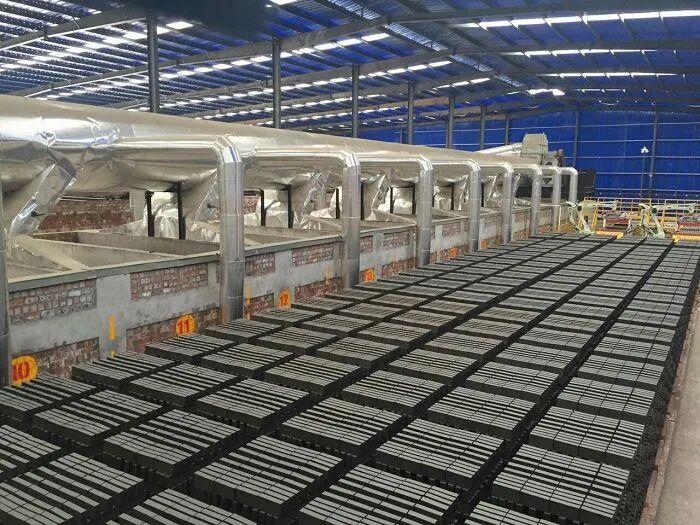
Adopt PLC computer control system to precisely adjust drying humidity, heating rate, and sintering temperature. Optimize kiln internal air circulation to eliminate local high-temperature hot spots. Uniform thermal field distribution prevents thermal stress cracks and improves finished brick appearance flatness.
The prevention of spiral and S-cracks depends on five core technologies: scientific material proportioning, vacuum flow extrusion, precise moisture management, intelligent equipment maintenance, and automatic kiln control. Reasonable application of these technologies helps brick factories achieve zero crack defects, high yield rate, and low production cost. High-quality clay bricks will better meet the demands of global construction and infrastructure projects.