
0102030405
Key Technical Guidelines for Artificial Brick Drying Chamber Operation and Parameter Optimization
2026-10-12
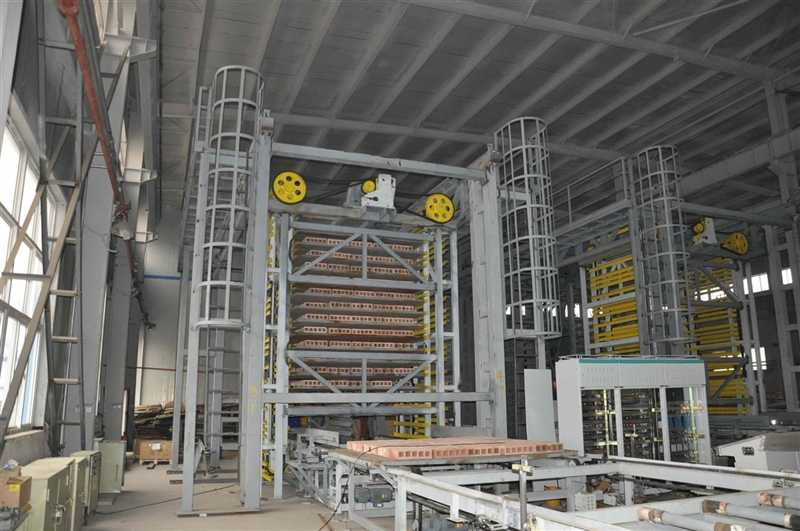
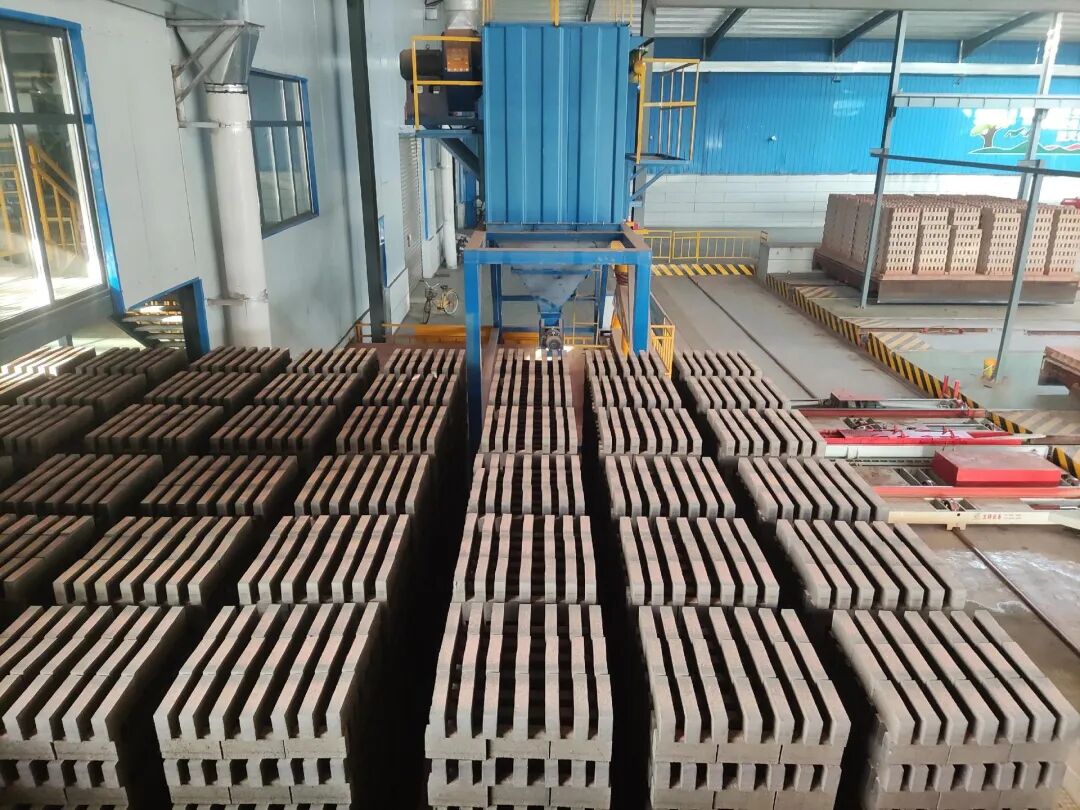
Artificial drying is the mainstream and efficient drying method in modern brick and tile production line, which solves the problems of low efficiency and unstable quality of natural drying. Scientific operation of the artificial drying chamber and accurate optimization of process parameters are essential to eliminate drying defects, improve product consistency, and reduce production costs. All drying parameters must be dynamically adjusted according to raw material properties to adapt to different brick product production needs.
The core adjustable parameter of the drying chamber is hot air drying temperature, which is classified and set based on brick type and raw material drying sensitivity. For low-sensitivity, easy-to-dry products such as clay hollow bricks and fly ash sintered bricks, the drying temperature is set at 60~80℃ to achieve mild and uniform dehydration. For medium-sensitive shale and coal gangue raw materials (sensitivity coefficient 1~2), solid bricks adopt 100~120℃ high-temperature drying, while hollow bricks of the same materials use 80~100℃ medium-temperature drying to balance efficiency and quality. For low-sensitivity shale bricks and coal gangue bricks with a coefficient below 1, the drying temperature can be raised to 120~125℃ to maximize production efficiency.
To build a stable drying environment, enterprises must strictly control the auxiliary environmental parameters of the drying chamber. The exhaust gas discharge temperature is controlled at 35~45℃, and the exhaust relative humidity is maintained at 90~95% to prevent secondary moisture absorption of brick green bodies. The internal air flow rate is fixed at 1.5~4.5m/s, ensuring timely discharge of water vapor and uniform heat distribution. Preprocessing mud materials with 45~60℃ hot water or steam stirring can optimize raw material activity and create better conditions for subsequent drying.
A critical operational rule for artificial brick drying: the initial temperature of green bodies entering the drying chamber must be higher than the ambient humidity temperature of kiln outlet exhaust gas. This core operation effectively avoids green body re-moistening and ensures stable drying quality. In actual production, the drying sensitivity coefficient of a single type of raw material is relatively fixed and positively correlated with its plasticity index. Higher plasticity index leads to stronger drying resistance, longer dehydration time and higher crack formation probability.
The matching relationship between sensitivity coefficient and drying cycle is clear and actionable for production: coefficient <1 corresponds to 12~20h drying time; 1~1.5 corresponds to 20~26h; 1.5~2 corresponds to 26~32h; coefficient >2 requires 32~48h or longer drying time. In terms of energy and gas consumption, the industry’s unified standard is 1300kcal heat consumption and 33m³ 30℃ hot air consumption per kilogram of evaporated water, providing a clear basis for enterprise energy-saving optimization.
Green body forming moisture control is a key optimization point for improving drying efficiency and product quality. Excessively high forming moisture only brings temporary convenience to the molding process, but will cause a series of adverse consequences: increased drying shrinkage, aggravated crack defects, reduced green body structural strength, and increased breakage rate during kiln stacking and transportation. Production practice proves that fine adjustment of forming moisture can significantly improve green body performance. Reducing moisture by 2% for viscous raw materials and 4%~6% for fat raw materials can double the compressive strength of brick green bodies.
Therefore, professional brick manufacturing factories will actively reduce green body forming moisture within the bearing range of brick production equipment. Combined with the four-stage scientific drying mechanism of heating, constant-speed drying, deceleration drying and balance, a complete set of stable temperature, dehydration and pressure curves is formed. This standardized drying process enables wet brick green bodies to complete gradual and balanced dehydration, effectively reduces defective rates, and realizes high-quality and high-yield brick production.
FAQ
Q1: What is the core advantage of artificial drying for brick green bodies?
A: Artificial drying allows precise parameter adjustment, stable drying quality, controllable production cycles, and effectively avoids natural drying defects such as uneven dehydration and green body re-moistening.
Q2: How to set drying temperature for different coal gangue brick types?
A: Coal gangue solid bricks (sensitivity 1~2) use 100~120℃, hollow bricks use 80~100℃, and low-sensitivity coal gangue bricks can use 120~125℃.
Q3: Why control air flow velocity in brick drying rooms?
A: Reasonable air flow velocity (1.5~4.5m/s) ensures timely water vapor discharge and uniform indoor heat distribution, preventing local over-drying or under-drying of green bodies.
Q4: How to improve brick green body strength through drying process optimization?
A: Properly reduce molding moisture, match exclusive drying temperature and cycle according to raw material sensitivity, and implement four-stage balanced drying.