0102030405
Industrial Upgrade of Brick Packaging: The Transitional Value and Limitations of Semi-Automation and the Revolutionary Strength of Full Automation
2026-06-08
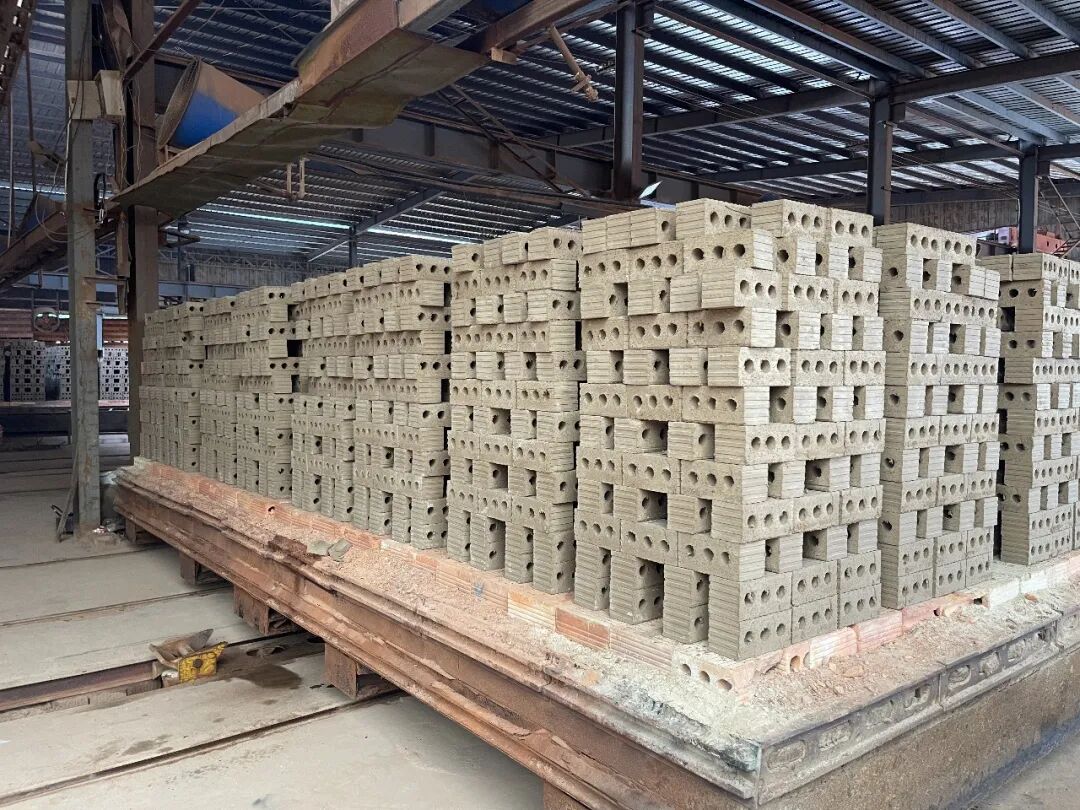
As a core link in brick and tile production, unloading and packaging technology determines the production efficiency, product quality and operational cost of brick enterprises. The technological iteration of brick packaging is a microcosm of the overall upgrading of the global brick manufacturing industry, showing a distinct evolutionary trend from semi-automatic transition to full-automatic intelligence.
Semi-automatic brick unloading and packaging technology represents the primary mechanization upgrade of the brick industry after manual operation. Compared with traditional full-manual packaging, it uses mechanical equipment to replace part of repetitive manual work, effectively lowering workers’ labor intensity and improving overall production efficiency. For the early development of the brick industry, this semi-automatic mode filled the gap between primitive manual production and advanced automated production, providing a feasible mechanized production solution for most small and medium-sized brick factories.
However, the semi-automatic model cannot support the high-quality and sustainable development of the modern brick industry due to its inherent flaws. The necessity of manual operation in key packaging procedures creates three major industry pain points: first, manual participation limits production continuity and speed, resulting in low overall production efficiency; second, manual operational errors and state differences lead to unstable packaging quality and inconsistent finished product standards; third, long-term reliance on labor brings rising labor costs, increasing the operational burden and restricting the scale development of enterprises. These limitations determine that semi-automatic technology can only serve as a temporary transitional stage in industrial development.
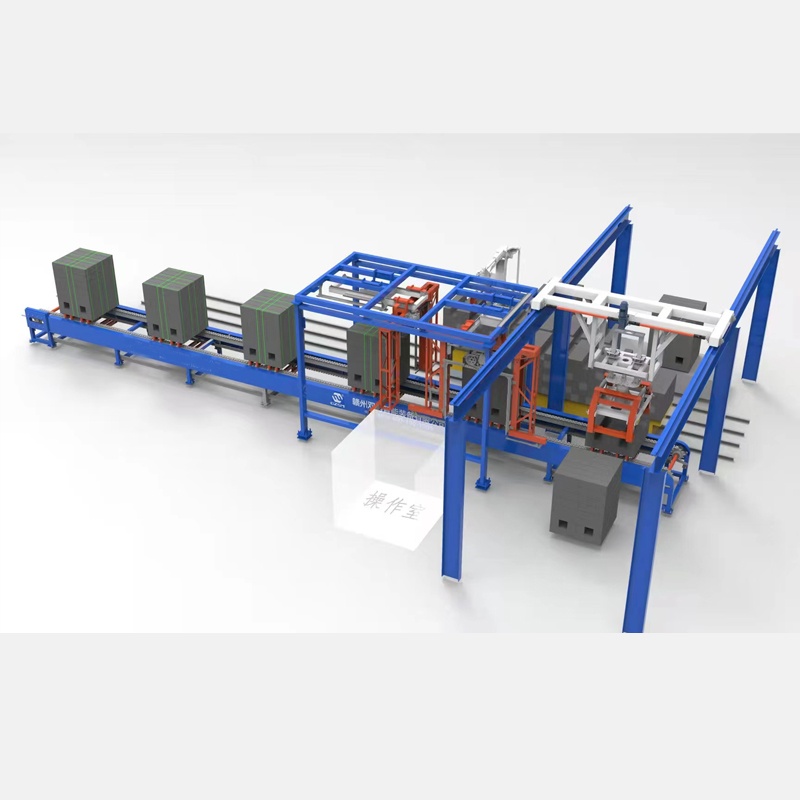
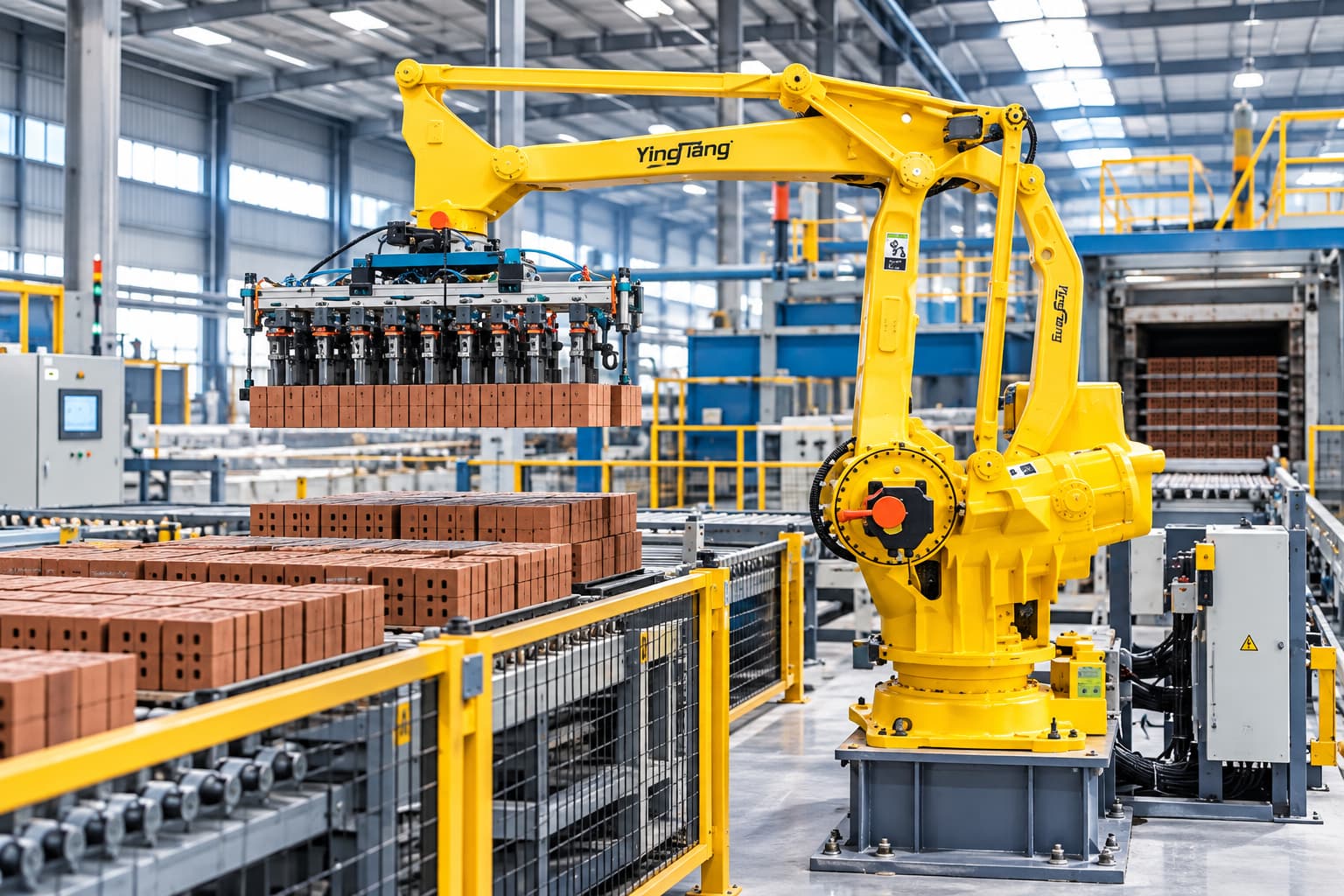
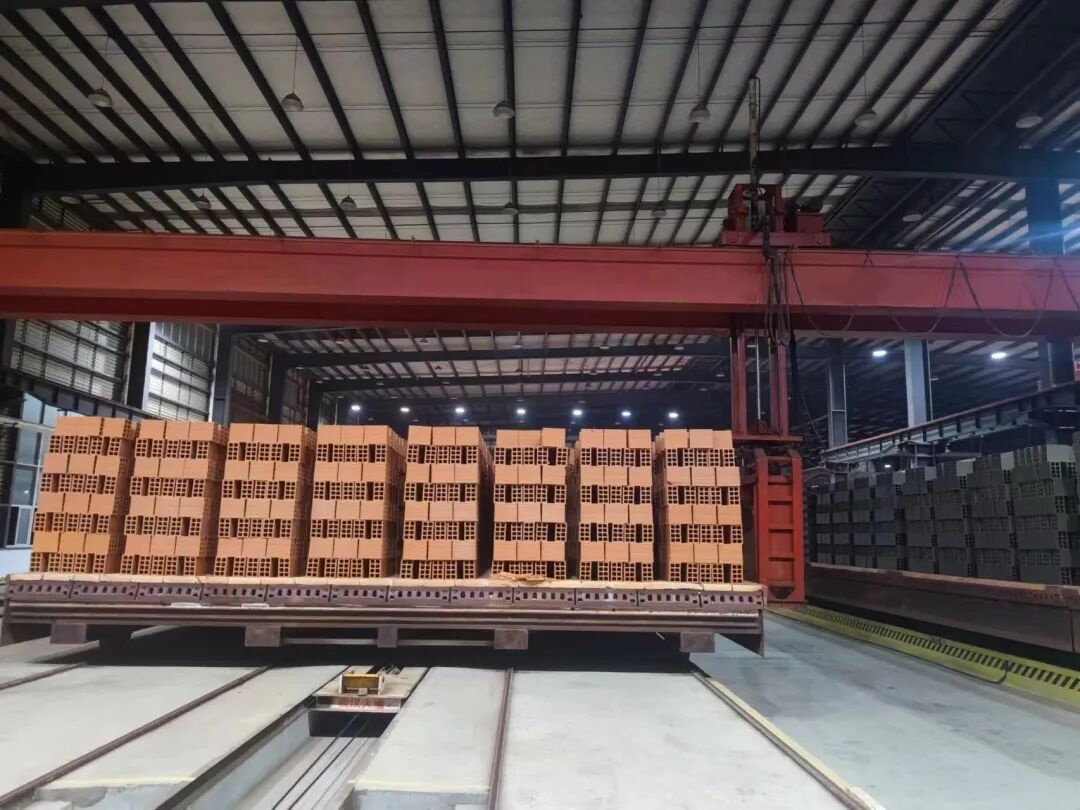
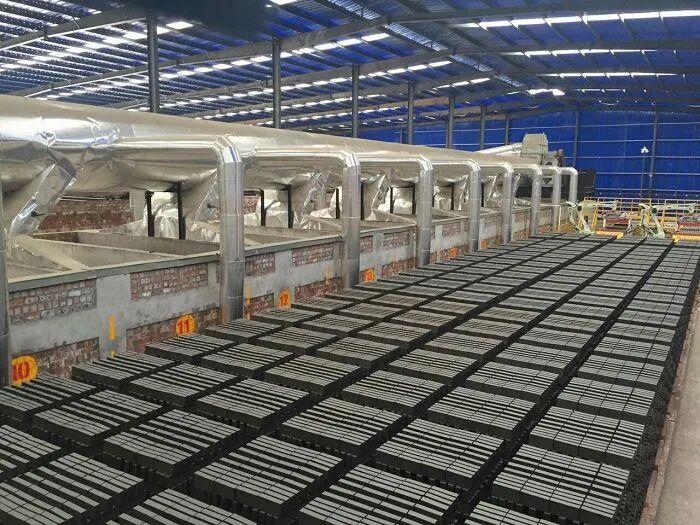
Full-automatic brick unloading and packaging technology is the key technological breakthrough that solves all bottlenecks of semi-automatic production. Integrating intelligent sensing, automatic control and precision mechanical transmission technologies, it realizes full-process unmanned operation from brick unloading, stacking to packaging and output. It completely gets rid of the constraints of manual operation, achieving standardized, unified and stable production for all links.
In actual production applications, fully automatic equipment delivers comprehensive advantages. Its high-speed continuous working mode greatly improves production output and line efficiency. Although the one-time investment cost is higher, it eliminates long-term labor input and management costs, optimizing the enterprise’s cost structure and improving long-term economic benefits. Besides, the intelligent adjustable system can adapt to various brick types and production scales, with strong compatibility and scalability. Equipped with intelligent maintenance and remote monitoring functions, the equipment effectively reduces failure rates and downtime, ensuring efficient and stable operation of the production line.
To conclude, semi-automatic brick packaging technology has transitional historical value in the industrial upgrading process but is limited by inherent technical defects. Full-automatic intelligent packaging technology breaks all development restrictions of semi-automation, bringing revolutionary changes to brick unloading and packaging processes. It has become the core driving force for the intelligent, high-efficiency and low-cost transformation of the global brick and tile manufacturing industry.