
Improvements on Tunnel Kiln Kiln Car Boosting Refractory Performance, Durability and Thermal Sealing
Tunnel kilns are widely used for firing fired brick and various kiln products. The kiln car frame and sand sealing plate are fabricated from castings or steel plates. These structures come into direct contact with high-temperature gas inside the kiln. When operating continuously in a high-temperature atmosphere, they will suffer sharply reduced thermal sealing performance after a certain service period if they cannot resist thermal expansion deformation and thermal oxidation corrosion.
Poor-quality kiln cars result in frames that fail to support groove bricks. The kiln car shakes during forward movement and destabilizes the firing process. This triggers brick deformation and cold cracking, lowering finished product quality. Once such faults emerge during kiln operation, immediate maintenance is impossible. Production must continue until the kiln is shut down. In severe cases, groove bricks lose balance, the kiln car frame collapses, and damage may occur to the main kiln body. Moving assemblies including the kiln bed, wheels and kiln rails will also be impaired.
When the thermal sealing of sand sealing plates deteriorates, high-temperature gas inside the kiln flows into the space beneath the kiln car through gaps between the kiln wall and kiln car side panels. This creates uneven temperature distribution inside the kiln, increases firing inconsistency and causes cold cracks, reducing product quality. Meanwhile, kiln wheels and rails tend to wear rapidly. Again, such faults cannot be repaired immediately, and production can only continue until kiln shutdown.
To solve the above problems, it is necessary to improve the refractory performance, durability and thermal sealing of the kiln car frame and sand sealing plates, with special emphasis on durability. We have implemented multiple structural improvements to the kiln car system and achieved satisfactory results.
Main Improvement Measures
1. Structural Upgrade of Kiln Car Assembly
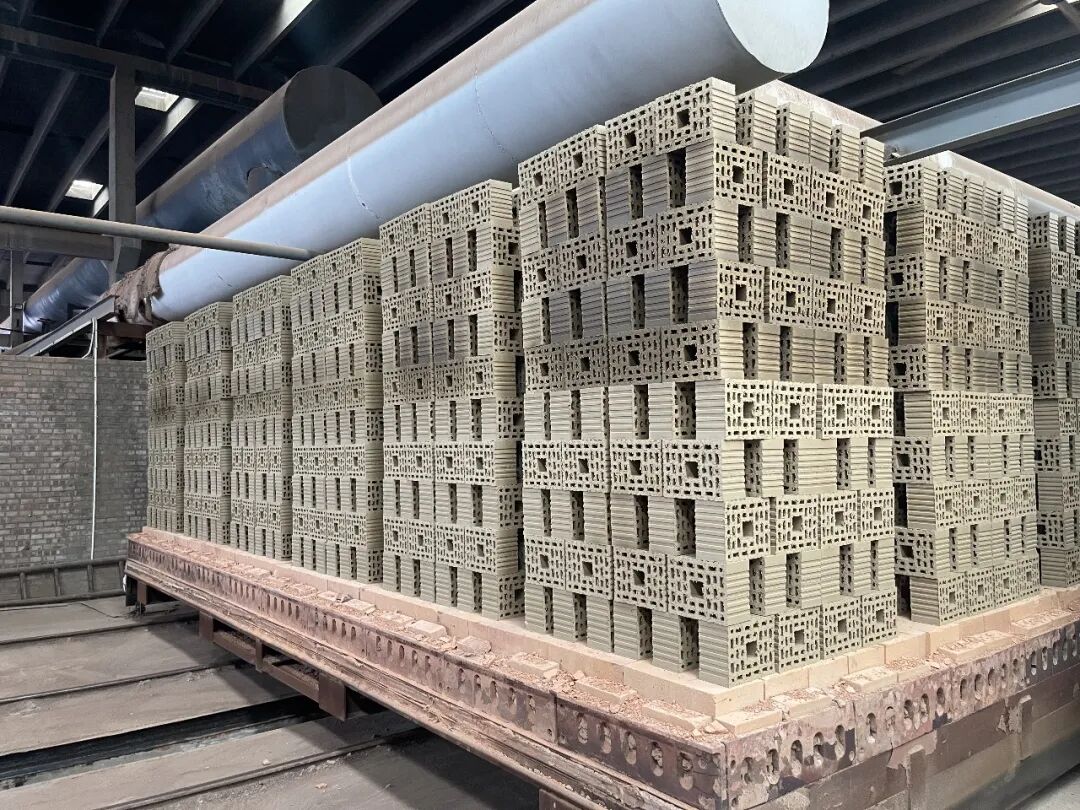
A complete kiln car consists of the kiln car frame, groove bricks, supporting protrusions on the frame, sand sealing plates covering the lower side of groove bricks, and heat insulation layers laid inside groove bricks. The metal frame serves as the main load-bearing skeleton.
The sand sealing plate is vertically mounted on the end face of the kiln car frame and designed for easy disassembly. Mounting fittings on both lower ends of the frame support vertical installation of removable sand sealing plates. The plates extend from front to rear on both sides of the kiln car, with the top edge covering the bottom of groove bricks and the frame end face.
Protrusions parallel to the travelling direction of the kiln car are fabricated slightly inward above the frame. Groove bricks are placed between the protrusions and fixed sand sealing plates. Groove bricks connected along the kiln running direction form the two side walls of the kiln car, preventing hot gas from flowing backward to the undercarriage area.
Vertically fixed sand sealing plates support the bottom outer wall of groove bricks and cover the frame end. This isolates the metal frame from direct contact with high-temperature kiln gas and effectively prevents thermal expansion deformation and thermal oxidation corrosion. A refractory insulation layer above the frame forms part of the kiln bed. Together with side wall structures, it blocks hot gas penetration from the top to the bottom of the kiln car.
2. Modular Sand Sealing Plate Design
The sand sealing plate is assembled from two or more refractory panels, installed vertically and detachable. It covers the bottom of groove bricks and both end faces of the kiln car frame. This structure keeps the metal frame away from direct high-temperature impact. When individual refractory panels get damaged and sealing performance drops, the kiln can still keep running. Damaged panels can be replaced conveniently during maintenance.
3. Sealing Filler for All Assembly Gaps
Fiber felt and other sealing materials are filled at all joint gaps: between sand sealing plates and groove bricks, between sand sealing plates and frame mounting positions, between groove bricks and frames, between groove bricks and protrusions, between protrusions and insulation layers, between insulation materials and frames, and joints of multi-piece refractory sand sealing plates. This extra sealing further blocks hot gas leakage into the lower part of the kiln car.
4. Anti-slip Groove Brick Embedding Structure
Groove bricks adopt an embedded structure matching the protrusions on the kiln car frame. The embedding design locks groove bricks firmly to avoid sliding. The detachable vertical sand sealing plates cover both ends of the frame. The metal frame avoids direct contact with kiln hot gas. Even if partial refractory panels are damaged, kiln operation can continue, and component replacement remains simple.
5. Refractory Ceramic Coating for Metal Sand Sealing Plates
For metal sand sealing plates, a refractory ceramic coating can be applied on the surface. Thin metal sheets coated with refractory ceramic layers deliver the same anti-deformation and anti-corrosion performance as the above solutions.