
0102030405
Core Design Secrets of Zero-Collapse Tunnel Kiln Drying Chamber: Scientific Dehumidification Mode and Air Volume Matching Strategy
2026-06-02
The fundamental solution to winter green brick collapse and low drying efficiency of large-section tunnel kilns lies in three core design elements: dehumidification mode, air supply volume and exhaust dehumidification volume. Fan configuration and air volume adjustment are only auxiliary means. Only by matching scientific dehumidification modes and reasonable air volume parameters can we realize high-efficiency drying, energy saving and stable production.
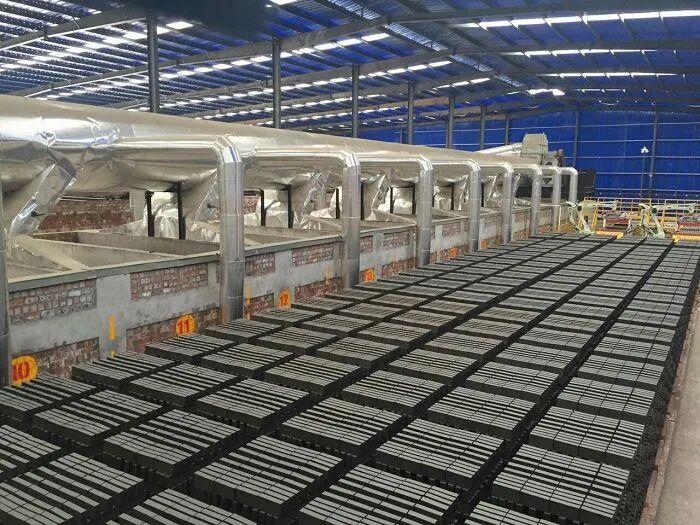
Common industrial drying chamber dehumidification modes include centralized top dehumidification, centralized side dehumidification, distributed top dehumidification, distributed side dehumidification, and combined top-side dehumidification. Each dehumidification mode has applicable production scenarios. The traditional centralized dehumidification process is theoretically the most reasonable, with the lowest exhaust temperature and the highest heat utilization rate. However, it is difficult to achieve the theoretical optimal state in actual operation due to unreasonable air supply and exhaust matching and unregulated humidity balance.
The essence of high-quality drying is to maintain a dynamic balance of temperature and humidity in the drying chamber. The ideal working state is to keep the exhaust humidity stably between 90% and 100% and the temperature above 30°C. Relying solely on high temperature or large air volume will break the internal humidity balance: excessive air volume will take away a large amount of hot and humid air, resulting in low exhaust humidity, incomplete internal dehydration and local secondary moisture absorption of green bricks; insufficient air volume will lead to accumulated moisture and saturated steam, causing blank collapse.
Combined with a number of field renovation cases, the optimal design logic of modern tunnel kiln drying chambers is summarized:
First, select the targeted dehumidification mode according to the kiln width, drying chamber length and seasonal production characteristics. Distributed combined dehumidification is more suitable for large-section and long-distance drying chambers, which can avoid local moisture accumulation and dead corners of dehumidification.
Second, abandon the "larger air volume is better" wrong concept, and implement precise air volume matching. On the premise of meeting the desulfurization and exhaust resistance requirements, optimize the fan power and the ratio of air supply volume to exhaust volume to ensure stable humidity in the chamber. The Shandong Tai’an renovation case fully proves that precise air volume matching and reasonable dehumidification mode can achieve zero winter collapse, energy saving and consumption reduction, and double production capacity.
Third, add complete humidity detection and adjustment systems for the drying chamber. Real-time monitoring of exhaust humidity is the premise of precise drying control. Only by realizing adjustable humidity can we completely get rid of the dependence on blind temperature rise and large air volume, and fundamentally solve the long-standing problem of winter green brick collapse in tunnel kilns.