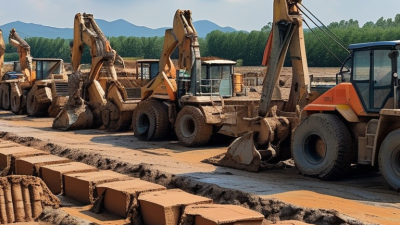
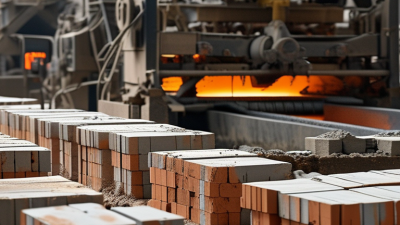
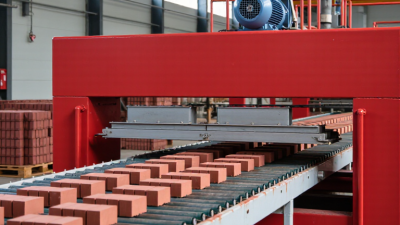
Picking the right brick machine for your clay isn’t just about looking at how fast it can produce or how much it costs upfront. I mean, clay itself is pretty variable—moisture levels, mineral content, and how you prepare it all make a big difference. What works like a charm in one region might totally struggle in another because the clay composition differs. That’s why doing some practical testing is so important, don’t skip it!
For example, a brick machine fired clay brick making machine needs to fit your specific needs—like the size of bricks you're aiming for, the amount of bricks you want to produce, and your firing process. Before you make a purchase, it’s a good idea for manufacturers (or you, if you’re DIY-ing) to test local clay. This means crushing some, mixing it up, running it through the machine, slicing, drying, and firing. Doing small test batches can really show you potential issues like cracking, warping, weak edges, or uneven color—all things that can end up costing you in the long run.
Take a close look at key parts of the machine too—like the frame, gearbox, vacuum system, and components that wear out easily. Having enough extrusion pressure helps produce dense green bricks with uniform sizes, but be careful—pushing it too hard can bump up energy costs and wear down parts faster. The goal is to find that sweet spot where performance is balanced, not pushed to the limit.
A reliable supplier will give you detailed technical drawings, clear operating instructions, spare parts, and ongoing maintenance help. Don’t just go on pretty pictures from their catalog—ask for real production data so you know what to expect. Also, double-check if their recommended capacity matches your setup—your workers, kiln, dryer, and clay supply. Remember, a machine alone won’t fix poor material prep, so make sure your clay is ready to go.
Honestly, there’s no such thing as a perfect machine. The process of choosing the right one might seem slow, but it definitely pays off in preventing avoidable problems later on. During testing, it’s super helpful for operators to keep track of moisture levels, the quality of the output, downtime, and how much fuel you’re using. These notes help you make smarter decisions and spot any faulty assumptions early on. With good clay prep and regular maintenance, your brick machine can really help keep your production steady, save resources, and deliver consistent fired bricks. It’s all about patience and making the right choice!
Clay Brick Basics: Composition, Plasticity, and the 900–1,200°C Firing Range
Why Choose a Brick Machine for Clay?
Clay brick quality begins with composition. Clay minerals provide bonding and plasticity. Sand, silt, and grog reduce shrinkage during drying. Too much sand makes the body crumbly. Too much clay can create warping and cracks.
Plasticity controls how clay behaves inside a brick machine. A practical hand test is simple: press a moist sample into a thin ribbon. It should bend without breaking or sticking heavily. Moisture must remain consistent before extrusion or pressing. This is where a machine helps. It delivers steadier shapes, pressure, and production rhythm. Still, uniform equipment cannot correct poor clay preparation. I have seen attractive green bricks fail after drying. That mistake is easy to underestimate.
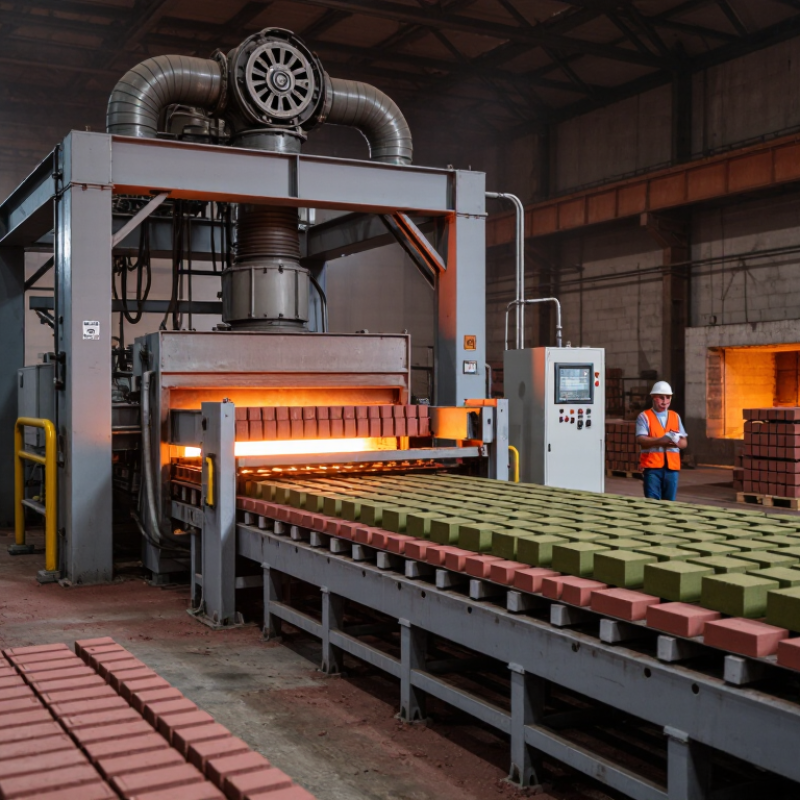
Firing usually falls between 900 and 1,200°C. This range supports sintering without excessive melting. The European Commission’s Ceramic Manufacturing BREF places many ceramic firing processes broadly around 800–1,300°C, depending on the body and product. The practical target must match mineral content, size, and kiln atmosphere. UNEP’s Global Status Report for Buildings and Construction 2023 attributes 37% of global energy-related and process emissions to buildings and construction. Efficient firing deserves attention, not just faster forming.
Tips: Test three clay blends before production. Record moisture, drying loss, and firing shrinkage. Check the brick core, not only its surface. A cooler kiln can save energy but leave weak bonds. A hotter kiln may produce strength, yet waste fuel and distort edges. Curious operators keep questioning the first successful batch.
Why Choose a Brick Machine for Clay?
Clay Brick Basics: Composition, Plasticity, and the 900–1,200°C Firing Range
A representative clay-brick body contains mainly silica and alumina, while iron, calcium, magnesium, and alkali oxides influence color, vitrification, and strength. Actual proportions vary according to the clay deposit and formulation.
Water is added to develop plasticity for extrusion or pressing, but it is removed during drying. Firing is commonly carried out between 900°C and 1,200°C, allowing the clay minerals to sinter into a durable ceramic product.
How Brick Machines Convert Prepared Clay into Uniform Masonry Units
Why Choose a Brick Machine for Clay?
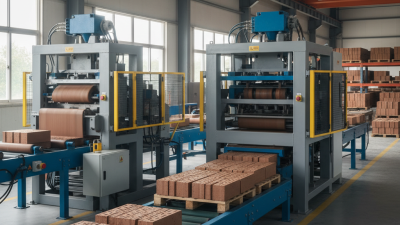
A Clay Brick Machine turns prepared clay into consistent masonry units through controlled, repeatable stages. The process begins with screened clay, where stones and hard lumps are removed. Water is then added until the mixture reaches a workable, plastic texture. Too much moisture creates weak edges. Too little causes cracking during forming.
Inside the machine, rollers or a pug mill blend the clay evenly. The compacted material moves through a forming chamber under steady pressure. An extrusion die shapes the clay into a continuous column. Cutting wires then divide it into bricks with matching lengths. Clean cuts matter. Uneven units can create wider mortar joints and rough wall lines.
Practical operators check moisture, pressure, and cutting alignment during production. A small adjustment can change the brick surface noticeably. Fresh units often feel cool and slightly soft in the hand. They need careful stacking before controlled drying and firing. This stage requires patience, because rapid drying may produce hidden cracks. No machine removes every variable. Clay from different pits can behave differently, even after similar preparation. That is why regular size checks, weight checks, and visual inspections remain necessary. A reliable workflow combines machine control with human judgment.
Dimensional Control: Why EN 771-1 Consistency Matters in Clay Brick Production
Choosing a brick machine for clay is not only about output. It is about holding shape from soft extrusion to fired masonry. In daily production, a few millimeters can become a visible wall problem. EN 771-1 consistency matters because the standard addresses dimensions, tolerances, and performance expectations for clay masonry units. It gives buyers and producers a common technical reference. That reference supports dependable laying, cleaner joints, and fewer site adjustments. Small details matter. A Clay Brick Kiln Machine works best when forming, drying, and firing are treated as one controlled process. If the die is worn, the cutter drifts, or moisture varies, bricks may leave the line with uneven edges.
Reliable operators check green bricks with gauges before loading the dryers. They record length, width, height, moisture, and firing results by batch. The kiln profile also needs attention. Uneven heat can create warping, bloating, or size differences after firing. A stable machine helps, but it cannot correct poor clay preparation. Screening, mixing, and moisture adjustment remain essential. In practice, consistency is built through repeated measurements, not hopeful visual checks. Yet no production line is flawless. Dust changes readings. Tools wear. Even experienced teams sometimes accept a batch too quickly. That is where documented sampling and corrective maintenance protect dimensional control. When brick sizes stay predictable, masons spend less time trimming units and correcting courses. The result is a more credible product specification and a smoother installation.
Strength and Durability Benchmarks Under ASTM C62: 8.6–20.7 MPa
Why Choose a Brick Machine for Clay?
Clay brick strength is not only a firing result. It begins with controlled forming, moisture, and density. Under ASTM C62/C62M benchmarks, compressive strength ranges from 8.6 to 20.7 MPa across common, moderate-weathering, and severe-weathering grades. The Brick Industry Association’s technical guidance also links uniform units with more predictable masonry performance.
A modern brick machine helps maintain consistent clay pressure and dimensions. This reduces weak corners, uneven faces, and variable absorption. In practical production, a stable feed system matters. Small moisture changes can create visible cracks after drying. Proper compaction supports higher green strength before kiln entry. However, a machine cannot repair poor clay preparation. That part is often underestimated.
Tips: Test each clay batch before scaling production. Record moisture, pressing pressure, drying loss, and fired compressive strength. Compare results with ASTM C62 requirements, not appearance alone. Keep sample sizes and curing conditions consistent. A handsome brick may still fail testing. That is the uncomfortable part. Review the process when results approach 8.6 MPa, even if the units look acceptable. ASTM standards provide benchmarks, while actual performance still depends on firing control, absorption, shape, and site exposure.
Production Efficiency: Comparing Automated Molding with Manual Brick Forming
Why Choose a Brick Machine for Clay?
Production efficiency changes sharply when clay bricks move from hand forming to automated molding. In a small clay yard, manual workers may shape 400 to 800 bricks daily, depending on clay moisture and experience. Each mold receives a slightly different amount of material. Edges can soften, corners may crack, and drying times often vary.
A Clay Brick Maker Machine controls filling, pressing, and releasing with repeatable pressure. One operator can monitor the feed system, adjust moisture, and manage output instead of forming every brick by hand. The machine also reduces idle time between molds. Fresh bricks leave the line in regular rows, which makes stacking and drying easier. In practical production, this consistency can reduce rejected units and improve daily planning.
However, automation is not effortless. Clay that feels too wet may stick inside the mold. Dry clay can create weak corners or rough surfaces. Operators still need experience with moisture testing, pressure settings, and routine cleaning. Manual forming remains useful for small batches, custom sizes, or changing designs. It also reveals problems quickly through touch. I have found that early estimates can be too optimistic when maintenance time is ignored. A realistic comparison should include setup, cleaning, training, energy use, and product losses, not only the machine’s hourly output.
Energy, Labor, and Waste Factors in Selecting a Clay Brick Machine
Why Choose a Brick Machine for Clay?
Choosing a brick machine for clay is not simply a production decision. It affects energy use, staffing, drying losses, and daily consistency. In a small plant, I would measure moisture, clay plasticity, and available electricity before selecting equipment. A machine that matches local clay can reduce rework and broken green bricks. That sounds obvious. It is often missed.
Energy performance depends on more than motor rating. Efficient extrusion or pressing can lower power use per brick. A poorly matched mixer creates costly idle time. The Clay Brick Drying Machine also deserves careful attention. Controlled airflow and temperature can shorten drying cycles without cracking edges. Operators should record kilowatt-hours, drying time, and rejected units for several weeks. Manual handling still matters. Simple conveyors and adjustable cutters can reduce lifting and staffing pressure. Automation does not remove supervision. Sensors drift, and wet clay changes after rain.
Waste control begins with accurate dosing and stable shaping. Trimmings may return to production, but contaminated material may not. Water recycling should be checked for salts and sediment before reuse. I would inspect nozzle wear, bearing noise, and brick dimensions each shift. These checks reveal problems early. Yet no machine guarantees low waste. Poor clay preparation, rushed maintenance, or unrealistic output targets can reverse the gains. A trial using the intended clay is more trustworthy than a brochure figure.
Heavy Type Steel Belt Board Box Feeders for Brick Production: Insights from Grand View Research & Mordor Intelligence Reports
Heavy-Type Steel Belt Board Box Feeders for Brick Production: Insights from Grand View Research & Mordor Intelligence Reports
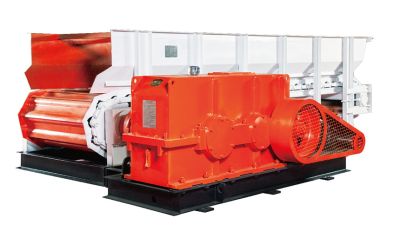
Industry assessments from Grand View Research and Mordor Intelligence show that the global construction and building-materials equipment market is expanding steadily, supported by urbanization, infrastructure investment, and the modernization of manufacturing lines. These reports also identify automation, reliable material handling, and improved operational efficiency as important purchasing priorities. In brick and tile production, a heavy-type steel belt board box feeder addresses these needs by delivering consistent raw-material flow between processing stages.
Sourced from leading Chinese equipment manufacturers, this auxiliary transport machine features a robust steel structure, high traction strength, and strong productivity for demanding factory environments. Its redesigned feeding mechanism maintains a stable and uniform speed, helping reduce material fluctuations and improve forming consistency. Uniform speed regulation allows operators to adjust output according to production requirements, while automatic overload protection helps safeguard the system during sudden changes in material volume or operating resistance.
The feeder is suitable for clay, shale, coal gangue, fly ash, and other commonly used raw materials, with compatibility across different brick specifications and production capacities. Its flexible configuration makes it practical for new plants and line upgrades, supporting smoother continuous operation and more efficient use of downstream forming equipment.
Conclusion
A Brick Machine For Clay transforms prepared clay into consistent masonry units through controlled feeding, molding, pressing, and cutting. Because clay’s composition and plasticity directly affect shaping performance, careful preparation is essential before firing products at approximately 900–1,200°C. Machine-based production helps maintain stable dimensions, which is important for meeting the consistency expectations associated with EN 771-1 and achieving reliable wall alignment during construction.
Compared with manual forming, automated molding can improve output, reduce variation, and lower material waste. It also supports more predictable strength and durability, with common benchmark values under ASTM C62 ranging from about 8.6 to 20.7 MPa, depending on the product category and manufacturing conditions. When selecting equipment, producers should consider energy consumption, labor requirements, maintenance, clay utilization, production capacity, and firing compatibility. A suitable machine can therefore improve efficiency while helping manufacturers produce durable clay bricks with repeatable quality.