请留言
    
0%

A Kiln For Burning Bricks is a controlled heating chamber used to transform shaped clay into durable masonry units. It removes moisture, develops strength, and stabilizes the brick’s final structure. In practical production, operators monitor temperature, airflow, fuel use, and firing time together. Small changes can affect color, density, cracking, and water absorption.

Common kiln designs include tunnel, shuttle, and intermittent kilns. Each suits different production volumes, layouts, and energy requirements. A modern Clay Bricks Making And Burning Machine may combine forming, drying, firing, and temperature-control systems. However, the kiln remains the heart of the process. It often operates near 900°C to 1,100°C, depending on the clay mixture and product specification. The exact range should come from testing, equipment guidance, and local quality standards.

Real experience shows that uniform heating matters more than simply reaching a high temperature. Bricks stacked too tightly may develop pale centers or uneven surfaces. Fuel savings can also become misleading when underfired bricks require replacement. That deserves honest attention. Kiln performance depends on clay preparation, moisture control, burner calibration, insulation, and operator training. No single design solves every production problem. A reliable evaluation should examine capacity, heat recovery, emissions control, maintenance access, and safety procedures. Clear records help technicians identify faults before they become expensive. This guide explains how kilns work, which types are available, and how careful firing supports consistent brick quality.
What Is a Kiln for Burning Bricks?

Kiln for Burning Bricks: Definition and Basic Purpose

Kiln for Burning Bricks: Definition and Basic Purpose

A brick kiln is a heated chamber used to fire shaped clay bricks. Its basic purpose is to turn fragile, dried clay into strong, durable masonry units. Inside the kiln, controlled heat removes remaining moisture and changes the clay structure. Firing commonly occurs between 900°C and 1,200°C, depending on the clay mixture and brick design. Good airflow matters. Uneven heat can leave pale centers, dark edges, or cracked surfaces. In practical work, technicians check brick color, shape, and sound after cooling. A properly fired brick often produces a clear ringing sound when tapped.

Tips: Dry bricks slowly before firing. Stack them with small air gaps. Record temperature changes carefully. Avoid opening the kiln too early.

Kiln operation needs patience and measurement. A digital temperature reading helps, but it cannot replace visual inspection. Watch for warping, bloating, and unusual color changes. These signs may reveal excessive heat or poor clay preparation. Cooling also requires control, because sudden temperature changes can cause hidden cracks. I have found that small test batches provide useful evidence before larger production runs. Still, results are not always perfect. Local clay can behave differently from expected, even under identical firing conditions. That uncertainty deserves attention, not guesswork.

What Is a Kiln for Burning Bricks?

A brick kiln is a high-temperature chamber used to remove moisture from shaped clay and permanently harden it through firing. The chart shows representative temperatures across the main kiln stages.

Typical fired-clay brick temperatures are commonly around 900–1200°C, depending on the clay composition, brick type, and kiln process.

Main Types of Brick-Burning Kilns

A kiln for burning bricks is a controlled chamber that dries, heats, and hardens shaped clay. Its design affects fuel use, firing consistency, worker exposure, and brick strength. The main types differ in airflow and batch movement.

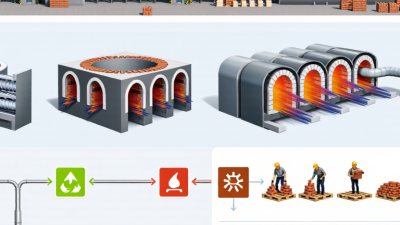
Clamp kilns are simple piles of bricks and fuel, covered with clay or soil. They need little construction, but temperature control is uneven. Bull’s Trench Kilns use a continuous oval trench, allowing repeated loading and unloading. Their output is higher, although smoke can escape from several points.

Fixed-chimney kilns add a tall stack and regulated airflow.

A 2011 World Bank assessment reported that improved designs could reduce coal consumption by about 20 percent and particulate emissions by 50–70 percent, compared with older kilns.

Zigzag kilns guide hot gases through a longer path between brick stacks. This improves heat transfer and can reduce fuel demand. Tunnel kilns move bricks through fixed heating zones, offering consistent temperature and easier quality control. They require greater capital, reliable power, and careful maintenance.

A Brick Burning Oven Kiln may describe several configurations, so the name alone proves little. Operators should check firing temperature, energy use per kilogram, and rejected-brick rates.

UNEP’s 2019 regional air-pollution assessment also identifies brick production as a meaningful source of fine particles in parts of Asia. Data can vary widely. Local clay, moisture, fuel quality, and loading habits still change the result.

Raw Materials and Brick Preparation

What Is a Kiln for Burning Bricks?

A kiln hardens shaped clay into strong, durable bricks. However, reliable firing begins with careful raw material selection. Common materials include clay, shale, sand, and finely crushed fired brick. Clay provides plasticity, while sand can reduce shrinkage. Crushed brick, often called grog, helps control cracking. The exact mixture depends on local soil, mineral content, and the desired brick strength.

Preparation requires more than simply adding water. Workers should remove stones, roots, and organic matter before crushing and screening the soil. The material is then mixed until its moisture feels even throughout. Too much water creates deformation during drying. Too little water makes molding difficult. After mixing, the clay may rest overnight, allowing moisture to spread more evenly. Bricks are molded or extruded, then dried slowly under shelter. Green bricks must feel firm before entering the kiln. Rushing this stage can leave hidden moisture inside.

Tips: Test a small batch first. Measure shrinkage after drying and inspect the surface for cracks. I have found that simple hand tests can reveal problems early, though they are not a replacement for laboratory analysis. Keep records of moisture, drying time, and firing results. A perfect recipe rarely exists, because each clay deposit behaves differently.

How Bricks Are Loaded and Fired in a Kiln

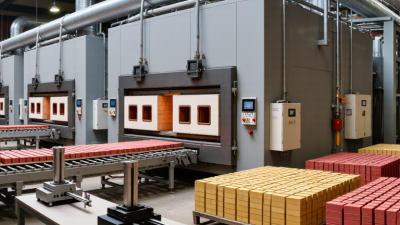
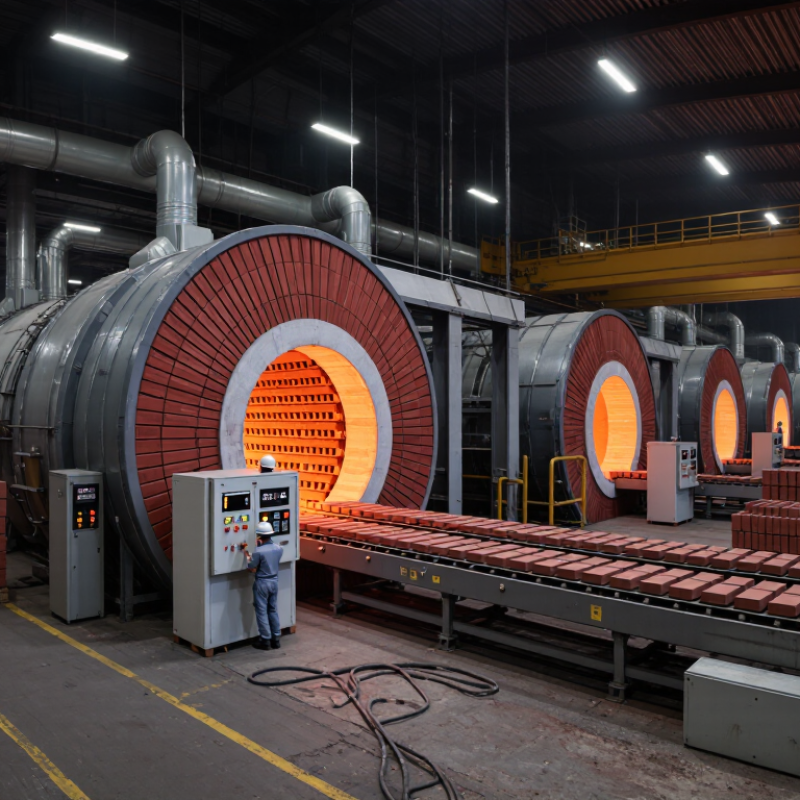
A kiln for burning bricks uses controlled heat to harden shaped clay. In a Clay Brick Burning Tunnel Kiln, brick cars move slowly through drying, heating, firing, and cooling zones. Operators load green bricks in stable rows, leaving narrow air channels between them. These channels help heat reach inner surfaces evenly. The European Commission’s Ceramic Manufacturing BREF reports typical brick firing temperatures of about 850–1,200°C.

Before firing, bricks must lose most free moisture. Even small moisture differences can cause cracks or uneven color. Workers inspect edges, stacking height, and spacing before the kiln doors close. Small gaps matter. Too much space wastes heat, while tight packing restricts airflow. During firing, burners raise temperature gradually, then maintain a controlled peak. Thermocouples record the kiln profile, not just the display temperature. That distinction is easy to overlook.

The U.S. Environmental Protection Agency’s AP-42 report identifies particulate matter, sulfur compounds, and nitrogen oxides as key kiln emissions. Their levels depend on clay chemistry, fuel, temperature, and pollution controls. Cooling also needs discipline. A sudden temperature drop can shock bricks and create hidden fractures. The 2023 Global Status Report for Buildings and Construction attributes 34% of global energy demand to buildings and construction operations. Kiln efficiency therefore matters beyond the factory floor. In practice, firing lines are rarely perfect. One corner may dry slower. A careful operator adjusts loading patterns after reviewing rejected bricks, fuel readings, and kiln charts. Mistakes become useful data.

Temperature Control and Firing Stages

A kiln for burning bricks is a controlled thermal system, not simply a hot chamber. A modern Brick Burning Machine usually moves bricks through drying, preheating, firing, and cooling zones. The European Commission’s Ceramic Manufacturing BREF reports common firing temperatures of approximately 850–1,200°C for many clay products. Exact values depend on clay mineralogy, moisture, and brick density.

Temperature control begins before the flame reaches peak heat. Drying commonly stays below 200°C, allowing free water to escape slowly. Between roughly 200°C and 600°C, chemically bound water and organic matter leave the clay. Heating too quickly can create internal steam pressure. Cracks may appear along corners first. The firing zone often approaches 1,000°C, where sintering strengthens the brick without fully melting it. The U.S. EPA’s AP-42 guidance identifies kiln firing as a major source of particulate and gaseous emissions, making airflow and fuel control important.

Cooling requires equal care. A controlled descent reduces thermal shock, especially in thick or perforated units. The Ceramic Manufacturing BREF indicates that kiln energy demand can commonly fall near 1.5–4.0 GJ per tonne, depending on product and equipment. That range is useful, but not a promise. Site data matters more. In practice, operators should compare thermocouple readings with brick color, surface hardness, and water absorption. A clean temperature curve can still hide uneven airflow. That is where my judgment becomes less certain, and repeated testing remains necessary.

Cooling, Unloading, and Quality Inspection

What Is a Kiln for Burning Bricks?

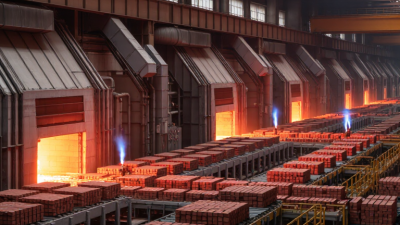
A kiln for burning bricks does more than heat clay. It controls firing, cooling, and handling conditions. After firing, hot bricks enter a cooling zone where airflow must remain steady. Sudden cooling can create hairline cracks, warped edges, or weak corners. Operators monitor temperature changes with sensors and regular visual checks. The cooling period may take several hours, depending on brick size and kiln design. Patience matters here.

Unloading begins only when the bricks reach a safe handling temperature. Workers or automated systems remove them carefully from the kiln cars. Rough contact can chip fresh edges, especially when bricks retain internal heat. A Clay Burning Brick Machine should support stable movement and reduce unnecessary impact during unloading. In practice, dust, uneven stacking, and occasional delays can affect the workflow. These small problems deserve attention, not excuses.

Quality inspection follows a clear routine. Inspectors check color uniformity, surface cracks, shape, dimensions, and soundness. A light tap can reveal a dull sound linked to poor firing, although laboratory testing remains more reliable. Samples may undergo compressive strength, water absorption, and dimensional tests. Records should include kiln temperature, cooling time, and batch details. The process is not perfectly uniform. Even experienced teams sometimes miss subtle defects under poor lighting. Reflective checks and random sampling help expose those weaknesses before shipment.

FAQS

What is a brick kiln used for?

A brick kiln fires shaped clay into strong masonry units. Heat removes moisture and changes the clay structure. The result should resist handling and weather. Not every batch succeeds.

What firing temperature do bricks usually need?

Many clay bricks fire between 850°C and 1,200°C. The exact temperature depends on clay minerals, moisture, and brick density. Around 1,000°C often supports effective sintering. Higher heat is not always better.

How should bricks be loaded inside the kiln?

Place green bricks in stable rows with narrow air gaps. These channels help heat reach inner surfaces. Avoid overly tight stacks. Leave too much space, and energy is wasted.

Why must bricks dry before firing?

Drying removes free moisture before intense heating begins. Remaining water can become steam and create internal pressure. Cracks often start near corners. Slow drying is safer.

What happens during the main firing stages?

Drying usually remains below 200°C. Between 200°C and 600°C, bound water and organic matter leave the clay. The firing zone then strengthens the brick through sintering. Cooling follows.

How can operators check firing quality?

Inspect brick color, shape, surface hardness, and visible cracks after cooling. A properly fired brick may produce a clear ringing sound when tapped. Water absorption tests provide additional evidence. Visual checks alone can miss problems.

Why is temperature control important during cooling?

Sudden cooling can create thermal shock and hidden fractures. Thick or perforated bricks need especially careful cooling. Follow the kiln temperature curve gradually. Cooling is not an afterthought.

What can cause uneven brick quality?

Uneven airflow, poor clay preparation, tight stacking, or rapid heating can cause defects. Signs include pale centers, dark edges, warping, bloating, and cracked surfaces. Small test batches help reveal problems. Local clay may behave differently than expected.

Conclusion

A Kiln For Burning Bricks is a controlled heating chamber used to transform shaped clay into strong, durable masonry units. Its basic purpose is to remove moisture, develop strength, and create the desired hardness through carefully managed heat. Common kiln types include periodic kilns, continuous kilns, and tunnel kilns, each suited to different production scales and operating methods. Before firing, raw materials such as clay, water, and selected additives are mixed, shaped, and dried to reduce the risk of cracking.

During operation, prepared bricks are arranged to allow steady air and heat circulation. Firing generally moves through several stages: preheating, moisture removal, high-temperature sintering, and controlled cooling. Temperature, airflow, and firing time must be monitored to achieve even color, strength, and dimensional stability. After cooling, the bricks are unloaded and inspected for cracks, warping, underfiring, overfiring, and surface defects. Only products that meet the required quality standards are selected for construction use.


Lila

Lila

Lila is a seasoned marketing professional at We Henan Cadier Green Building Technology Co., Ltd., a company at the forefront of innovative wall material production since 2009. With a strong expertise in energy-saving and environmentally friendly solutions, she is dedicated to promoting the......
Previous How to Choose the Best Clay Brick Tunnel Kiln?