请留言
    
0%

So, a clay brick production line is basically one big connected setup that turns prepared clay into strong, long-lasting bricks. Usually, it goes through feeding the raw materials, crushing, mixing, extrusion, cutting, drying, firing, and then packaging. And honestly? Every step kind of influences the next one.

You know, Dr. H. H. Murray—a ceramic process engineer—put it pretty well when he said, “Brick quality begins with disciplined control of moisture, pressure, and heat.” And honestly? That idea still holds up on today’s factory floors. Even a slight shift in moisture can throw off an extruded column, and if kiln temperatures aren’t even, you might end up with pale edges, dark cores, or cracks you didn’t ask for. It’s the kind of stuff that’s easy to overlook.

To get a truly reliable clay brick production line, you need both solid machinery and a close eye on the process. Operators are always checking things like clay texture, vacuum pressure, how accurate the cutter is, dryer airflow, and kiln temperature. Sensors can give you plenty of useful data, sure — but experienced workers still pick up on sounds, smells, and little changes on the surface. And honestly? That kind of human judgment is what really counts.

You'll also see some manufacturers call automated clay processing equipment an Ecp Production Line. Honestly, the terminology can get pretty confusing. After all, different suppliers—and even different regions—often use different names for the same kind of equipment. So, if you're buying, don't just trust the labels. Take a closer look at process capacity, energy consumption, brick dimensions, automation level, and maintenance access—those things matter just as much.

Honestly, a practical brick-making line should fit the clay you actually have locally -- and the market you're aiming for. More output? That's not automatically a win. Push the speed too hard, and you can end up with more waste, higher fuel use, and more bricks getting rejected. So the real question is pretty simple: can this line turn out consistent bricks, day after day? In this article, I'll walk through the main equipment, the workflow, the quality checks, and the key things to consider when choosing a line -- so you can answer that question for yourself.
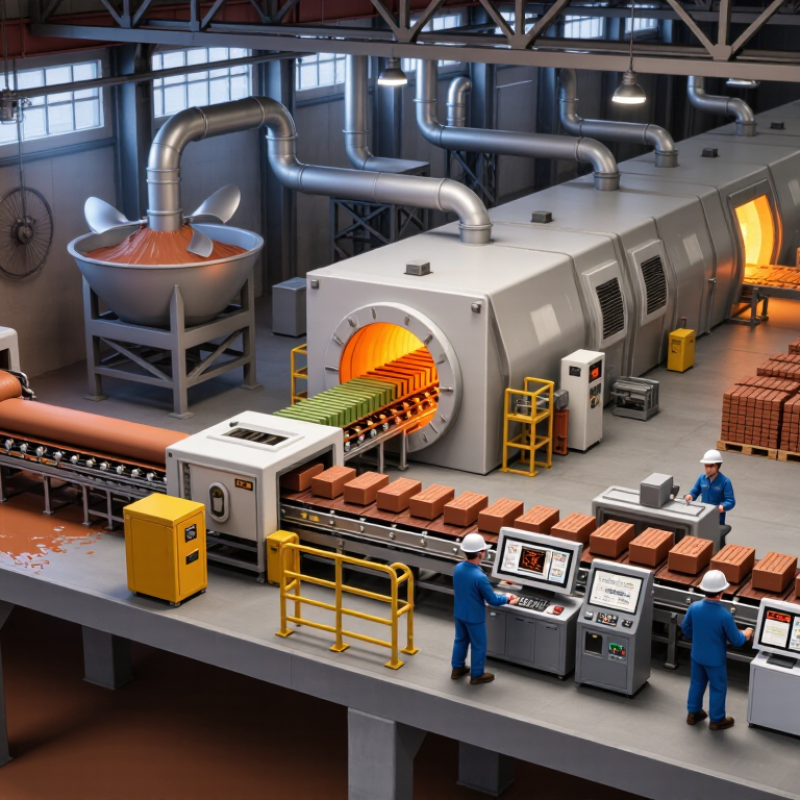
What Is a Clay Brick Production Line?

Definition and Purpose of a Clay Brick Production Line

A clay brick production line is an integrated system for turning raw clay into durable building bricks. Its purpose is to control each stage, from material preparation to final firing. The process usually includes crushing, mixing, screening, shaping, drying, and kiln firing. Raw clay enters a crusher, where stones and hard lumps are reduced. Moisture matters. Too much water causes deformation, while too little makes forming difficult. After shaping, the green bricks must dry gradually. Rapid drying may create cracks or uneven edges. Finally, a controlled kiln heats the bricks until they gain strength, color, and weather resistance.

In practice, operators monitor moisture, dimensions, drying time, and firing temperature. They check brick samples for cracks, warping, surface texture, and compressive strength. Engineers also inspect fuel use, airflow, and kiln temperature records. These checks support consistent production and safer quality decisions. Online searches often use the phrase Brick Machine Fired Clay Brick Making Machine, although technical documents may use different equipment terms. The phrase can be confusing. A useful line should match local clay properties, output needs, available energy, and maintenance skills. Cheap output is not always efficient. A poorly balanced system may waste clay, fuel, and working hours. Even a well-designed line can produce imperfect bricks when moisture or temperature changes. That weakness deserves regular review, not blind trust.

Raw Material Selection and Preparation

A clay brick production line begins with disciplined raw material selection. The USGS Mineral Commodity Summaries 2024 estimated U.S. common clay and shale output at about 24 million metric tons in 2023. This scale shows why consistent feedstock matters. Suitable clay usually contains balanced plastic minerals, sand, and natural fluxes. Excessive sand weakens shaping. Too much plastic clay causes drying cracks.

Laboratory testing should measure particle size, moisture, plasticity, soluble salts, and firing shrinkage. Mineral analysis can reveal troublesome limestone particles or organic matter. A small limestone fragment may create a visible burst after firing. That is not a minor defect. It can damage the product and disrupt the Clay Brick Kiln. The European Commission’s Ceramic Manufacturing BREF reports typical thermal energy consumption of roughly 1.5–4.0 GJ per tonne for brick and roof-tile production. Poorly prepared material can push energy use higher.

Tips: Collect samples from several quarry points, not one surface pile. Blend clay gradually. Record every moisture adjustment. Keep test bricks from each batch. There is no universal clay recipe. A blend that works in summer may fail during a wet season. This is where production planning needs humility. More testing is often cheaper than repairing a cracked kiln load.

Clay Mixing, Refining, and Moisture Control

What Is a Clay Brick Production Line?

Clay brick production begins with controlled preparation, not simply feeding soil into a machine. A Clay Brick Maker usually relies on crushers, mixers, refining units, moisture systems, forming equipment, dryers, and kilns. Each stage affects the next one.

Clay mixing determines whether the material feels uniform and workable. Operators add measured water while monitoring texture, temperature, and clay variation. The mixture should hold its shape without sticking heavily to the mixer walls. Too little water can create cracks during forming. Too much water may distort fresh bricks and extend drying time. Small changes matter.

Refining removes stones, hard lumps, and unwanted particles from the clay. Fine screening and repeated grinding help produce smoother surfaces and sharper edges. However, refining cannot repair poorly selected raw material. That point is easy to underestimate. In practice, no batch behaves perfectly. Seasonal moisture changes, uneven clay deposits, and worn refining parts can affect production. Operators should inspect the clay regularly rather than trust fixed settings.

Moisture control continues after mixing. Sensors can guide adjustments, but experienced workers still check samples by hand. A sample that breaks during compression needs more conditioning. A sample that feels oily may contain excess water. Drying should reduce moisture gradually, especially in thick bricks. Rapid drying often causes warping or internal cracks. The process looks simple from outside. It is not. Good results depend on measured water, consistent refining, and careful observation at every shift.

Brick Shaping Through Extrusion or Pressing

What Is a Clay Brick Production Line?

Brick Shaping Through Extrusion or Pressing

A clay brick production line turns prepared clay into uniform green bricks before drying and firing. Shaping is the critical control point. The European Commission’s Ceramic Manufacturing Industry BREF identifies extrusion and pressing as established forming methods for structural clay products.

Extrusion pushes plastic clay through a steel die. The die creates a continuous column with a defined profile. A cutter then divides it into individual bricks. This method suits hollow blocks and high-volume production. Moisture must remain stable. Excess water causes deformation during drying. Too little water increases cracking and machine load.

Pressing uses a measured clay charge inside a mould. Mechanical force forms each brick with consistent dimensions and sharper edges. Dry pressing requires less plastic clay, but mould wear can become expensive. The right choice depends on product geometry, moisture, capacity, and local clay behavior. There is no universal setting.

Tips: Test clay moisture at several points during each shift. Record vacuum pressure, die temperature, cutter accuracy, and rejected pieces. The U.S. EPA’s AP-42 guidance treats drying and firing as important emission sources, so shaping defects also waste energy later. A small crack may become a large kiln loss.

In practice, perfect feedstock is uncommon. Experienced operators still adjust pressure and cutting speed. Laboratory results can mislead when the quarry layer changes. Pilot trials remain essential. A production line should be judged by fired quality, not only by fresh brick appearance.

Drying Methods and Moisture Removal

What Is a Clay Brick Production Line?

Drying Methods and Moisture Removal

A clay brick production line must remove water before firing begins. Freshly extruded bricks may contain about 7% to 30% moisture, according to the U.S. EPA’s AP-42 emission factor document for structural clay products. Drying usually reduces this level to approximately 1% to 2%. The exact target depends on clay composition, brick thickness, and kiln design.

Tunnel dryers use controlled hot air, while chamber dryers handle smaller batches with greater flexibility. In practical operation, air speed matters as much as temperature. Excessive heat can dry the surface first, trapping moisture inside. Cracks may appear later. Not ideal.

The European Commission’s Ceramic Manufacturing BREF reports that drying commonly uses around 10% to 15% of a plant’s thermal energy. Uneven airflow can raise this demand. Operators should monitor brick weight, exhaust humidity, and temperature at several points. A dry outer edge is not proof of complete moisture removal. This is where experience matters.

Heat recovery from the kiln exhaust can reduce fuel use, but the recovered air must remain clean and stable. Sudden humidity changes may deform green bricks. Some production lines still rely on fixed drying schedules. That approach is convenient, yet often wasteful. Clay varies between deposits, so drying curves should be adjusted from measured data rather than habit.

Firing Bricks in Industrial Kilns

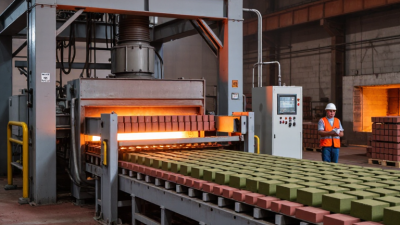
Firing is the decisive stage in a clay brick production line. Green bricks enter a tunnel kiln after drying, with moisture already reduced to prevent cracking. Industrial firing commonly occurs between 850°C and 1,200°C, depending on clay chemistry and product density. The Ceramic Manufacturing Industry BREF from the European Commission reports typical brick-firing energy use of roughly 1.5–4 GJ per tonne. That range is wide for a reason.

Kiln control matters more than simply reaching a high temperature. Burners must create a stable heat curve, while fans regulate airflow through each kiln zone. A pale core can indicate under-firing. Dark edges may signal overheating or poor circulation. The US EPA AP-42, Chapter 11.3, identifies firing as a major source of particulate matter, nitrogen oxides, sulfur oxides, and carbon monoxide in structural clay production. Operators therefore monitor oxygen, pressure, temperature, and fuel flow continuously. Small changes can affect strength, color, and water absorption.

There is no perfect firing schedule. Clay from the same site may behave differently after seasonal moisture changes. This is where production experience remains valuable. Laboratory tests guide the curve, but kiln workers still inspect brick surfaces and break samples during trials. That practical feedback can expose weaknesses that automated readings miss. Waste heat recovery also deserves attention, although installation costs and maintenance can reduce the expected benefit.

Quality Testing, Packaging, and Process Automation

What Is a Clay Brick Production Line?

Quality testing begins when freshly formed bricks leave the Clay Brick Machine. Operators check dimensions with calipers and inspect edges for cracks, warping, and uneven surfaces. Moisture sensors help control drying conditions, while sample bricks are tested for compressive strength after firing. Small differences matter. A slightly wet batch can crack inside the kiln. Routine records should include clay moisture, firing temperature, cycle time, and test results. These records support traceability and help technicians identify repeated defects.

Packaging protects the finished bricks during storage and transport. After cooling, bricks are counted, stacked on pallets, and secured with weather-resistant straps. Corner protection reduces chipped edges. Clear labels can show batch numbers, production dates, and quality grades. Dust removal before wrapping improves presentation. However, packaging still needs regular inspection. Loose straps or unstable stacks can damage good products before delivery.

Process automation connects forming, drying, firing, testing, and packaging through sensors and control systems. Temperature alarms, conveyor monitoring, and automatic counting reduce manual errors. Operators still need practical judgment. Sensors can drift, and software cannot recognize every unusual crack. A calibration check may reveal problems early. No production line is perfect. Reviewing rejected bricks honestly often improves settings more than chasing high output alone. The best results come from balanced automation, trained staff, and dependable quality records.

FAQS

What does a clay brick production line do?

It converts raw clay into finished bricks through crushing, mixing, screening, shaping, drying, and firing. Each stage affects the next.

Why is clay moisture so important?

Excess water can deform fresh bricks. Too little water makes shaping difficult. Moisture control is never perfectly simple.

How should green bricks be dried?

Dry them gradually before kiln firing. Rapid drying may create cracks, warped edges, or uneven surfaces. Slow control helps.

What temperature is commonly used for brick firing?

Industrial firing often ranges from 850°C to 1,200°C. The correct temperature depends on clay chemistry and brick density.

How can operators identify firing problems?

A pale core may indicate under-firing. Dark edges can suggest overheating or poor airflow. Breaking sample bricks can reveal hidden defects.

What quality checks are needed after forming?

Operators measure dimensions with calipers and inspect cracks, warping, and surface texture. Fired samples should also undergo strength testing.

How does packaging protect finished bricks?

Workers stack cooled bricks on pallets and secure them with weather-resistant straps. Corner protection helps prevent chipped edges during transport.

Can automation remove the need for skilled workers?

No. Sensors can monitor temperature, counting, and conveyors, but they may drift or miss unusual cracks. Human judgment still matters.

How can a production line reduce waste?

Review moisture records, firing curves, rejected bricks, and fuel use regularly. Waste heat recovery may help, but maintenance costs can weaken the benefit.

What makes a production line reliable?

Reliable results require balanced equipment, trained operators, calibration checks, and clear quality records. High output alone can hide wasted clay and fuel.

Conclusion

A Clay Brick Production Line is an integrated industrial system designed to transform natural clay and other suitable minerals into durable bricks for construction. The process begins with selecting and preparing raw materials, including crushing, screening, and removing unwanted particles. The clay is then mixed and refined to achieve a consistent texture, while moisture is carefully controlled to support stable shaping and reduce production defects.

After preparation, the material is formed into bricks through extrusion or pressing, depending on the required size and design. The shaped bricks are gradually dried to remove excess moisture and prevent cracking during firing. They are then heated in industrial kilns, where controlled temperatures develop strength, hardness, and long-term durability. Finally, the finished bricks undergo quality testing for dimensions, appearance, strength, and water absorption before being packaged and prepared for delivery. Modern process automation can monitor material flow, moisture, temperature, and production speed, helping improve consistency, efficiency, and workplace safety throughout the entire line.
Evelyn

Evelyn

Evelyn is a dedicated marketing professional at We Henan Cadier Green Building Technology Co., Ltd., where she has been instrumental in promoting the company’s innovative solutions in energy-saving and environmentally friendly wall materials since 2009. With a deep understanding of the industry and......
Previous What Is a Kiln for Burning Bricks?