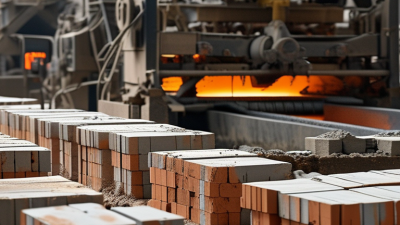
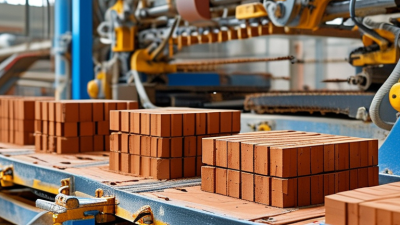
An Automatic Brick Production Line turns raw materials into masonry products that stay pretty consistent, with only limited manual handling. Typically, it covers batching, mixing, molding, pallet transfer, curing, and final stacking. And here’s the thing: each stage affects the next. Even a small shift in moisture can change brick strength, surface texture, and dimensional accuracy.
This article walks through how the system works in practical terms. We’ll look at material prep, hydraulic or vibration molding, curing chamber control, and production monitoring. Experienced operators check mix moisture, mold wear, pressure settings, and pallet alignment throughout the shift. Honestly, those details matter more than big speed claims. Reliable manufacturers also give you equipment manuals, maintenance schedules, operator training, and documented quality checks.
Automation does improve repeatability, but it doesn’t remove responsibility. No line is perfect. Dust, uneven aggregates, sensor errors, or poor curing can still lead to weak products. A thoughtful buyer should compare capacity, energy use, spare-part access, workplace safeguards, and local building requirements. You might see the phrase Ecp Production Line in related searches, but specs should always be checked against technical documents and the actual supplier. An Automatic Brick Production Line is valuable when its output matches the project, climate, raw materials, and quality expectations. Careful testing really is key. Through measured trials and regular inspection, producers can build a safer, more dependable operation—instead of trusting marketing language alone.
Defining Automatic Brick Production Lines: PLC Control and 10,000+ Bricks Daily
What Is an Automatic Brick Production Line?
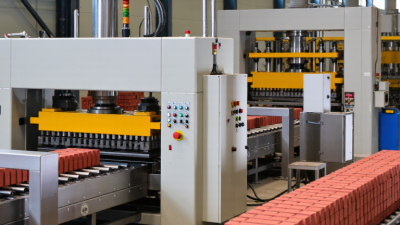
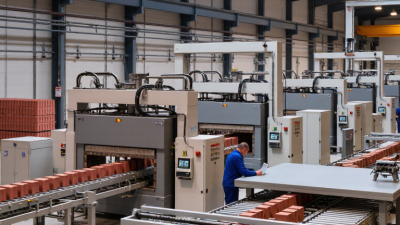
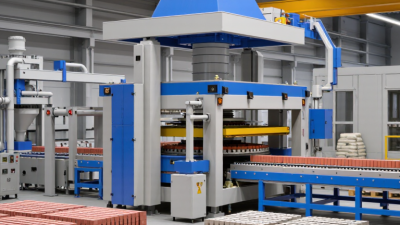
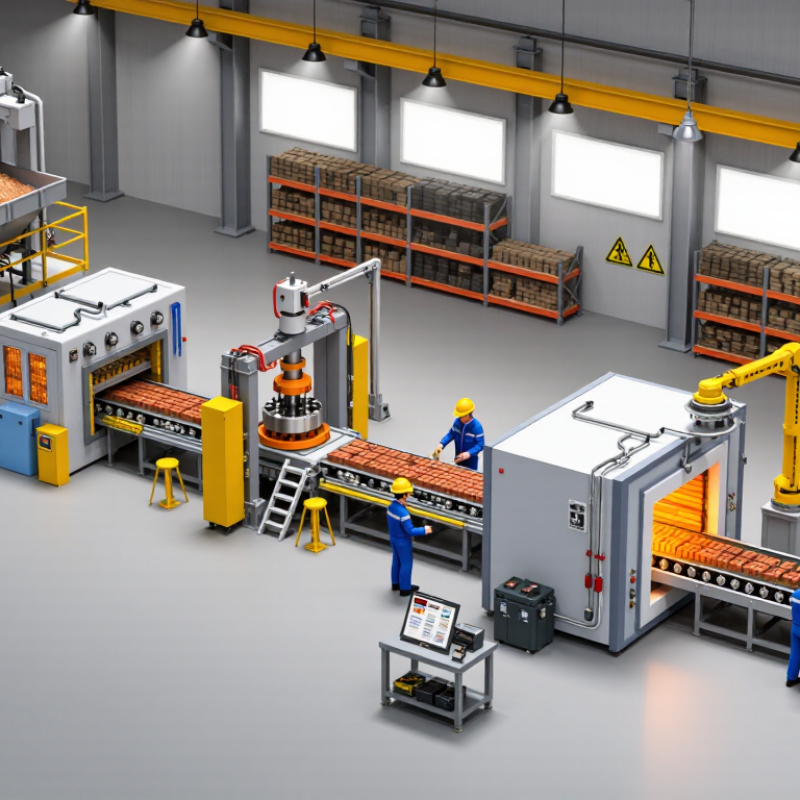
An Automatic Brick Production Line combines batching, mixing, molding, transfer, curing, and palletizing. A PLC coordinates these stages through sensors, timers, and fault alarms. Operators can monitor pressure, material flow, cycle time, and rejected units from one control panel. An Automatic Brick Machine may produce over 10,000 bricks daily, but capacity depends on mold size, cycle speed, and working hours.
Consider a ten-cavity mold running one cycle every 12 seconds. It can form about 3,000 green bricks per hour. Four productive hours could exceed 12,000 bricks. The numbers need context. Curing space, material refilling, mold cleaning, and pallet movement often reduce real output. A line producing 10,000 acceptable bricks is more valuable than one claiming 20,000 unfinished units.
Energy performance also deserves attention. The United Nations Environment Programme’s 2023 Global Status Report states that buildings and construction consumed 34% of global energy and generated 37% of energy-related and process emissions. Efficient batching, shorter idle periods, and controlled curing can reduce waste, although results vary by brick formula and climate. In practice, technicians should record hourly output, moisture content, downtime, and defect rates. Small errors matter. A poorly calibrated sensor can quietly lower quality for an entire shift. This is where PLC records help, but human review remains necessary.
Raw-Material Preparation: Crushing, Screening, and 8–12% Moisture Control
What Is an Automatic Brick Production Line?
Raw-material preparation determines whether an automatic brick line runs smoothly. Clay, shale, and sand usually pass through crushers, feeders, and vibrating screens before forming. The European Commission’s Ceramics BREF identifies preparation, drying, and firing as key stages in ceramic production. Each stage affects product quality and energy use. A Brick Machine Automatic system cannot correct poorly graded feedstock later.
Moisture control deserves close attention. Many production lines target 8–12% moisture before extrusion or pressing. At this range, particles bind without becoming overly sticky. Too little water can cause edge cracks and weak green bricks. Too much water may overload the vacuum extruder and extend drying time. The U.S. EPA AP-42, Section 11.3, lists crushing, screening, and material transfer as important dust-generating operations. Enclosed conveyors and controlled spraying help reduce visible dust. UNEP’s 2023 Global Status Report states that buildings account for about 34% of global energy demand. Therefore, every unnecessary kilogram of water can increase dryer demand. The target is practical, not sacred. Local clay can behave differently after rainfall.
Tips: Test moisture at several conveyor points, not only near the mixer. Use a calibrated moisture meter and record readings by batch. Inspect screen openings weekly. A blocked screen quietly changes particle size and forming pressure. I have found that operators often adjust water first, when worn crusher plates may be the real problem. Recheck the raw mix after maintenance, because stable numbers can still hide inconsistent material.
Raw-Material Preparation: Moisture Control in Brick Production
Crushing and screening mainly improve particle size consistency, while water addition and mixing bring the prepared material into the typical 8–12% moisture range required for stable forming and efficient compaction.
Automated Batching and Mixing for Uniform Clay Composition
What Is an Automatic Brick Production Line?
Automated Batching and Mixing for Uniform Clay Composition
An automatic brick production line begins with controlled clay preparation. Hoppers weigh clay, sand, water, and additives separately. Load cells record every batch before mixing starts. This removes much of the guesswork from manual feeding.
Uniform composition matters because moisture changes plasticity and extrusion pressure. The 2023 UNEP Global Status Report states that buildings and construction consumed over 34% of global final energy in 2022. More consistent forming can reduce rejected units, wasted fuel, and repeated firing. Small improvements matter.
The mixer should run with a defined sequence and residence time. A moisture sensor can adjust water, but it cannot replace laboratory testing. Operators still need regular checks for particle size, moisture, and plasticity. The European Commission’s Ceramic Manufacturing Industry BREF identifies raw material preparation as a key control point for ceramic quality and emissions.
Automation is not magic. Sensors drift. Clay varies between stockpiles. A practical line therefore stores batch records and flags unusual readings. That evidence supports troubleshooting and audits. However, excessive dependence on software can hide poor calibration. Manual verification remains necessary, especially after material changes or maintenance. The best systems combine accurate dosing, stable mixing, trained operators, and disciplined quality records.
Brick Forming Methods: Vacuum Extrusion and 15–25 MPa Pressing
What Is an Automatic Brick Production Line?
Brick Forming Methods: Vacuum Extrusion and 15–25 MPa Pressing
An automatic brick production line coordinates material dosing, mixing, forming, cutting, drying, and firing. Its forming section largely determines brick density, shape accuracy, and later cracking risk. Two widely used methods are vacuum extrusion and pressing at 15–25 MPa. The suitable choice depends on clay moisture, particle size, product geometry, and required output. Small details matter.
In vacuum extrusion, prepared clay moves through a de-airing chamber before entering a die. The vacuum removes trapped air and helps produce a continuous, compact column. A cutter then divides the column into green bricks with consistent dimensions. This method suits plastic clay and long, repeated profiles. It can run quickly, but moisture control is demanding. Too much water may cause deformation, while too little can overload the extruder. Operators should check die wear, vacuum stability, and cut length during each shift. Complex shapes may need careful die design and slower setup.
Pressing uses measured material charges inside a mold, applying roughly 15–25 MPa to compact each piece. It works well with semi-dry mixtures and supports sharp edges, textured faces, and controlled dimensions. Pressure is not enough. Uniform filling prevents weak corners and density differences. A line must also monitor moisture, mold clearance, press timing, and release behavior. Production trials sometimes show that higher pressure does not improve strength. Uneven moisture can still create hidden cracks. That result deserves attention. Testing should include density, size tolerance, drying loss, and fired strength before routine operation.
Controlled Drying at 100–200°C Before Kiln Firing
What Is an Automatic Brick Production Line?
Controlled Drying at 100–200°C Before Kiln Firing
An automatic brick production line shapes, transfers, dries, and fires clay units with coordinated equipment. The Automatic Brick Making Machine usually forms fresh bricks under controlled pressure. At this stage, the bricks remain fragile and contain considerable moisture.
Controlled drying at 100–200°C prepares the bricks for kiln firing. Gentle heating removes free water first, while airflow limits sudden surface shrinkage. Sensors can monitor chamber temperature, humidity, and drying time. Workers also inspect brick edges and corners for early cracks.
Drying is rarely perfectly uniform.
A practical system uses gradual temperature increases instead of immediate high heat. For example, a lower setting can stabilize wet bricks before the chamber reaches 100–200°C. Exhaust air should remove vapor without pulling moisture from the surface too quickly. Uneven stacking can create pale centers, warped sides, or hidden internal stress.
Experience shows that clay composition changes the correct drying schedule. Fine clay may need slower airflow, while coarser material can release moisture more easily. I have seen production teams adjust conveyor spacing after finding damp cores in otherwise dry bricks. That adjustment improved consistency, but it also reduced hourly output. This trade-off deserves careful review.
Kiln firing should begin only when moisture levels are acceptably low. Otherwise, trapped vapor may expand rapidly and damage the brick. Regular sampling, calibrated sensors, and documented temperature records support reliable quality control. Even a well-designed line needs human observation, because real clay rarely behaves exactly as expected.
Kiln Firing at 900–1,100°C for Strength and Dimensional Stability
What Is an Automatic Brick Production Line?
An automatic brick production line converts prepared clay into consistent, fired masonry units. Machines mix, extrude, cut, stack, dry, fire, and unload the bricks with limited manual handling. The kiln remains the critical stage. It usually fires bricks between 900 and 1,100°C, depending on clay composition, brick size, and the required performance.
At this temperature, mineral particles bond more tightly through controlled sintering. The brick gains compressive strength and resists surface damage during transport and construction. Heat must rise gradually, especially while remaining moisture leaves the green brick. Rapid heating can create internal steam pressure, cracks, or distorted edges. The heat is unforgiving.
Inside a continuous kiln, burners, fans, and sensors manage different temperature zones. Preheating removes residual moisture, the firing zone develops strength, and controlled cooling reduces thermal shock. Even airflow matters. Uneven circulation may leave one side darker or change the brick’s final dimensions. Operators should check kiln records, sample strength, water absorption, color, and dimensional tolerances after each production shift.
Experience shows that automation improves repeatability, but it cannot correct poor raw-material preparation. Clay moisture, particle size, and extrusion pressure still require careful adjustment. A perfectly uniform load is an ideal, not a daily reality. Small stacking errors can affect airflow and firing results. Periodic calibration and independent laboratory testing help confirm that the kiln is producing stable, reliable bricks rather than merely attractive ones.
Quality Control, Robotics, and Production Capacity up to 100,000 Bricks Daily
What Is an Automatic Brick Production Line?
An automatic brick production line combines material preparation, molding, handling, drying, and quality inspection. The process starts with screened soil, water, and measured stabilizing materials. Moisture sensors help maintain consistent texture during mixing. Operators record batch moisture and compression results. Small errors matter. An Automatic Mud Brick Making Machine then forms bricks under controlled pressure and cycle times. Each brick should have clean edges, even density, and stable dimensions.
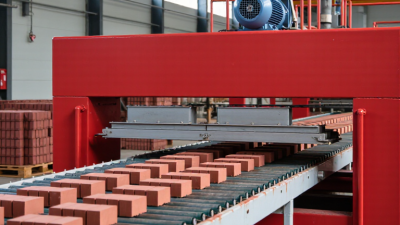
Robotic arms transfer fresh bricks onto pallets without unnecessary contact. They reduce handling damage and keep spacing consistent. Vision systems can check cracks, shape, color, and surface defects. Defective units are removed before curing or loading. This sounds perfect. It is not. Dust, uneven material, and worn molds still affect results. Experienced technicians must inspect machines, sample bricks, and adjust settings during each shift. Human judgment remains important when raw materials change.
With matched mixers, molds, conveyors, and curing areas, a line may produce up to 100,000 bricks daily. Actual capacity depends on brick size, curing time, material quality, and working hours. At this scale, a small stoppage can waste thousands of units. Production software helps track output, downtime, moisture, and rejection rates. Power interruptions and maintenance delays still require planning. A practical installation should be tested with local soil before full-scale operation.
FAQS
It mixes prepared clay, forms bricks, cuts them, dries them, fires them, and unloads finished units.
Firing at 900–1,100°C strengthens mineral particles through controlled sintering. It also improves dimensional stability and surface durability.
Yes. Remaining moisture may create internal steam pressure, cracks, or warped edges. Heat must rise gradually.
Separate zones handle preheating, firing, and cooling. Burners, fans, and sensors regulate temperature and airflow.
They should check strength, water absorption, color, cracks, and dimensions after each production shift.
No. Moisture, particle size, and extrusion pressure still need careful adjustment. Automation improves repeatability, not every decision.
Robotic arms move fresh bricks with less contact. Vision systems identify cracks, uneven shapes, color changes, and surface damage.
Some matched systems may reach that output. Actual capacity depends on brick size, curing time, material quality, and working hours.
Power interruptions, maintenance delays, poor stacking, worn molds, and inconsistent raw materials can reduce output quickly.
Local soil may change moisture behavior, strength, and firing results. Testing reveals problems before full-scale production. It is not foolproof.
Conclusion
An Automatic Brick Production Line is an integrated manufacturing system that uses PLC control to coordinate material preparation, mixing, forming, drying, firing, and quality inspection. It begins by crushing and screening raw materials, then adjusts their moisture content to approximately 8–12% for stable processing. Automated batching and mixing help maintain a consistent clay composition, while bricks are shaped through vacuum extrusion or mechanical pressing at pressures of about 15–25 MPa. These automated operations can support production exceeding 10,000 bricks per day.
After forming, the green bricks are carefully dried at approximately 100–200°C to reduce moisture and prevent cracking before kiln entry. Kiln firing at around 900–1,100°C develops the required strength, durability, and dimensional stability. Sensors, robotics, and automated quality-control procedures further improve consistency and reduce handling errors. Depending on equipment configuration and operating conditions, a modern line may achieve capacities of up to 100,000 bricks daily while maintaining efficient, repeatable production.