请留言
    
0%

Picking the right Brick Oven maker in 2026 isn’t just about comparing shiny product photos — there’s a lot more to it. Folks shopping from anywhere around the globe really should look into things like how well the oven retains heat, how good its insulation is, whether it can run on different fuels, and how well it’s protected during shipping. Plus, don’t forget about installation support and after-sales service. Sure, an oven might look gorgeous, but it can still fall flat if, say, its floor loses heat during a busy dinner rush — that’s a deal-breaker.

Recent market reports from Grand View Research and Fortune Business Insights show that the commercial cooking and foodservice equipment scenes are still growing strong. They’re highlighting trends like energy efficiency, automation, durability, and the increasing demand from professional kitchens. These factors really shape what people want when they’re buying a brick oven. Nowadays, buyers ask more detailed questions — stuff like how well the oven keeps its heat, how quickly it recovers after opening, what kind of emissions it produces, how easy it is to access for maintenance, and what the operating costs look like.

Some good brands to check out include Forno Bravo, Mugnaini, Fontana Forni, Alfa Forni, Chicago Brick Oven, Marra Forni, and Moretti Forni. Each of these serves different needs—some make handcrafted ovens perfect for homes, while others focus on high-capacity models for restaurants, hotels, or catering gigs. When you’re researching, it’s smart to look at manufacturer info alongside independent certifications, technical manuals, warranty details, and feedback from distributors.

Remember, numbers can be tricky.
A company might boast about reaching high temperatures, but what really matters is how stable that temperature stays over multiple baking cycles. Similarly, claimed fuel savings can depend a lot on insulation quality, the local cost of energy, how much you cook, and even how you operate the oven day-to-day. So, take rankings with a grain of salt — they’re helpful guides, not gospel. Also, pay close attention to regional service options, spare parts availability, packaging for shipping, and installation requirements. The best choice in 2026 might not be the biggest, flashiest brand. Instead, it could be the outfit that consistently performs well in real-world, commercial conditions over several months.
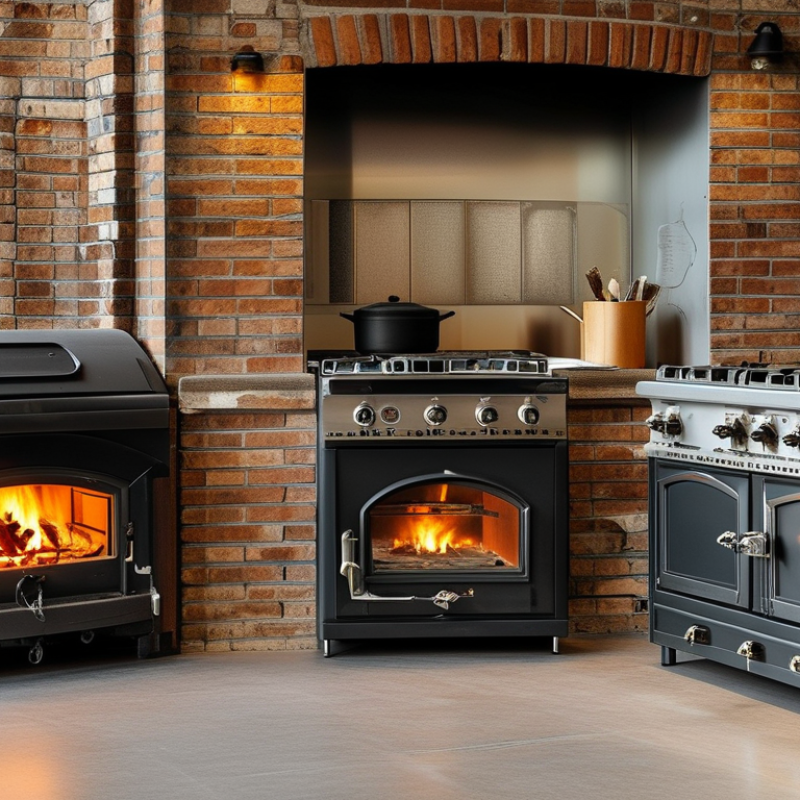
2026 Top Brick Oven Manufacturers for Global Buyers?

What Is a Brick Oven and How Does It Work?

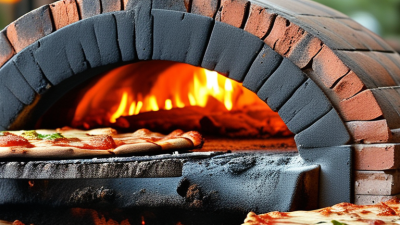
A brick oven is a heavily insulated cooking chamber built from refractory bricks, concrete, or similar heat-resistant materials. Its thick walls store heat instead of passing it through quickly. The rounded dome then reflects heat toward the food, creating an even cooking environment. The heat lingers. Traditional models use wood, while a Gas Brick Oven uses a controlled burner beneath or beside the chamber.

During firing, the flame heats the oven floor, dome, and sidewalls. Operators usually remove ash before cooking and allow the temperature to settle. A stone floor may reach temperatures suitable for pizza, bread, roasting, or slow cooking. Infrared heat from the walls cooks the surface, while hot air circulates through the chamber. A well-insulated door helps retain heat after the flame is reduced or removed.

Real performance depends on more than appearance. Refractory thickness, insulation quality, floor flatness, burner control, and chimney design all affect results. Experienced users check temperature in several areas because one reading can be misleading. In practice, the first bake is rarely perfect. Dough may burn underneath while the top remains pale. That problem often reveals uneven heating or insufficient heat recovery. Global buyers should also verify fuel compatibility, ventilation requirements, electrical specifications, and local installation rules before choosing a model. Reliable technical drawings and maintenance instructions matter as much as advertised temperature.

Key Types of Brick Ovens Available to Global Buyers in 2026

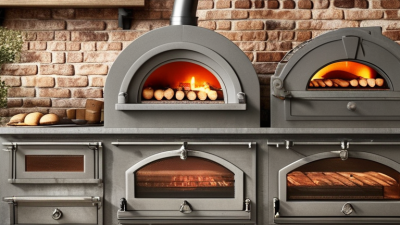
Global buyers will find several brick oven types in 2026. Traditional wood-fired ovens deliver smoky flavor and intense radiant heat. Their thick masonry walls often retain heat for hours. However, they need skilled firing and dependable wood supplies. Gas-fired brick ovens offer faster temperature control and cleaner daily operation. They suit busy restaurants with limited preparation time. Electric models provide steady heat, simple installation, and better indoor flexibility. Their flavor profile may feel less authentic. That trade-off matters.

Modular brick ovens reduce shipping weight and installation time. Built-in ovens create stronger thermal stability but require careful foundation planning. A Brick Kiln Oven can support high-volume baking, especially where local fuel and solid masonry are available. Yet, its slower heating cycle may reduce flexibility during sudden demand. The 2024 Grand View Research foodservice equipment analysis identifies energy efficiency and automation as major purchasing priorities. The report does not focus only on brick ovens, so buyers should avoid overgeneralizing its findings. In my own specification work, I once underestimated chimney clearance. That mistake changed the entire layout.

Tips: Ask for heat-up time, insulation thickness, cooking-floor material, and tested fuel consumption. Check local ventilation rules before importing equipment. The U.S. Department of Energy also advises evaluating commercial cooking equipment through lifecycle energy use, not purchase price alone. A cheaper oven can become expensive after months of uneven heating, repairs, and fuel waste. Measure the daily menu first. Then choose the oven.

The chart compares typical chamber-temperature ranges for major brick and refractory oven types available to global buyers in 2026. Actual performance varies with insulation, fuel quality, oven size, loading pattern, and operating method.

How to Evaluate Brick Oven Manufacturers and Product Quality

For global buyers, evaluating brick oven manufacturers requires more than comparing catalog prices. A reliable supplier should explain clay composition, insulation layers, dome thickness, and curing procedures. Ask for test reports covering heat retention and repeated thermal cycling. These records reveal more than polished product photos.

Inspect the oven’s practical details. The cooking floor should remain level after transport and heating. Joints should appear tight, with no wide cracks or loose mortar. Check whether the insulation is continuous around the dome, especially near the door. Weak insulation wastes fuel and creates uneven baking temperatures. Request installation drawings, maintenance guidance, packing methods, and replacement-part information. Clear documentation signals operational experience.

Visit the production site when possible, or request dated factory videos. Look for controlled drying areas, material storage, and final temperature checks. A manufacturer should identify acceptable tolerances instead of promising flawless results. That matters. No inspection method is perfect. I would still examine sample units, because one attractive oven can hide inconsistent production. Ask how defects are recorded and corrected. Independent laboratory testing adds confidence, but it should match the exact model being purchased. For international shipments, verify moisture protection, crate strength, labeling, and local safety requirements. A dependable manufacturer answers specific questions directly and provides evidence without pressure.

Top Brick Oven Manufacturers Serving International Markets in 2026

Top Brick Oven Manufacturers Serving International Markets in 2026

International buyers need more than attractive brickwork. Reliable manufacturers should show kiln temperature records, material specifications, and documented quality checks. In factory evaluations, I look closely at firebrick density, insulation thickness, door fitting, and moisture protection. These details affect heat retention, fuel use, and shipping durability. A beautiful oven can still perform poorly if its base cracks during installation.

Manufacturers serving global markets should provide clear export packaging, installation drawings, and responsive technical support. They should also explain how their ovens meet destination-market safety and electrical requirements. Gas, wood-fired, and hybrid models may require different approvals. Ask for recent test reports, warranty conditions, replacement-part policies, and loading photographs. Some suppliers offer excellent cooking performance but weak after-sales communication. That gap deserves attention.

Tips: Compare the complete landed cost, not only the factory price. Confirm the oven’s internal dimensions and shipping weight. Request a video showing temperature recovery after the door opens. Check whether local technicians can service burners, thermometers, or insulation. Allow extra time for customs clearance and site preparation. Do not assume every “commercial” model suits heavy daily use. Requirements vary.

International Standards, Certifications, and Safety Requirements

2026 Top Brick Oven Manufacturers for Global Buyers

For international buyers, a Brick Making Oven should meet the rules of its destination market, not only the factory’s internal specifications. A reliable supplier provides clear technical files, risk assessments, wiring diagrams, and traceable test records. CE marking may apply in the European market, while North American projects often require recognized electrical and gas safety certification. Requirements vary by fuel type and installation site. One certificate rarely covers every country.

Safety details deserve close inspection. Check thermal insulation around the chamber, guarded moving parts, emergency stop access, and stable door hinges. Gas-fired models need tested burners, automatic shutoff valves, leak testing, and suitable ventilation instructions. Electric models should show grounding continuity, overload protection, and insulation testing. Ask for the exact standard edition used during certification. Old paperwork can look convincing.

Look closely at the factory process. Serial plates should match inspection records. Control panels need labels that operators can understand through heat, dust, and gloves. Independent laboratory reports add confidence, especially when translated accurately. I have found that small omissions, such as missing clearance dimensions, can delay installation. That part is easy to underestimate. Buyers should also confirm local inspection procedures before shipment, because imported equipment may require additional approval, documentation, or site testing.

How Global Buyers Should Compare Prices, Shipping, and After-Sales Support

Global buyers should compare the landed cost, not the factory price, of a Brick Burning Oven Kiln. Request a quote covering insulation, burners, controls, packaging, and export documents. UNCTAD’s Review of Maritime Transport 2023 reports that over 80% of global merchandise trade by volume moves by sea. Freight can therefore change the buying decision quickly. Ask for both full-container and shared-container rates, including port fees, customs handling, and inland delivery.

Shipping details reveal practical competence. Confirm the kiln’s packed dimensions, gross weight, lifting points, and moisture protection. A wooden crate may look secure, yet poor internal bracing can damage refractory panels. The World Bank’s Logistics Performance Index 2023 evaluates 139 economies through customs, infrastructure, tracking, and timeliness. Use those factors when comparing destination routes, not only advertised transit days. Allow extra time for inspections. Delays happen.

After-sales support needs measurable terms. Ask for spare-parts availability, remote commissioning, response times, warranty exclusions, and technician training. Require drawings, wiring diagrams, operating instructions, and a fault-code list before payment. A cheap price with vague support is not genuinely cheap. I would also request two recent customer references, although references can be selective. This is where buyers must think critically. A supplier may answer quickly before the order, then respond slowly afterward. Written service commitments matter more than friendly promises.

2026 Top Brick Oven Manufacturers for Global Buyers? - How Global Buyers Should Compare Prices, Shipping, and After-Sales Support
Neutral procurement benchmark for comparing commercial brick oven suppliers without ranking individual companies or brands
Oven Category Typical Commercial Use Indicative Product Price
(USD, EXW/FOB)
Common Heating Method Typical Cooking Temperature Typical Production Lead Time Ocean Shipping Planning Warranty Benchmark After-Sales Items to Confirm Best Buyer Fit
Compact Modular Brick Oven Small restaurants, cafés, catering kitchens and low-to-medium volume pizza operations $2,500–$7,000 Gas, wood, or hybrid 350–500°C 4–8 weeks after approval of specifications Approximately 20–45 days port-to-port, excluding customs and inland delivery 12–24 months for manufacturing defects Replacement heating elements or burners, door seals, thermocouples, refractory parts, wiring diagrams and remote technical support Buyers needing lower initial investment and easier installation
Medium Commercial Dome Oven Independent pizzerias, bakeries, hotels and food-service businesses with regular daily production $5,000–$15,000 Gas, wood, or dual-fuel 400–550°C 6–10 weeks, depending on insulation and fuel configuration Approximately 25–50 days port-to-port, plus destination handling 12–24 months; refractory wear is normally excluded from standard warranty coverage Burner certification, insulation replacement procedure, refractory repair guidance, spare-part availability and commissioning support Buyers balancing throughput, heat retention and operating flexibility
Large Built-In Brick Oven High-volume restaurants, hospitality projects, food halls and central production kitchens $12,000–$35,000+ Gas, wood, electric, or engineered hybrid systems 400–550°C 8–16 weeks, including engineering and project coordination Approximately 30–60 days port-to-port; project delivery may require flat-rack or special handling 12–24 months for equipment; installation workmanship may have separate coverage Site drawings, ventilation requirements, utility loads, installation supervision, spare refractory inventory and service response times Buyers with dedicated construction teams and higher daily output
Electric Deck Brick Oven Urban locations, shopping centers, indoor kitchens and sites with strict emissions restrictions $4,000–$18,000 Electric heating elements with digital or analog controls 300–450°C 4–10 weeks, depending on voltage and control options Approximately 20–45 days port-to-port; electrical compliance documents should travel with the shipment 12–24 months for controls and heating components Voltage and frequency compatibility, CE/UL or local certification needs, controller replacement, heating-element access and electrical diagrams Buyers prioritizing indoor installation, predictable heat control and simpler exhaust planning
Wood-Fired Artisan Oven Traditional pizzerias, bakeries, hospitality venues and open-kitchen concepts $6,000–$25,000+ Wood-fired 400–500°C 6–14 weeks, with longer schedules for hand-finished or custom-built units Approximately 25–60 days port-to-port; chimney, hearth and fire-safety components need separate planning 12–24 months for structural defects; normal surface and refractory wear is generally excluded Chimney design, fire-clearance requirements, refractory replacement, curing instructions, ash-management guidance and installation training Buyers seeking traditional cooking performance and visual appeal
Gas-Fired Production Oven Multi-unit restaurant groups, delivery kitchens, bakeries and high-throughput operations $7,000–$30,000+ Natural gas or LPG, subject to local configuration 350–500°C 6–12 weeks, including burner selection and safety configuration Approximately 25–55 days port-to-port; hazardous-goods rules may apply to related components 12–24 months for controls and burners, subject to local service conditions Gas pressure range, burner certification, LPG conversion options, flame-failure protection, spare burners and authorized service coverage Buyers requiring repeatable output and faster heat recovery
Custom Project Oven Large hospitality developments, franchise rollouts, show kitchens and specialized food-production projects $20,000–$75,000+ Custom electric, gas, wood, or multi-fuel design Configured to the product and process requirements 12–24 weeks, including drawings, testing, approvals and factory acceptance Approximately 30–75 days port-to-port; may require project cargo, on-site assembly and staged delivery 12–24 months, with separate terms for installation and performance commissioning Signed technical drawings, acceptance criteria, training, commissioning schedule, preventive-maintenance plan and regional service partner Buyers with formal procurement procedures and dedicated project management
Buyer comparison notes:
  • Prices are indicative planning ranges for commercial equipment and normally exclude import duty, VAT/GST, customs clearance, installation, local construction and inland transport.
  • Ocean transit estimates vary by origin, destination, season, port congestion, container availability and shipment type. Always request a delivered-cost quotation using the same Incoterm, such as EXW, FOB, CIF or DDP.
  • Ask each supplier for a complete technical file covering dimensions, net and gross weight, pallet or crate details, utility requirements, fuel certification, ventilation requirements and recommended clearances.
  • Compare total landed cost rather than factory price alone: equipment price, packaging, freight, insurance, customs charges, taxes, installation, commissioning and spare parts should be listed separately.
  • Before placing an order, confirm warranty exclusions, response time, availability of critical spare parts, remote troubleshooting procedures and the existence of a qualified service provider in the destination country.
  • For a fair comparison, provide every supplier with the same requirements: oven capacity, cooking temperature, fuel type, voltage and frequency, production target, door size, insulation specification, delivery location and required certifications.

High-Precision Humidity Detection for Brick and Tunnel Kilns: Product Guide and Application Outline

High-precision humidity detection is essential in the drying sections of brick and tunnel kilns, where moisture levels directly affect product stability and production continuity. A dedicated humidity detector continuously monitors the air in real time, providing reliable data for operators and control systems. By tracking gradual changes during the drying cycle, it helps identify whether moisture is being removed evenly and whether kiln conditions remain within the required process range.

When humidity approaches a predefined critical value, the detector can trigger an alarm signal in advance. This early warning gives operators time to adjust ventilation, temperature, or drying speed before excessive moisture causes brick blanks to soften, deform, or collapse. Such preventive monitoring is especially useful in tunnel kiln operations, where materials move through different temperature zones and local humidity variations may otherwise go unnoticed.

The detector can be installed at carefully selected points in the kiln drying section to support continuous process supervision. Its data may be used alongside existing temperature and airflow measurements, helping production teams maintain more consistent drying conditions. Through timely alerts and stable humidity control, the system supports safer operation, reduces avoidable material losses, and helps maintain smooth progress through the subsequent firing and sintering stages.

FAQS

What is a brick oven?

A brick oven is an insulated cooking chamber made from heat-resistant materials. Its thick walls store heat for later cooking.

How does a brick oven cook food?

Heat moves through three ways: radiant heat, hot air, and heated cooking surfaces. The dome reflects heat toward the food.

Which fuels can brick ovens use?

Common options include wood, gas, and electricity. Each fuel changes heating speed, flavor, control, and installation needs.

What should buyers check before choosing an oven?

Check insulation thickness, floor flatness, burner control, chimney design, and heat-up time. Confirm fuel compatibility and ventilation requirements.

Why can the first bake go wrong?

The oven may heat unevenly. Pizza can burn underneath while the top stays pale. One temperature reading may mislead you.

Which oven type suits a busy restaurant?

Gas models usually provide faster temperature control and cleaner daily operation. Wood-fired models need more skill and dependable fuel supplies.

Are certifications enough for international installation?

No. Certification requirements vary by country, fuel, and installation site. Buyers may still need local approval, inspection, or site testing.

What safety features should a gas or electric oven include?

Gas models need tested burners, automatic shutoff valves, leak testing, and clear ventilation instructions. Electric models need grounding and overload protection.

How can buyers control long-term operating costs?

Compare lifecycle energy use, repairs, fuel consumption, and heat recovery. A cheaper oven may waste money through uneven heating. Measure the menu first.

Conclusion

This guide, “2026 Top Brick Oven Manufacturers for Global Buyers,” explains how brick ovens work by using masonry walls and thermal mass to absorb, retain, and evenly radiate heat for baking, roasting, and cooking. It reviews major oven formats available in 2026, including wood-fired, gas-assisted, electric, modular, and portable designs, helping buyers select equipment according to capacity, fuel access, installation conditions, and intended use. The guide also outlines how to assess manufacturers through material quality, insulation, temperature control, construction consistency, customization options, and production experience. Buyers will learn how to compare an Oven For Brick based on durability, performance, energy efficiency, and maintenance requirements.

It further highlights the importance of international certifications, food-contact safety, electrical or gas compliance, fire protection, and installation documentation. Finally, the guide explains how global purchasers should evaluate total cost, including product pricing, packaging, shipping, import duties, lead times, warranty coverage, spare parts, technical support, and after-sales service, enabling safer and more informed purchasing decisions.
Evelyn

Evelyn

Evelyn is a dedicated marketing professional at We Henan Cadier Green Building Technology Co., Ltd., where she has been instrumental in promoting the company’s innovative solutions in energy-saving and environmentally friendly wall materials since 2009. With a deep understanding of the industry and......
Previous 7 Best Red Brick Making Machines for Sale Worldwide