请留言
    
0%

Picking the right Tunnel Kiln manufacturer? That choice can shape your product quality, energy use, and how steady your factory runs for years. And no, it’s not just about kiln length or the quoted price. You’ve got to think about firing temperature, material flow, insulation, automation, maintenance access, and after-sales support.

Fortune Business Insights put the global ceramics market at about $307.77 billion in 2023. Their report also predicts strong growth through 2032. That kind of expansion puts more pressure on factories to raise output without letting consistency slip. The European Commission’s Ceramic Manufacturing BREF flags firing as a major energy-consuming stage. IEA industrial energy studies also stress efficiency, electrification, and measurable process control. So technical evaluation isn’t optional—it’s essential.

Ceramic process engineer Dr. Michael J. O’Driscoll puts it well: “A kiln is a production system, not merely a heating chamber.” That’s worth remembering. A reliable Tunnel Kiln should keep temperatures even across loaded cars, cut heat loss, and give you operating data you can actually use. Buyers should look at test-firing records, refractory specs, burner performance, control systems, and documented service response times. Ask for evidence.

Not promises.

This article offers seven practical tips for comparing Tunnel Kiln Manufacturers. It looks at engineering experience, fuel flexibility, automation, total ownership cost, and installation support. Some buyers still fixate on the initial quotation. Fair enough—but that’s only part of the picture. A cheaper kiln can get expensive fast when spare parts show up late, firing curves drift, or operators don’t get proper training. And let’s be honest: no checklist removes every risk. Careful factory visits and sample testing still matter.
7 Tips for Choosing Tunnel Kiln Manufacturers?

Define Your Tunnel Kiln Production Requirements

7 Tips for Choosing Tunnel Kiln Manufacturers

Define Your Tunnel Kiln Production Requirements

Before comparing manufacturers, define the product, output, and firing conditions clearly. Record the daily tonnage, product dimensions, moisture content, and acceptable firing shrinkage. A kiln designed for thin wall tiles may perform poorly with dense bricks. That mismatch becomes expensive quickly.

Specify the firing temperature and curve, not only the maximum temperature. Include heating rate, soaking time, cooling speed, kiln atmosphere, and expected temperature uniformity. The U.S. Department of Energy reports that process heating uses about half of manufacturing energy, so fuel type and heat recovery deserve serious attention. Ask for measured fuel consumption per tonne, not optimistic estimates. Also request data under your actual production load.

IEA industry reports identify industrial operations as responsible for roughly one-quarter of global energy-related emissions. Your requirements should therefore include oxygen control, exhaust treatment, insulation quality, and future emissions monitoring. Check conveyor width, car spacing, burner zones, automation, spare parts, and maintenance access. A narrow inspection door may look minor during purchasing, then frustrate every service visit. I have seen technically impressive kilns fail because factory layout and loading equipment were ignored. That part is easy to overlook. Leave room for expansion, but do not pay for unused capacity. Independent trial firing, documented test results, and references from comparable products provide stronger evidence than brochures. Consider requiring performance guarantees tied to output, energy use, temperature uniformity, and product quality.

Compare Kiln Types, Sizes, and Technical Specifications

Choosing a tunnel kiln manufacturer requires more than comparing advertised output. Study the kiln type, heating method, and material flow. A Gas Tunnel Kiln may suit continuous production, especially when stable firing temperatures and efficient fuel use matter. Electric tunnel kilns can provide clean temperature control, but operating costs may rise in energy-intensive applications. Ask how each design handles your specific products, not just standard test pieces.

Size affects both capacity and consistency. Compare kiln width, effective length, firing zone length, and usable car height. A larger chamber is not always better. Empty space can increase heat loss and slow temperature recovery. Check hourly output using your actual product dimensions, stacking pattern, and moisture level. Request temperature uniformity data from several kiln zones. A reliable manufacturer should explain the test method and provide operating ranges.

Technical specifications deserve careful reading. Review maximum firing temperature, control accuracy, insulation thickness, burner or heating-element layout, car speed, cooling performance, and maintenance access. Inspect sample process records if possible. Small details matter, such as door sealing and thermocouple placement. I have found that attractive efficiency figures can hide difficult cleaning work or frequent adjustments. Leave room for doubt. A practical factory visit, operator interview, and trial firing may reveal weaknesses that a specification sheet cannot show.

Assess Manufacturer Experience and Engineering Capabilities

Choosing a tunnel kiln manufacturer starts with evidence, not brochure language. Ask how many comparable kilns they have commissioned, where, and for which products. Product density, moisture, firing temperature, fuel mix, and output can change the design. Request reference contacts and performance records after 12 months, not only factory acceptance data. Real experience includes awkward details.

Tip: Ask for a heat-balance example. It should show useful heat, wall losses, exhaust losses, cooling-air recovery, and expected fuel consumption. The International Energy Agency reports that industry uses nearly 40% of global final energy. Small thermal losses deserve serious attention. Compare assumptions carefully. A polished spreadsheet can still hide weak inputs.

Assess the engineering team behind the kiln. Can it model airflow, pressure zones, burner placement, refractory expansion, and control-loop response? The U.S. Department of Energy’s Industrial Decarbonization Roadmap identifies efficiency, electrification, and process integration as major industrial pathways. A capable manufacturer should connect these ideas to your plant. Test their troubleshooting depth with uneven firing or unstable pressure. Listen for measured diagnosis, temporary safeguards, and permanent corrective action. I would not trust a perfect forecast. Kilns age, operators improvise, and raw materials vary.

Verify Energy Efficiency, Automation, and Safety Features

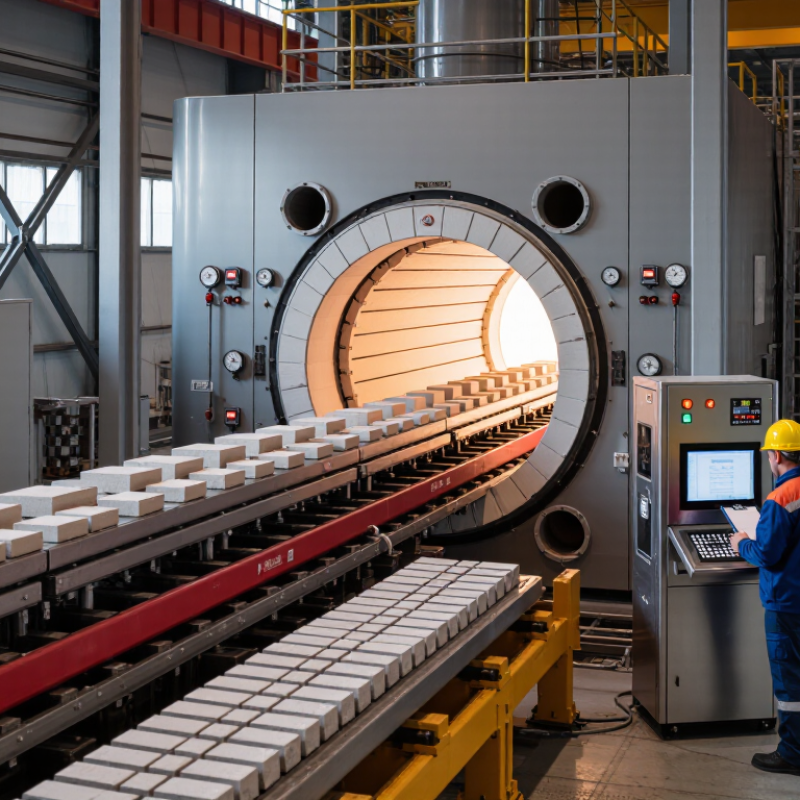
Choosing a Tunnel Kiln Plant requires more than comparing production capacity or quoted prices. Energy efficiency should be verified through measured fuel consumption, heat recovery data, and stable temperature records. Ask the manufacturer for recent operating results from a similar kiln. A glossy brochure is not proof. Check whether insulation limits heat loss around doors, kiln cars, and cooling zones. Efficient burners should adjust automatically when the load changes. This can reduce wasted fuel and uneven firing.

Automation should support operators, not simply add screens and buttons. Inspect the control system during a factory visit. Look for temperature sensors, pressure monitoring, alarm history, and clear manual override procedures. The system should record firing curves and identify abnormal changes quickly. Safety deserves equal attention. Confirm emergency stops, guarded moving parts, gas leak detection, ventilation, and automatic fuel shutoff. Ask how often these devices are tested and who signs the records.

Speak with the engineering team about maintenance access and spare sensor availability. Their answers often reveal more than a sales presentation. I would also request a risk assessment and operator training plan before signing. Some suppliers underestimate cleaning time around burners and sensors. That mistake can increase downtime later. A reliable manufacturer explains limitations openly and provides evidence, not confident promises. Small details matter.

7 Tips for Choosing Tunnel Kiln Manufacturers

Recommended procurement weighting for verifying energy efficiency, automation, safety, and long-term operating reliability.

How to use this chart: Give the highest attention to measurable energy performance, process automation, safety interlocks, and after-sales support. Ask manufacturers for kiln energy consumption in kWh per tonne, temperature uniformity records, automation coverage, safety validation documents, spare-parts availability, and references from comparable production lines.

Review Material Quality, Customization, and Manufacturing Standards

Choosing a Brick Tunnel Kiln manufacturer requires more than comparing prices. Material quality affects heat retention, service life, and firing consistency. Ask for refractory brick grades, insulation density, steel thickness, and supplier test reports. Touching sample materials or visiting an operating kiln can reveal details that brochures often hide.

Tip 1: Check thermal materials carefully. High-quality insulation should resist cracking near burners and doors. Tip 2: Request customization drawings. Kiln length, firing temperature, fuel type, product size, and loading method must match your process. A useful manufacturer should explain airflow changes, not simply accept every request. Tip 3: Review control-system flexibility. Temperature zones, sensors, alarms, and data records should support practical production decisions.

Manufacturing standards deserve equal attention. Tip 4: Confirm welding inspections, dimensional checks, pressure testing, and electrical safety procedures. Tip 5: Ask how components are documented and replaced. Clear manuals and labeled wiring save time during maintenance. Tip 6: Examine trial-firing procedures using your actual products. Results should include temperature uniformity, fuel consumption, and defect rates. Tip 7: Speak with technical staff after installation, not only sales representatives. Their answers may show real experience.

Do not trust perfect promises.

A small weakness in insulation or calibration can become expensive later. I would also check whether the manufacturer records design changes and accepts reasonable corrections. Standards matter, but disciplined follow-through matters more. The strongest evaluation combines material evidence, customization logic, factory inspection, and measurable testing.

Evaluate Installation Support, Maintenance, and Spare Parts

Choosing a tunnel kiln manufacturer requires more than comparing heating capacity and quoted price. Installation support often determines the first year’s performance. The U.S. Department of Energy’s 2017 Bandwidth Study estimates that process heating consumes about 51% of U.S. manufacturing energy. A poorly tuned Tunnel Kiln Burner can therefore create expensive fuel losses. Ask whether the supplier provides site supervision, commissioning records, airflow testing, and operator training.

Maintenance planning should begin before shipment. Request a recommended inspection schedule for burners, thermocouples, fans, seals, and refractory zones. The supplier should explain alarm logic and show real service response times. Deloitte’s maintenance research indicates that predictive maintenance can reduce downtime and maintenance costs, although results depend heavily on data quality and technician skills. That limitation matters. A dashboard alone will not repair a cracked thermocouple connection.

Spare parts deserve a written agreement. Check local stock, delivery targets, part interchangeability, and storage conditions. Ask for at least two years of critical-spares recommendations, including burner nozzles, ignition units, sensors, and control modules. Confirm whether obsolete components receive approved replacements. The U.S. Department of Energy also emphasizes measurement and control in process-heating efficiency, so suppliers should provide calibration procedures and energy-performance benchmarks. A low initial price can still become costly when one unavailable sensor stops production for three days. Forecasts are never perfect; honest suppliers explain their assumptions.

Compare Total Costs, Delivery Terms, and Customer References

When choosing tunnel kiln manufacturers, compare the complete ownership cost, not only the quotation. The IEA reports that industry uses about 37% of global final energy. Kiln efficiency therefore affects years of operating expense. Request fuel consumption per tonne, installed power, refractory replacement intervals, labor needs, and expected output at your actual firing curve. A low purchase price can become expensive after burner upgrades, heat loss, or repeated shutdowns.

Tip 1: Build a five-year cost sheet. Include freight, installation, commissioning, spare parts, energy, maintenance, and lost production. Ask manufacturers to state assumptions clearly. They may not match your factory conditions.

Tip 2: Examine delivery terms line by line. Confirm the shipping point, insurance responsibility, unloading equipment, customs documents, and acceptance tests. The World Bank’s 2023 Logistics Performance Index shows that logistics reliability differs significantly between markets. A promised delivery date means little without milestones for drawings, fabrication, inspection, shipment, and site installation. Keep a contingency allowance; my own procurement reviews often underestimated civil-work delays.

Tip 3: Check customer references with similar products and firing temperatures. Speak with operators, not only sales teams. Ask about temperature uniformity, fuel consumption, response time, and parts availability after commissioning. Request production records where possible. Three references are useful, but one honest failure report may reveal more than polished testimonials. Also verify whether the quoted capacity reflects stable production or a short trial run.

7 Tips for Choosing Tunnel Kiln Manufacturers? - Compare Total Costs, Delivery Terms, and Customer References
A practical comparison table for evaluating tunnel kiln suppliers without relying on brand names
Tip Evaluation Dimension What to Compare Relevant Data or Benchmark Documents or Evidence to Request Decision Rule
1 Define the required production capacity Compare rated output, product size, firing temperature, firing cycle, loading method, and kiln utilization assumptions. Require capacity to be stated in finished product per day or per year, with product moisture, dimensions, and firing schedule clearly specified. Technical data sheet, heat-balance calculation, kiln layout, product loading plan, and a written list of operating assumptions. Reject quotations that provide only a kiln length or burner quantity without a verifiable finished-output calculation.
2 Compare total cost of ownership Review equipment price together with civil works, insulation, burners, controls, installation, commissioning, utilities, spare parts, and training. Ask for a five-year cost model covering purchase cost, fuel or electricity, labor, scheduled maintenance, major wear parts, and estimated downtime. Itemized commercial offer, energy-consumption guarantee, utility list, spare-parts schedule, maintenance plan, and exclusions. Select the offer with the lowest verified cost per finished product, not necessarily the lowest initial purchase price.
3 Verify energy performance Compare fuel type, burner control, insulation thickness, heat recovery, exhaust treatment, temperature uniformity, and control-system capability. Energy figures should be linked to a defined product, firing curve, kiln loading, moisture level, ambient condition, and fuel specification. Energy test protocol, heat-balance report, burner specifications, temperature-mapping records, and sample performance data from comparable installations. Treat unsupported energy-saving percentages as marketing claims until confirmed by a defined test method or acceptance test.
4 Review delivery terms and project schedule Compare design approval, manufacturing, factory testing, shipping, site installation, commissioning, and performance-acceptance milestones. The contract should identify a delivery point, responsible party for transport and insurance, customs responsibility, installation scope, and delay remedies. Gantt schedule, Incoterms® selection, packing list format, factory-acceptance-test procedure, commissioning plan, and liquidated-damages clause. Prefer a schedule with measurable milestones and dependencies rather than a single unqualified promise such as “delivery in several months.”
5 Assess automation and technical support Compare PLC and HMI functions, recipe management, alarm history, remote diagnostics, data logging, backup procedures, and operator training. Confirm whether the control system records temperature, pressure, fuel flow, alarms, and firing recipes at a useful time interval for troubleshooting. Control-system architecture, I/O list, cybersecurity and remote-access policy, training agenda, software backup procedure, and service-response terms. Choose a system that local operators can run safely and that maintenance staff can diagnose without depending entirely on remote assistance.
6 Check customer references objectively Speak with customers operating similar products, capacities, fuels, climates, and production schedules rather than relying only on showroom visits. Request at least three relevant references and ask about actual output, energy use, commissioning duration, unplanned downtime, spare-part availability, and service quality. Permission to contact references, anonymized performance records, commissioning report, acceptance-test results, warranty-claim history, and maintenance log samples. Give greater weight to independently verified operating results than to photographs, testimonials, or a general list of installations.
7 Protect quality, warranty, and long-term service Compare product-uniformity commitments, temperature tolerance, refractory warranty, burner warranty, spare-parts lead time, and after-sales coverage. Define measurable acceptance criteria such as throughput, fuel consumption, temperature uniformity, product quality rate, noise, emissions, and availability. Warranty terms, exclusions, acceptance-test procedure, recommended critical spares, service-level agreement, escalation contacts, and operator manuals. Do not sign final acceptance until agreed performance indicators are tested, documented, and linked to payment or corrective-action obligations.
Comparison reminder: Cost, delivery time, energy use, and performance data are meaningful only when the compared quotations use the same product specification, capacity, firing cycle, utility assumptions, installation scope, and acceptance criteria.

China Suppliers’ Integrated Drying & Firing Tunnel Kilns: Insights from Freedonia’s Brick and Block Market Report

China’s brick and block industry is evolving as manufacturers respond to demand for greater efficiency, consistent quality, and more responsible energy use. Insights associated with Freedonia’s Brick and Block Market Report point to the importance of production modernization, especially for suppliers serving construction markets that require reliable output and competitive operating costs. In this environment, integrated drying and firing tunnel kilns offer a practical pathway for factories seeking to upgrade their manufacturing systems.

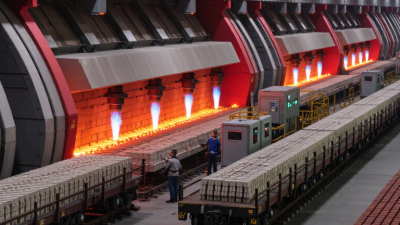
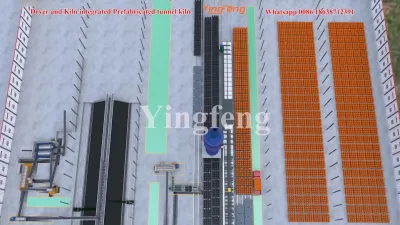
The Drying and Firing Integrated Tunnel Kiln combines green-body feeding, drying, preheating, sintering, and cooling within one continuous kiln structure. By eliminating repeated transfers and stacking between separate chambers, the system reduces handling requirements, saves floor space, and simplifies plant planning. Its design also recovers heat from the firing process, helping reduce energy consumption by more than 20% compared with conventional tunnel kiln arrangements. Lower civil construction costs and reduced equipment investment make the solution particularly suitable for small and medium-sized brick manufacturers.

An automated control system supports stable 24-hour operation, precise firing cycles, and a more uniform temperature field. These features can improve brick strength, density, dimensional stability, and surface appearance while reducing labor intensity and production variations. For Chinese suppliers producing sintered bricks from coal gangue, shale, or clay, the integrated kiln provides a cost-effective option for improving productivity and responding to changing market expectations.

FAQS

How can I assess a tunnel kiln manufacturer’s real experience?

Ask how many comparable kilns they have commissioned. Request locations, product types, firing temperatures, and production records. A 12-month record matters. Speak with operators, not only sales staff. Their practical comments may reveal problems hidden in polished brochures.

What technical information should the manufacturer provide?

Request a heat-balance example showing useful heat, wall losses, exhaust losses, cooling-air recovery, and fuel consumption. Check every assumption carefully. A neat spreadsheet can still contain weak inputs. The design should reflect product density, moisture, firing temperature, fuel mix, and required output.

How can I test the engineering team’s problem-solving ability?

Ask how they would diagnose uneven firing or unstable pressure. Listen for airflow modeling, pressure-zone analysis, burner placement, refractory expansion, and control-loop response. A strong answer should separate temporary safeguards from permanent corrections. Perfect forecasts deserve skepticism.

What installation support should be included?

Confirm site supervision, commissioning records, airflow testing, and operator training. Ask who adjusts the kiln during the first production runs. A poorly tuned burner can waste fuel. Small settings matter.

Which maintenance details should I request before purchasing?

Obtain inspection schedules for burners, thermocouples, fans, seals, and refractory zones. Ask for alarm logic, calibration procedures, and realistic service response times. A dashboard cannot repair a cracked thermocouple connection. Data quality and technician skills still matter.

How should I evaluate spare-parts support?

Request at least two years of critical-spares recommendations. Include nozzles, ignition units, sensors, and control modules. Confirm local stock, delivery targets, interchangeability, and storage conditions. Ask how obsolete components receive approved replacements. One missing sensor could stop production for three days.

What costs belong in a five-year ownership comparison?

Include freight, installation, commissioning, energy, labor, maintenance, spare parts, refractory replacement, and lost production. Compare fuel use per tonne and installed power at your actual firing curve. A low purchase price may age badly. My own estimates would include more contingency next time.

Which delivery and customer-reference questions are most useful?

Review shipping terms, insurance responsibility, unloading equipment, customs documents, and acceptance tests. Request milestones for drawings, fabrication, inspection, shipment, and site installation. Speak with references using similar products and firing temperatures. Ask about uniformity, fuel use, response time, and parts availability. One honest failure report may teach more than three testimonials.

Conclusion

Choosing the right Tunnel Kiln Manufacturers is essential for achieving stable production, consistent product quality, and long-term operating efficiency. Begin by defining your production capacity, material type, firing temperature, product dimensions, and expected output. Then compare suitable kiln types, sizes, and technical specifications to ensure the equipment matches your process. It is also important to assess each manufacturer’s experience, engineering capabilities, and ability to provide practical solutions for your facility.

Pay close attention to energy efficiency, automation, temperature control, and safety features, as these directly influence operating costs and production reliability. Review the quality of construction materials, customization options, and manufacturing standards before making a decision. You should also confirm the availability of installation guidance, maintenance services, technical support, and spare parts. Finally, evaluate the total investment, delivery terms, warranty conditions, and customer references to select a dependable supplier that can support your production goals over the long term.
Evelyn

Evelyn

Evelyn is a dedicated marketing professional at We Henan Cadier Green Building Technology Co., Ltd., where she has been instrumental in promoting the company’s innovative solutions in energy-saving and environmentally friendly wall materials since 2009. With a deep understanding of the industry and......
Previous 2026 Top Automatic Brick Production Line Suppliers?