请留言
    
0%

Picking the right kiln for your brick production isn’t just about buying equipment — it’s a significant decision that impacts your whole plant. The type of kiln you choose will influence things like firing quality, fuel consumption, how consistent your output is, and how much maintenance you’ll need to do daily. If you don’t get it quite right, you might end up with bricks that have dark cores, cracked edges, or uneven coloring across the batch. That can quickly damage trust with your customers.

A seasoned kiln engineer, David A. King, often reminds folks: “The best kiln is the one that fits your brick, your fuel, and the people running it.” That idea serves as a guiding principle for the seven tips I’m about to share. We’ll look into essential factors like kiln type, firing temperature, chamber size, fuel flexibility, automation options, emissions control, and how easy it is to do maintenance — all tied to real-world production conditions. For example, a tunnel kiln might work great if you’re doing continuous runs, while a periodic kiln might be better if your batches are smaller or fluctuate often. And honestly, bigger isn’t always better.

Pay close attention to the firing curve. Even tiny temperature tweaks can change the strength and water absorption of your bricks. Make sure the kiln supports your specific clay mix, brick sizes, stacking style, and your expected capacity. Also, look into how responsive the burners are, how well the kiln is insulated, whether it can recover heat efficiently, and if spare parts are readily available. Always ask for actual fuel consumption figures — don’t settle for overly optimistic estimates. And it’s a good idea to compare your kiln with setups like the Ecp Production Line. Poor material handling can really waste the efficiency of a firing system, so don’t overlook that. Honestly, going through all these calculations might seem a bit tedious, but trust me, it’s worth it to avoid costly surprises down the line.

Of course, no kiln is perfect. Fuel prices can fluctuate, operators might need more training than you first expected, and weather conditions can influence drying times before firing. A trustworthy supplier should provide you with test firing data, support during setup, safety docs, and clear info on what the kiln can and can’t do. All this helps you make a well-informed choice, armed with solid evidence, cautious planning, and a focus on long-term production success.

7 Tips for Choosing a Kiln for Brick Production?

Define Your Brick Production Requirements and Capacity

Before choosing a kiln, define the bricks you will actually produce. Record their size, shape, clay composition, moisture level, and expected firing temperature. A standard solid brick needs different handling from a thin facing brick or a perforated unit. Small details matter. A 10% change in moisture can increase drying time and fuel use.

Capacity should be measured in finished bricks per day, not kiln volume alone. Estimate daily demand, working shifts, loading time, and acceptable downtime. For example, producing 20,000 bricks daily requires a different kiln plan from producing 5,000 bricks weekly.

Include space for green bricks, dried stock, and rejected products. Crowded storage can damage fresh units before firing.

Choose between batch and continuous operation only after checking your labor, energy supply, and production rhythm. A batch kiln may suit variable orders and limited output. A continuous system can support steady, larger-scale production, but it needs careful control and trained operators. Review test-firing results before making a final decision. Measure temperature uniformity, fuel consumption, firing time, and breakage. Do not trust capacity claims without practical data. A common mistake is planning for peak output every day. Real production includes maintenance, weather delays, and uneven clay quality. Leave a realistic operating margin. Recheck the numbers after a pilot run.

Compare Kiln Types for Different Brick Manufacturing Processes

Choosing a Brick Kiln starts with the manufacturing process, not the purchase price. The European Commission’s Ceramic Manufacturing BREF identifies tunnel kilns as continuous systems, while periodic kilns operate in batches. This difference affects fuel use, labor, loading time, and product consistency. Check daily output, brick size, moisture, fuel availability, and future capacity. Small plants may value flexibility more than maximum throughput.

Tunnel kilns suit high-volume production with stable demand. Bricks move through preheating, firing, and cooling zones on a controlled schedule. They usually require higher investment and careful temperature management. Intermittent kilns suit varied products, seasonal production, or limited budgets. However, uneven heating can create pale surfaces, cracks, or under-fired cores. It happens more often than equipment brochures suggest. The U.S. EPA’s AP-42 manufacturing guidance separates continuous and intermittent kiln operations, supporting this practical comparison.

Fuel choice deserves close attention. UNEP and the Climate and Clean Air Coalition estimate brick kilns produce about 20% of global black carbon emissions. Ask for measured fuel consumption, not optimistic estimates. Compare insulation thickness, heat recovery, loading design, emissions controls, maintenance access, and operator training. My first assumption was that a larger kiln always saves money. That shortcut can fail when demand fluctuates. Test a representative batch, record firing temperatures, and inspect bricks after cooling. Seven checks, one real production trial.

Evaluate Fuel Sources, Energy Efficiency, and Operating Costs

Choosing a kiln for brick production starts with fuel, not appearance. A Gas Brick Kiln may offer clean combustion and steady temperature control. However, gas prices can change sharply by region and season. Compare fuel cost per useful unit of heat, not just the listed price.

Measure before buying. Record daily output, fuel consumption, firing time, and rejected bricks from similar kilns. A kiln that uses less fuel may still cost more if it needs frequent repairs. Check insulation thickness, burner adjustment, heat recovery, and automatic temperature controls. These features reduce heat loss around the chamber and chimney. Small losses matter.

Fuel availability also affects production reliability. Local gas, electricity, biomass, or other approved fuels may have different storage and handling requirements. Ask an experienced operator about delivery delays, moisture problems, and cleaning frequency. Wet fuel can extend firing time and produce uneven heating. That creates pale edges, dark cores, or cracked bricks. Safety systems deserve close attention, including leak detection, ventilation, emergency shutoff, and trained maintenance procedures.

Use measured data from your own site when possible. Supplier estimates often assume ideal loading and dry bricks. Real production is messier. I once underestimated drying losses and overestimated weekly output. That mistake changed the operating-cost calculation. Leave room for maintenance, fuel variation, and imperfect batches before choosing the kiln.

7 Tips for Choosing a Kiln for Brick Production

Compare fuel sources, energy efficiency, and operating-cost benchmarks before selecting a kiln.

How to read the chart: Lower specific energy consumption generally indicates better thermal efficiency. The operating-cost index uses natural-gas tunnel kilns as a reference value of 100; actual costs vary with local fuel prices, production scale, brick moisture, firing temperature, and kiln loading. The figures represent practical planning benchmarks for common industrial kiln configurations.
  1. Compare delivered fuel prices rather than published energy prices alone.
  2. Check the kiln’s specific energy consumption per tonne of fired bricks.
  3. Evaluate heat recovery from cooling zones and exhaust gases.
  4. Match kiln capacity and firing cycle to the planned production volume.
  5. Consider fuel availability, storage requirements, and supply reliability.
  6. Include labor, maintenance, emissions control, and downtime in operating costs.
  7. Test the kiln with the actual clay body, brick size, moisture level, and firing temperature.

Match Kiln Size and Temperature Control to Your Brick Products

Choosing a kiln for brick production starts with the bricks, not the equipment catalog. During trial firings, I have seen oversized chambers waste heat and extend drying time. Match the kiln’s internal volume to your daily output and loading pattern. Leave enough clearance for air movement around stacked bricks. A crowded setting creates pale cores, warped edges, and uneven strength. Too much empty space raises fuel use. That matters.

Temperature control deserves equal attention. Different clay bodies mature at different temperatures, and firing schedules may change with moisture content. Choose a kiln that can hold steady heat through preheating, firing, and cooling. Reliable thermocouples, insulated doors, and adjustable airflow make control more practical. Ask for temperature uniformity data across the chamber. One hot corner can spoil a full load. Small test batches reveal more than sales claims. Record brick color, shrinkage, absorption, and cracking after each firing. My records are not perfect, but they expose patterns that memory misses.

Consider seven working details before committing: usable chamber size, maximum temperature, ramp control, cooling rate, fuel flexibility, maintenance access, and operator training. A kiln may reach a high peak temperature yet fail during slow, controlled changes. That weakness often appears in winter. Check whether sensors, seals, burners, and inspection points are easy to access. Calculate output from saleable bricks, not chamber capacity. Keep a contingency budget for repairs and calibration. Ask an experienced technician to review your firing curve and local clay tests before installation.

Check Automation Features, Loading Methods, and Production Flexibility

Choosing a kiln for brick production requires more than comparing temperature ratings. A practical assessment begins with your daily output, brick dimensions, clay moisture, and available floor space. I would record these figures for at least one production week. Guesswork often creates expensive bottlenecks.

Check the automation system carefully. Look for independent temperature zones, oxygen control, firing-curve storage, alarm history, and safety interlocks. Data logging helps operators identify uneven heating before cracks spread through a batch. Ask whether settings can be adjusted without stopping the entire kiln. Simple controls are sometimes more reliable than complicated screens. Still, excessive manual work can cause inconsistent firing during night shifts.

Loading methods deserve equal attention. Review kiln-car size, stacking height, forklift access, and loading time per cycle. Poor airflow between stacked bricks may leave pale centers and dark edges. Test the proposed pattern with your heaviest and most fragile products. A tunnel kiln may support continuous loading, while a batch kiln can suit changing product sizes. Neither option is automatically better. Production flexibility also depends on firing curves, changeover time, spare capacity, and maintenance access. Leave room for future products, even if current demand looks stable. I have seen efficient layouts become restrictive after one new brick size was introduced. Ask for trial-firing records, energy data, and operator training details before making a final decision.

7 Tips for Choosing a Kiln for Brick Production? - Check Automation Features, Loading Methods, and Production Flexibility
Tip Selection Dimension What to Check Common Kiln Options Relevant Operating Data Best Fit
1 Match the kiln to the production scale Compare required daily output, product dimensions, firing schedule, available floor area, and future expansion plans. Tunnel kiln: continuous production with kiln cars.
Shuttle kiln: intermittent batch production.
Hoffmann or zigzag kiln: continuous or semi-continuous operation, depending on design.
Tunnel systems are generally more suitable for stable, high-volume production. Shuttle systems can be economical for smaller or changing production schedules. Choose continuous firing for consistent high demand; choose batch firing when production volume or product mix changes frequently.
2 Evaluate automation features Check whether the kiln includes programmable controls, temperature sensors, automatic fuel-air regulation, alarm functions, data logging, and remote monitoring. Manual control, semi-automatic control, or PLC-based automatic control with thermocouples, pressure sensors, variable-frequency drives, and combustion control. Automatic zone control helps maintain a more stable firing profile and can reduce temperature variation between different kiln zones. Higher automation is valuable when consistent color, strength, low labor input, and repeatable firing results are priorities.
3 Compare loading and unloading methods Review the required labor, loading speed, brick breakage risk, kiln-car design, stacking pattern, and compatibility with handling equipment. Manual stacking, semi-automatic setting, robotic setting, kiln cars, fixed shelves, or stacked kiln furniture for special products. Kiln cars are common in tunnel systems, while shuttle kilns usually use a fixed chamber with products loaded and unloaded in batches. Automated setting and unloading are suitable for large, standardized production lines; manual or semi-automatic loading offers greater adaptability at lower initial complexity.
4 Check production flexibility Determine whether the kiln can handle solid bricks, hollow blocks, facing bricks, pavers, roof tiles, and different product sizes without major reconstruction. Shuttle kilns normally provide high batch flexibility. Tunnel kilns provide efficient repeat production but may require changes to car design, stacking patterns, or firing settings for different products. Most clay brick products are fired approximately within the 900–1,100°C range, although the exact temperature depends on clay composition and product specification. Select a flexible batch kiln for diverse products; select a continuous kiln when one or a few products dominate the production plan.
5 Assess fuel and energy efficiency Compare fuel type, insulation quality, heat recovery, exhaust-gas control, burner turndown ratio, and the energy required for drying and firing. Natural gas, LPG, diesel, biomass-derived fuels, or other approved fuels may be used depending on local availability, emissions rules, and burner design. Heat recovery from the cooling zone can be used for drying green bricks. Actual fuel consumption varies significantly with moisture content, kiln loading, insulation, product geometry, and firing cycle. Prioritize heat recovery, tight insulation, and independently controlled burners where fuel cost and emissions are major concerns.
6 Verify firing uniformity and product quality Ask how the design controls temperature distribution, kiln pressure, atmosphere, airflow, and cooling rate throughout the firing chamber. Multi-zone tunnel kilns, cross-flow or zigzag airflow systems, adjustable burners, circulation fans where applicable, and programmable firing curves. A controlled heating, soaking, and cooling profile helps limit cracking, warping, under-firing, over-firing, and color variation. Testing should include compressive strength, water absorption, dimensions, and visual quality. Choose a kiln with independent monitoring and adjustment for each important firing zone when product consistency is critical.
7 Consider maintenance, safety, and total ownership cost Review refractory life, burner accessibility, spare-parts availability, control-system support, operator training, emissions equipment, and planned downtime. Modular refractory linings, accessible inspection ports, automatic safety shutoff valves, flame-failure protection, over-temperature alarms, and documented maintenance schedules. Total cost includes purchase, installation, fuel, labor, maintenance, rejected products, replacement parts, downtime, and environmental compliance—not only the initial kiln price. Select a design that local technicians can maintain safely and that has clearly documented operating procedures and emergency shutdown functions.
Note: Operating temperatures, fuel consumption, cycle times, and output depend on clay properties, brick geometry, moisture content, stacking density, kiln design, and local operating conditions. Confirm final specifications through pilot testing and a detailed technical proposal.

Assess Kiln Durability, Maintenance Needs, and Safety Standards

Choosing a kiln for brick production starts with its resistance to heat, dust, and repeated thermal cycling.

Inspect the refractory lining, steel shell, doors, seals, and burner supports before comparing prices. Cracks around door frames often reveal movement or poor installation. Ask for service records, expected lining life, and inspection intervals. A kiln that saves fuel but needs frequent shutdowns may cost more during peak production. When you Make Brick Kiln, design maintenance access around real working conditions, not drawings alone. Leave room for cleaning, thermocouple replacement, and safe valve access. Use a written checklist.

Safety deserves equal weight.

Confirm guards, emergency stops, temperature controls, alarms, and reliable interlocks are included. Operators should see pressure, temperature, and fuel readings from a clear position. Ventilation must control heat and combustion gases, while walkways remain dry and unobstructed. Ask whether the design supports local inspection requirements and recognized safety standards. Independent engineers can verify installation quality before firing begins. Train operators through shutdown drills, lockout procedures, and fire response practice. Keep inspection logs beside the control area, with dates, readings, and corrective actions. I would not trust a polished quotation without a site visit. Small oversights become expensive lessons.

Calculate Installation Costs, Long-Term Value, and Supplier Support

Choosing a Clay Brick Kiln requires more than comparing the purchase price. Installation can include foundations, fuel lines, electrical work, insulation, ventilation, transport, and local labor. Request a detailed site estimate before signing anything.

Measure twice. Build once.

Calculate the kiln’s full installation cost, including drainage and operator training. A cheaper unit may need expensive structural changes. During a recent production review, one overlooked foundation upgrade delayed operation by nearly three weeks. That mistake was avoidable, but budget plans often ignore site conditions.

Long-term value depends on fuel efficiency, firing consistency, maintenance access, and expected production volume. Ask for realistic fuel-use data under similar clay and weather conditions. Review the cost of burners, sensors, refractory parts, and routine inspections. A technically advanced kiln is not automatically economical if technicians cannot repair it locally.

Supplier support matters after delivery. Check response times, spare-parts availability, training materials, warranty limits, and remote troubleshooting procedures. Ask to speak with existing operators, not only sales representatives. Their experience may reveal frequent sensor failures or difficult cleaning points. Keep a written service agreement.

Do not trust perfect projections. Test the numbers. Consider lower production during the first months, seasonal fuel-price changes, and occasional firing losses. A reliable choice leaves room for these uncomfortable realities.

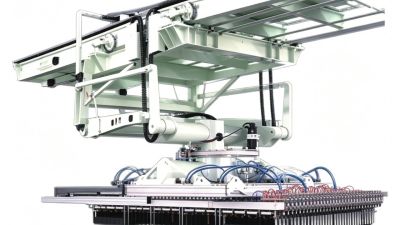
High-Speed Automatic Mantis Brick Stacker for Streamlined Clay Brick Production

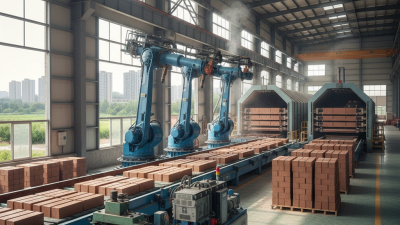
High-speed automatic mantis brick stackers are becoming an important solution for clay brick manufacturers seeking higher productivity and more consistent handling. Industry automation reports show that the global factory-automation market continues to expand as manufacturers replace repetitive manual tasks with servo-controlled systems. In modern brick plants, a high-speed stacker can maintain stable operation while delivering high output, helping production lines respond efficiently to growing construction-material demand.

Designed for streamlined clay brick production, this stacker combines low-load movement with reduced energy consumption and easy installation. Its servo motor drive provides precise positioning, smooth acceleration, and a high degree of automation, reducing operator dependence and improving stacking accuracy. The compact layout saves valuable floor space and adapts well to different factory configurations, making it suitable for both new installations and production-line upgrades. Energy-efficiency studies in the building-material sector also emphasize that reducing idle running and unnecessary mechanical movement can significantly lower operational costs over time.

A quick-change gripper system further improves daily efficiency. Operators can replace the gripper within approximately 20 minutes, minimizing downtime and reducing maintenance labor. With high-speed performance, stable operation, flexible site adaptability, and simplified changeover, the automatic mantis brick stacker supports a more efficient and reliable clay brick production process.

FAQS

: How should kiln size match brick production?

: Match usable chamber volume to daily output and loading patterns. Leave space for air movement. An oversized kiln wastes heat and extends drying time. A crowded kiln creates pale centers, warped edges, and uneven strength.

Why is temperature uniformity important?

Different clay bodies mature at different temperatures. A steady firing schedule reduces defects. One hot corner can spoil a full load. Ask for temperature uniformity data across the chamber, not only the peak temperature.

Which kiln controls are useful?

Useful controls include reliable thermocouples, adjustable airflow, insulated doors, and ramp control. Data logging helps reveal uneven heating. Independent temperature zones and alarm history can support quicker corrections.

How does loading affect brick quality?

Stacking patterns must allow airflow between bricks. Tight spaces may cause pale cores and dark edges. Test the pattern carefully. Use the heaviest and most fragile products during trials.

Should production use a batch kiln or a tunnel kiln?

A tunnel kiln may suit continuous loading and stable output. A batch kiln can handle changing product sizes. Neither option is always better. Consider changeover time, product variety, and maintenance access.

What information should be recorded during trial firings?

Record brick color, shrinkage, absorption, cracking, moisture, and firing temperature. Compare results after each cycle. Memory misses patterns. My records are imperfect, but they still expose recurring problems.

How should actual output be calculated?

Calculate output from saleable bricks, not chamber capacity. Include loading time, drying time, rejected pieces, and maintenance delays. Capacity can look impressive. Practical output may be lower.

What should be checked before installation?

Review sensor access, seals, burners, inspection points, spare parts, and calibration needs. Check floor space, forklift access, and operator training. Keep a repair contingency budget. An experienced technician should review the firing curve and local clay tests.

Conclusion

Choosing the right Kiln For Brick Production is essential for achieving consistent quality, efficient output, and reliable long-term performance. Start by defining your brick types, production volume, firing schedule, and future capacity needs. Then compare suitable kiln types according to your manufacturing process, while evaluating available fuel sources, energy efficiency, emissions management, and operating costs. Kiln size and temperature control should match the dimensions, materials, and firing requirements of your products to prevent defects and uneven results.

It is also important to review automation options, loading and unloading methods, and the flexibility to handle different production runs. Consider the kiln’s construction quality, expected service life, maintenance requirements, and built-in safety features. Finally, calculate not only the purchase price but also installation, energy, labor, and maintenance expenses over time. A dependable supplier should provide technical guidance, operator training, spare parts, installation assistance, and responsive after-sales support to help protect your investment.

Clara

Clara

Clara is a dedicated marketing professional at We Henan Cadier Green Building Technology Co., Ltd., a company committed to providing comprehensive solutions for large-scale production lines of new energy-saving and environmentally friendly wall materials since 2009. With an extensive knowledge of......
Previous Why Choose the Best Brick Kiln Machine for Your Business?