请留言
    
0%

Honestly, picking the right Tunnel Kiln isn’t just about copying what another factory has. It really comes down to understanding your own product first. Bricks, sanitaryware, technical ceramics, refractory parts—they all need different firing conditions. So a kiln that works great for one material might end up wasting energy, or worse, damaging another.

Let’s start with the firing curve—this is kind of the backbone of the whole setup. You’ll want to record the peak temperature, heating rate, soaking time, and cooling profile. And here’s the thing: even small temperature shifts can mess with strength, color, shrinkage, and water absorption. Before firing, measure the green product’s size, moisture, and stacking pattern. Those details are what really determine kiln width, car spacing, burner arrangement, and production speed. So yeah, it all connects.

Then there's the fuel itself. Gas, electric, alternative—each one comes with its own operating costs and control headaches. You really have to look at local energy prices, emissions rules, whether your team can actually maintain it, and how supply might shake out down the road. A big impressive output number doesn't count for much if the kiln can't run reliably. It's a bit uncomfortable to admit, but a lot of buyers get dazzled by capacity and don't pay enough attention to consistency.

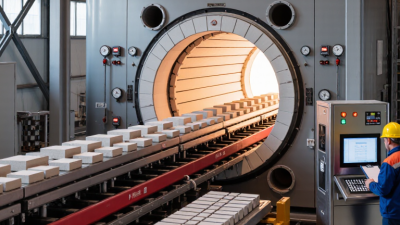
You know, when you've been around kilns long enough, you start checking the same things: thermal uniformity, how automated the system is, insulation, atmosphere control, and whether spare parts are actually easy to get. Don't just buy into the sales pitch—ask for test-firing data. If you can, go see a real installation in action. Spend a full shift there, watch the control screen, poke around the kiln cars, and chat with the operators. They'll often tell you stuff that never makes it into the brochure.

Honestly, there’s no one-size-fits-all answer here. The right tunnel kiln for you is really about juggling product quality, energy costs, manpower, upkeep, and where you plan to take things down the road. Going through the selection carefully can feel like it’s taking forever—but that slower pace often saves you from shelling out for a costly rebuild later. And even then, don’t just trust your initial numbers. Run every calculation again, because the conditions in your actual factory almost never line up with the assumptions you started with.
How to Choose the Right Tunnel Kiln?

Define Tunnel Kiln Types, Zones, and Typical 24–72-Hour Firing Cycles

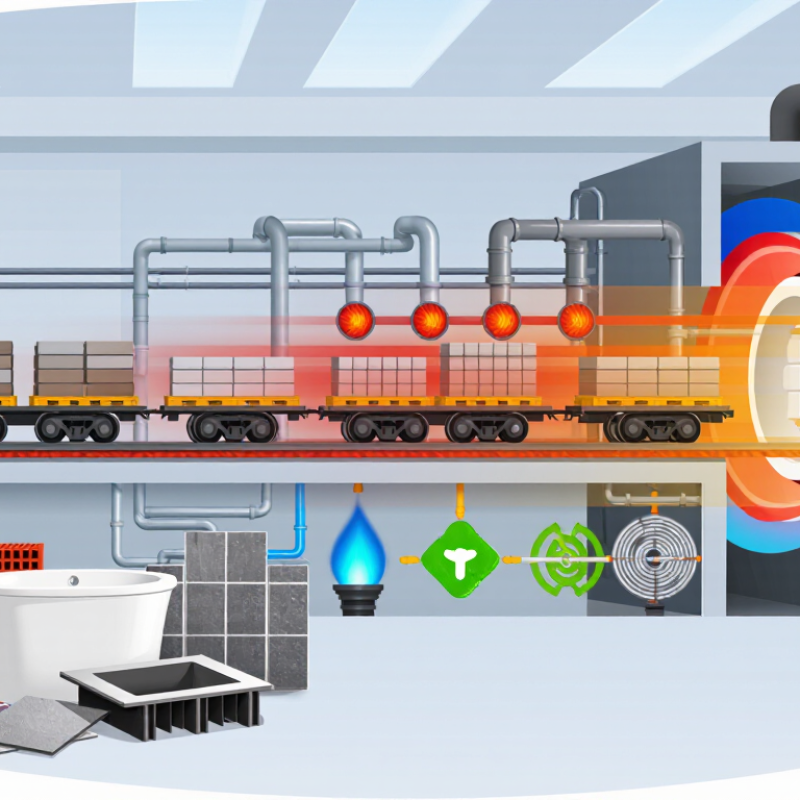
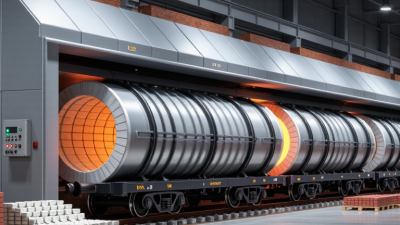
Choosing the right tunnel kiln means matching the process, not merely selecting the largest capacity. A continuous tunnel kiln moves ware through controlled thermal zones on cars or rollers. Common designs include direct-fired, indirect-fired, and electric systems. A Gas Tunnel Kiln can suit high-throughput work when fuel control and ventilation are properly engineered. The product decides more than the specification sheet. Clay bodies, refractories, sanitaryware, and technical ceramics respond differently to heat.

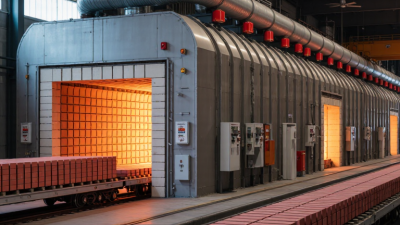
A typical layout has preheating, firing, and cooling zones. Preheating removes moisture and burns out binders gradually. The firing zone establishes peak temperature, atmosphere, and soaking time. Cooling must remain controlled to reduce thermal shock and cracking. Many production cycles run 24 to 72 hours, but this range is not universal. Thin, stable ware may move faster, while dense loads often need slower heating and cooling. Measure ware temperature, not only chamber air. Thermocouples can reveal cold spots near doors, walls, and stacked corners.

Before choosing, compare loading method, kiln width, fuel flexibility, heat recovery, and maintenance access. Check temperature uniformity with test pieces across the setting. Ask for documented firing curves and repeatability data. A neat spreadsheet can still mislead. Real loads contain gaps, variable moisture, and imperfect stacking. The first trial may expose assumptions that looked reasonable. Leave adjustment time in the schedule. That margin often protects quality.

Compare Firing Temperatures: 900–1,300°C for Common Ceramic Products

How to Choose the Right Tunnel Kiln?

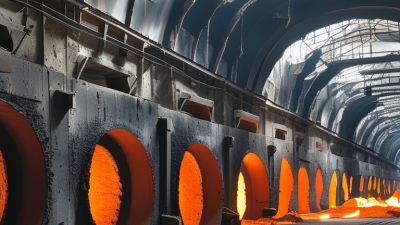
Choosing a tunnel kiln starts with the product’s firing temperature, not only its daily output. A tunnel kiln must deliver steady heat across a long firing zone. Small temperature differences can cause warping, cracks, or uneven color. For earthenware, the usual range is 900–1,100°C. Wall tiles and decorative ceramics often fit within this lower range. Stoneware generally needs about 1,200–1,300°C for proper vitrification. Porcelain commonly requires 1,200–1,300°C, with careful control of shrinkage and glaze maturity. Heat alone misleads.

In a Tunnel Kiln Plant, operators should compare the peak temperature with the complete firing curve. Preheating, soaking, and cooling can change the final result. A calibrated thermocouple helps confirm the actual temperature near the ware. Product tests should include water absorption, strength, color, and dimensional change. Keep clear records for each batch. A perfect chart can still hide cold spots.

Product thickness and loading density also affect firing performance. Thick sanitaryware may need slower heating than thin ceramic plates. Dense loading can restrict airflow and extend the required soak time. Kiln atmosphere matters too, especially when glaze color depends on oxidation or reduction conditions. Energy use should be measured against usable output, not just burner consumption. One trial rarely proves the best setting. Real production is less tidy. Allow room for adjustment when clay bodies, glaze formulas, or seasonal humidity change.

Match Kiln Capacity to Output, from 10 to 500+ Tons per Day

How to Choose the Right Tunnel Kiln?

Match Kiln Capacity to Output, from 10 to 500+ Tons per Day

Choosing a tunnel kiln starts with real daily output, not the largest number in a brochure. A plant producing 10 tons per day needs different loading patterns, heat control, and maintenance planning than a facility targeting 500 tons or more. Measure actual production demand, including seasonal changes, rejected pieces, drying losses, and planned downtime. A kiln sized too closely may run continuously and leave no recovery time.

For smaller production, a compact kiln can provide better control and lower fuel waste. Operators can inspect kiln cars, burners, and insulation more easily. However, limited space may restrict future expansion. That is easy to overlook. At 50 to 150 tons per day, cycle stability becomes more important than simple chamber volume. Check whether the kiln can maintain consistent temperature across the width, especially when products have different thicknesses.

Large plants need stronger material flow planning. Kiln length, car speed, loading density, cooling capacity, and exhaust treatment must work together. A 500-plus-ton system may require automated loading and detailed energy monitoring. Product moisture and firing curves should be tested before final selection. Small changes in moisture can disturb fuel use and firing time. Do not trust capacity figures without asking how they were measured. Confirm the output using your product dimensions, firing temperature, cycle time, and acceptable quality rate. A practical trial often reveals problems that drawings do not.

Evaluate Fuel Efficiency Below 1,500 kJ/kg for Modern Tunnel Kilns

How to Choose the Right Tunnel Kiln?

Fuel efficiency should be your first technical filter. A modern tunnel kiln should target fuel consumption below 1,500 kJ/kg of fired product. Measure this value using the fuel’s lower heating value, not the supplier’s estimated figure. The European Commission’s Ceramic Manufacturing BREF reports firing energy commonly ranging from about 1.5 to 3.5 GJ per tonne, depending on product type and process conditions. Therefore, 1,500 kJ/kg is an ambitious benchmark, not a universal guarantee.

Inspect the kiln’s insulation, burner control, cooling-air recovery, and pressure stability. In practical plant audits, uncontrolled air leakage often raises fuel use more than expected. A kiln may look efficient on paper, yet poor loading patterns can create cold zones and repeated firing. The International Energy Agency continues to identify process integration and waste-heat recovery as major industrial efficiency opportunities. Still, reported figures vary with moisture, product density, firing temperature, and measurement boundaries. A perfect spreadsheet can mislead.

Tips: Request a measured fuel trial over several production cycles. Record fuel input, fired output, moisture, rejects, and ambient conditions. Compare results using the same product recipe. Check whether recovered heat is counted separately. Ask for maintenance records, thermocouple calibration, and fan performance data. A target below 1,500 kJ/kg deserves verification, especially when production changes. You may need to accept a slightly higher figure if it improves quality and reduces rejects.

How to Choose the Right Tunnel Kiln?

Evaluate Fuel Efficiency Below 1,500 kJ/kg for Modern Tunnel Kilns

The chart compares representative specific thermal-energy levels for modern tunnel-kiln operating conditions. Lower energy consumption indicates better fuel efficiency. A value below 1,500 kJ/kg of fired product is used as the screening target for an efficient modern tunnel kiln.

Actual performance depends on product moisture, firing temperature, kiln loading, insulation quality, heat recovery, burner adjustment, and production continuity.

Select Atmosphere Control for Oxidizing, Reducing, or Neutral Firing

Choosing a Brick Tunnel Kiln requires more than checking its size or firing capacity. Atmosphere control often determines surface color, strength, and dimensional stability. The kiln should provide adjustable air, fuel, and exhaust flows across each firing zone.

An oxidizing atmosphere supplies excess oxygen and supports bright, stable colors in many clay bodies. It can also reveal iron-rich tones clearly.

A reducing atmosphere limits oxygen and changes how metal oxides react inside the ware. This may deepen colors, but poor control can create uneven surfaces or weak areas.

A neutral atmosphere stays close to balanced combustion, helping maintain predictable results for selected products.

Use oxygen probes, thermocouples, and calibrated flow meters together. Do not trust flame appearance alone. Keep it stable. In practical trials, place witness tiles at the kiln entrance, center, and exit. Compare their color, warpage, and water absorption after cooling. Small airflow changes can affect several kiln cars, especially near burner transitions.

A reliable Brick Tunnel Kiln should record temperature and atmosphere continuously. Review those records against fuel use and product quality. Still, no firing schedule is perfect. Clay bodies react differently, and a setting that worked last month may fail after material changes. Test gradually, adjust one variable, and allow enough time for the kiln to respond. Be careful with rapid corrections. They often create larger differences than the original problem.

Check Automation, Emissions, and Heat-Recovery Standards Before Purchase

Choosing a tunnel kiln requires more than comparing firing capacity and quoted fuel consumption. Focus on automation, emissions, and heat recovery before signing a purchase agreement. Ask for documented test results, control narratives, and maintenance records from comparable installations.

Automation should show stable temperature zones, burner status, pressure, oxygen, and conveyor speed on one interface. The Tunnel Kiln Burner system needs reliable ignition, flame monitoring, and automatic fuel shutoff. Request proof of alarm testing, backup controls, and safe restart procedures. A fast interface is not enough. Operators must understand it. During a site visit, watch a temperature change and a simulated fault. Unclear responses reveal training gaps. I would also check sensor calibration intervals, because neglected probes can distort an otherwise impressive report.

Emissions data should cover startup, normal firing, and shutdown, not only ideal production. Verify measurement methods and compare results with current local limits. Heat recovery deserves equal scrutiny. Inspect whether cooling-zone air preheats combustion air or dries incoming products, and ask for seasonal performance data. Duct insulation, filters, and cleaning access affect real savings. Payback estimates often look too neat. Include fan power, downtime, replacement parts, and reduced efficiency after years of dust. A modest recovery system may be more dependable than a complex one, though that assumption should be tested against your production schedule.

How to Choose the Right Tunnel Kiln? - Check Automation, Emissions, and Heat-Recovery Standards Before Purchase

Evaluation Area What to Check Before Purchase Practical Reference or Benchmark Recommended Evidence from the Supplier Purchase Risk if Ignored
Product and Firing Profile Maximum firing temperature, product dimensions, kiln width, production rate, firing cycle, and acceptable temperature variation. Confirm that the specified operating range covers the product recipe with design margin. Many ceramic tunnel-kiln applications operate approximately between 900 °C and 1,400 °C, depending on the material. Validated heat-up, firing, and cooling curves; product-loading drawings; trial-firing results; and temperature-uniformity test data. Uneven firing, cracked products, incomplete sintering, excessive rejects, or insufficient future capacity.
Automation Level Automatic temperature control, fuel-to-air ratio control, zone pressure control, conveyor or car movement, alarm handling, recipe management, and data logging. A modern system should provide independent control of firing zones, automatic alarm records, password-protected recipe changes, and historical trend data for critical process variables. Functional description, control-system architecture, alarm matrix, sample trend screens, cybersecurity responsibilities, and factory-acceptance-test procedure. Higher labor requirements, unstable product quality, delayed fault detection, and weak traceability.
Temperature Uniformity Temperature differences across the kiln width and along the firing zone under minimum, normal, and maximum production loads. Set a contract limit appropriate to the product. A commonly specified acceptance target is a temperature spread of approximately ±5 °C to ±10 °C in the controlled firing zone, but the correct value depends on the product. Independent or witnessed temperature-profile test using calibrated instruments, with results for representative production conditions. Color variation, warpage, dimensional instability, and inconsistent mechanical properties.
Fuel and Energy Use Fuel type, electrical demand, heat input, specific energy consumption, insulation condition, and energy measurement boundaries. Require energy data in a consistent unit such as kWh per tonne of fired product or MJ per tonne. The comparison must state whether auxiliary fans, drives, exhaust treatment, and heat-recovery equipment are included. Guaranteed energy-consumption test method, calibrated flow meters, electrical-load list, insulation specification, and performance-test conditions. Unreliable operating-cost estimates and difficulty comparing competing kiln proposals.
Heat Recovery Recovery of heat from cooling zones or exhaust streams for combustion air, drying, building heating, or other process users. Useful recovered heat depends on production rate, cooling-air balance, exhaust temperature, and the temperature required by the user. The supplier should provide a heat balance rather than only a percentage claim. Mass-and-energy balance showing source temperature, recovered heat, destination temperature, exchanger efficiency, duct losses, fan power, and seasonal operating assumptions. Lower-than-expected savings, unstable drying conditions, condensation, corrosion, or insufficient combustion air.
Emissions Compliance Pollutants generated by raw materials, binders, glazing, fuels, and firing chemistry, including particulate matter, nitrogen oxides, sulfur oxides, carbon monoxide, and volatile organic compounds where applicable. Emission limits are location-specific. The design should identify applicable local permits and relevant frameworks such as the EU Industrial Emissions Directive, U.S. EPA requirements, or equivalent national regulations. Emissions inventory, expected concentrations and mass flow rates, sampling ports, continuous-monitoring requirements, abatement design, and permit-support documentation. Permit delays, unexpected treatment costs, production restrictions, or non-compliance penalties.
Combustion Safety Burner management, flame supervision, automatic fuel shutoff, purge cycles, low- and high-pressure protection, and safe restart logic. The design should be reviewed against applicable combustion-equipment safety requirements, such as EN 746-2 or NFPA 86, according to the installation location and legal requirements. Safety-risk assessment, piping and instrumentation diagram, burner-management logic, proof-of-closure details, purge calculations, and safety-validation records. Fire, explosion, equipment damage, serious injury, and extended downtime.
Kiln Pressure and Airflow Pressure profile, leakage control, combustion-air distribution, exhaust balance, cooling-air recovery, and door or vestibule sealing. The firing zone is normally operated near controlled pressure conditions to limit uncontrolled air ingress and exhaust leakage. The supplier must define the pressure setpoints and measurement locations. Airflow diagram, pressure-profile data, fan curves, damper-control strategy, leakage assumptions, and commissioning test plan. Cold spots, oxidation problems, excess fuel use, hot-work-area exposure, and unstable combustion.
Insulation and Refractory Design Hot-face materials, backup insulation, expansion joints, roof design, shell temperature, repair method, and expected service life. Specify maximum external shell temperatures for accessible areas and require materials suitable for the maximum operating temperature and chemical atmosphere. Layered refractory drawing, material certificates, thermal-loss calculation, shell-temperature guarantee, and maintenance instructions. High heat loss, premature refractory failure, unsafe surfaces, and frequent shutdowns.
Maintenance and Availability Access to burners, fans, thermocouples, dampers, exhaust equipment, refractory sections, drives, and control panels. Define planned-maintenance intervals, critical spare parts, expected availability, mean time to repair, and maximum allowable unplanned downtime. Preventive-maintenance schedule, spare-parts list, critical-component lead times, maintenance-access drawings, and service-training plan. Long outages, high spare-parts costs, and dependence on unavailable specialist support.
Measurement and Verification Calibration of thermocouples, pressure sensors, oxygen analyzers, fuel meters, emissions instruments, and electrical meters. Use traceable calibration procedures and define measurement uncertainty before accepting energy, temperature, or emissions guarantees. Calibration certificates, test-instrument list, acceptance-test protocol, data-sampling frequency, and calculation formulas. Disputed guarantees and inaccurate energy or emissions reporting.
Expansion and Future Flexibility Ability to change products, fuel type, production rate, firing recipe, heat-recovery use, or emissions-control requirements. Reserve capacity should be based on a documented production forecast. Any spare fan, burner, control-panel, duct, or exhaust-treatment capacity should be identified explicitly. Future-load study, modular layout, spare-input and output list, upgrade costs, and limits of the control system. Expensive retrofits or inability to meet future product and regulatory requirements.
Note: Performance limits and emissions requirements must be finalized using the product recipe, local regulations, fuel characteristics, production schedule, and a witnessed acceptance test. Standards referenced above should be confirmed for the installation jurisdiction and kiln application.

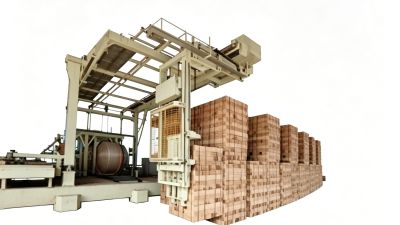
Brick Packing Unstacking Machine for Rotary Kiln Plants: Features, Applications, Benefits, and Selection Guide

A brick packing and unstacking machine is a practical logistics solution for rotary kiln plants, where fired bricks must be transferred efficiently between production, storage, and dispatch areas. The system automatically packs and separates brick stacks, reducing repeated forklift movements across multiple shifts. It can also support direct loading onto delivery vehicles and in-plant transfer by flatbed truck, helping factories streamline material flow without relying on continuous forklift operations.

Safety and labor efficiency are important considerations. The U.S. Occupational Safety and Health Administration (OSHA) reports that forklifts are associated with approximately 85 fatalities and 34,900 serious injuries each year, highlighting the value of reducing unnecessary vehicle traffic in busy production areas. By consolidating brick handling into fewer shifts, the machine can lower manpower requirements, reduce forklift fuel, maintenance, and rental costs, and improve loading consistency. Its automated handling process also helps minimize product damage caused by repeated manual transfers.

When selecting equipment, brick manufacturers should evaluate kiln capacity, brick dimensions, stack height, cycle speed, transfer distance, and compatibility with existing conveyors or loading systems. Floor conditions, available installation space, control-system integration, and after-sales support should also be reviewed. A suitable configuration should match daily output while allowing flexible dispatch through direct vehicle loading or flatbed transfer, ensuring reliable performance as production volumes change.

FAQS

What is a tunnel kiln?

A tunnel kiln moves products continuously through controlled heating zones. Ware travels on kiln cars or rollers. Its design should match the product, not simply the largest capacity.

What are the main zones in a tunnel kiln?

Most tunnel kilns include preheating, firing, and cooling zones. Preheating removes moisture and burns out binders gradually. The firing zone controls peak temperature and soaking time. Cooling must be slow enough to prevent cracking.

How long does a typical firing cycle take?

Many production cycles last between 24 and 72 hours. Thin, stable products may move faster. Dense loads usually need slower heating and cooling. There is no universal cycle.

How can fuel efficiency be evaluated?

A modern kiln may target fuel use below 1,500 kJ per kilogram. This is an ambitious benchmark, not a guaranteed result. Measure fuel with its lower heating value. Record moisture, fired output, rejects, and ambient conditions.

What commonly increases fuel consumption?

Air leakage, poor loading, and unstable pressure can increase fuel use. Cold spots may cause repeated firing. Heat recovery can reduce wasted energy. Paper calculations can mislead.

Which firing atmosphere should be used?

Oxidizing, reducing, and neutral atmospheres produce different results. Oxidizing firing often supports bright, stable colors. Reducing firing can deepen colors but may create uneven surfaces. Neutral firing helps maintain predictable conditions for suitable products.

How should temperature and atmosphere be monitored?

Use thermocouples, oxygen probes, and calibrated flow meters together. Flame appearance alone is unreliable. Place test tiles near the entrance, center, and exit. Keep records.

How can a new firing schedule be tested safely?

Run measured trials with the actual product and loading pattern. Check color, warpage, strength, and water absorption after cooling. Adjust one variable at a time. Leave schedule margin. The first trial may challenge reasonable assumptions.

Conclusion

Choosing the right Tunnel Kiln requires a clear understanding of production goals, material requirements, and operating conditions. Start by identifying the kiln type, its preheating, firing, and cooling zones, and the typical 24–72-hour firing cycle. For common ceramic products, confirm that the kiln can maintain the required temperature range, generally between 900°C and 1,300°C, while providing consistent heat distribution. Capacity should also match the intended output, from approximately 10 to more than 500 tons per day, without sacrificing product quality or flexibility.

Energy performance is another critical consideration. Modern systems should aim for fuel consumption below 1,500 kJ/kg where practical, supported by effective insulation and heat recovery. Buyers should also select atmosphere controls suitable for oxidizing, reducing, or neutral firing. Before purchase, evaluate automation features, emissions management, maintenance access, safety systems, and applicable heat-recovery standards. A well-matched kiln can improve product consistency, reduce operating costs, and support reliable long-term production.
Lila

Lila

Lila is a seasoned marketing professional at We Henan Cadier Green Building Technology Co., Ltd., a company at the forefront of innovative wall material production since 2009. With a strong expertise in energy-saving and environmentally friendly solutions, she is dedicated to promoting the......
Previous How to Choose the Best Clay Brick Tunnel Kiln in China?