请留言
    
0%

China’s market for auto brick machines is really attracting buyers who are after higher production rates, consistent quality, and lower labor costs. But making the right choice isn’t just about comparing prices in a catalog. You’ve got to consider whether a production line fits well with your local conditions—like the type of clay, fly ash, concrete mix, electricity supply, land availability, and how much you actually need to produce each day.

According to the International Energy Agency, cement making accounts for roughly 7% of global energy-related CO2 emissions. That’s a pretty big deal, so using materials efficiently and improving forming and curing processes is becoming more crucial than ever. The Global Cement and Concrete Association is also pushing for lower-carbon methods through better efficiency and alternative materials. Plus, Grand View Research points out that the booming construction activity worldwide is boosting demand for automatic brick and block-making equipment. These numbers definitely show opportunity—but, spoiler alert, they don’t promise instant profit.

John Provis, a cement chemistry professor, has emphasized that 'the future of cement is all about cutting emissions while still keeping performance up.' That’s a point you want to keep in mind when you're choosing an auto brick machine. Having a powerful hydraulic system alone doesn’t cut it. You really need to check out details like mold accuracy, how stable the vibration is, cycle times, whether spare parts are easy to get, and how well the machine can handle curing. The best way? Ask for test bricks made from your actual raw materials. Feel the edges, measure the dimensions, and don’t just rely on the demo at the showroom—observe the machine after several hours of operation.

Keep in mind, no single machine is perfect for every factory’s needs.

A realistic evaluation should also include training operators, reviewing maintenance records, understanding warranty details, and checking references from other buyers working in similar conditions. Some suppliers might hype up their maximum daily capacity, but in reality, your output could be much lower because of things like moisture in your materials, manual handling issues, or curing delays—that’s a little detail worth paying attention to. China’s got plenty of capable manufacturers, but the cheapest auto brick machine might end up costing you more in the long run once you factor in downtime, rejected bricks, or unavailable parts.
China Top Auto Brick Machine for Sale How to Choose?

Define Products: Bricks, Blocks, Pavers, and Interlocking Units

China Top Auto Brick Machine for Sale: How to Choose?

Define Products: Bricks, Blocks, Pavers, and Interlocking Units

Choosing an automatic brick machine starts with the product, not the machine’s advertised capacity. Bricks are usually smaller and suited to walls or traditional masonry. Blocks are larger, so they need stronger vibration and accurate mold filling. Pavers require a dense surface, sharp edges, and stable color. Interlocking units need precise profiles, because small dimensional errors can affect pavement alignment.

A practical evaluation should match the mold, pressure, vibration, and curing method to your material recipe. Check the target dimensions, daily output, compressive strength, and acceptable tolerance. A machine producing 10,000 pieces daily may still be unsuitable if its mold changes are slow. That detail is often overlooked. It matters.

Visit a working production site when possible. Observe feeding consistency, demolding quality, noise, maintenance access, and finished surfaces. Ask for test samples made from your own cement, aggregates, and local water. Laboratory results are useful, but real materials can behave differently. I would avoid choosing only by price or maximum output. A lower-cost machine may create more rejected pavers, wasted mix, and unplanned downtime. No selection is perfect. Leave room for operator training, spare parts, future molds, and seasonal changes in raw materials. Reliable suppliers should provide clear specifications, installation guidance, and verifiable performance records.

Set Strength Targets: ASTM C90 Requires 13.8 MPa Average CMU Strength

China Top Auto Brick Machine for Sale: How to Choose?

When choosing a China-made automatic brick machine, set the strength target first. ASTM C90 requires a 13.8 MPa average compressive strength for loadbearing concrete masonry units, measured on the net area. This requirement can vary with the standard edition, unit type, and testing conditions. Do not judge a machine by production speed alone. A fast cycle means little if the blocks crack after curing. Strength comes later. Check the machine’s vibration control, mold pressure, feeding system, and material consistency. These details influence density and internal voids.

An experienced producer should request trial blocks before purchasing equipment. Use the intended cement, aggregates, moisture level, and mix ratio. Record cycle time, block weight, dimensions, and visible defects. Then cure samples under controlled conditions before laboratory testing. Test the output. Ask for calibration records and clear quality data, not only attractive factory videos. The machine should maintain stable pressure and filling across repeated cycles. Small variations can create weak corners or uneven faces.

A reliable selection also considers maintenance access, spare parts, operator training, and safety controls. I have seen promising trial blocks fail because curing was rushed or moisture was poorly measured. That mistake is easy to repeat. A stronger evaluation compares several production batches, not one perfect sample. Keep a written testing log. Review failures honestly. The best machine is the one that repeatedly supports the required 13.8 MPa average under your actual materials and working conditions.

China Top Auto Brick Machine for Sale: How to Choose? — Set Strength Targets: ASTM C90 Requires 13.8 MPa Average CMU Strength

Selection Dimension Practical Target or Data Why It Matters Verification Method
ASTM C90 compressive-strength target Minimum average net-area compressive strength: 2,000 psi (13.8 MPa). The minimum individual unit strength is 1,800 psi (12.4 MPa). The machine, mix, curing process, and raw materials must work together to consistently meet the specified CMU strength. Test representative production units in accordance with the applicable ASTM C140 procedures and project requirements.
Block size and mold compatibility Common nominal CMU sizes include 4, 6, 8, 10, and 12 in. thicknesses, with 8 × 8 × 16 in. being a widely used nominal block size. Mold dimensions determine product range, changeover time, material usage, and sales flexibility. Confirm finished dimensions, core configuration, mold-steel specifications, and available interchangeable molds.
Machine type Automatic vibration-and-hydraulic or vibration-and-mechanical press with automatic feeding, pressing, demolding, and pallet handling. Automation can improve production consistency and reduce dependence on manual handling, but it increases installation and maintenance requirements. Review the process flow, control architecture, safety functions, emergency stops, and manual override procedures.
Production capacity For an 8 × 8 × 16 in. block, a typical planning range for medium automatic equipment may be approximately 1,000–3,000 blocks per 8-hour shift, depending on mold layout, cycle time, and operating efficiency. Rated output is not the same as sustained daily output; downtime, pallet movement, curing space, and staffing affect actual production. Request a timed production demonstration using the intended block size and record output over a complete operating shift.
Cycle time A typical press cycle for standard concrete blocks may be approximately 15–30 seconds, depending on product height, mix workability, vibration, and machine configuration. Shorter cycles can increase theoretical output, but excessive speed may reduce compaction uniformity and dimensional stability. Compare cycle time with block density, edge quality, height tolerance, and compressive-strength results.
Concrete mix design Use a controlled zero-slump or low-slump concrete mix with properly graded aggregates, cementitious materials, and moisture control. The exact proportions must be established by trial batches. Strength depends primarily on the finished concrete, compaction, curing, and quality control—not on the machine alone. Perform trial production and monitor aggregate grading, moisture content, batch weights, density, absorption, and strength.
Vibration and compaction control Adjustable vibration frequency, vibration duration, filling height, and pressing force are preferred for different block sizes and concrete mixes. Uniform compaction helps reduce voids, improve density, and limit strength variation between units. Check density and dimensions at several mold positions and compare results from the center and edges of the pallet.
Curing system Moist curing or controlled steam curing may be used. Concrete masonry units commonly require sufficient moisture and temperature control during early-age hydration. Poor curing can cause low strength, shrinkage, cracking, and inconsistent absorption even when pressing is satisfactory. Record curing temperature and humidity, protect units from premature drying, and test units at the specified age.
Dimensional accuracy Set project-specific tolerances for length, width, height, squareness, face-shell thickness, web thickness, and core dimensions. Accurate units improve laying speed, wall alignment, mortar-joint consistency, and finished appearance. Use calibrated calipers, steel rules, gauges, and sampling plans based on the applicable product specification.
Water absorption and density ASTM C90 includes requirements related to density classification and absorption; the applicable limits depend on the specified unit type and density category. Absorption and density affect durability, handling weight, mortar behavior, and compliance with the project specification. Measure oven-dry density, absorption, and moisture content using the applicable ASTM test methods.
Electrical and utility requirements Confirm local voltage, phase, frequency, connected load, compressed-air requirements, water supply, drainage, and dust-control needs before purchase. Mismatched utilities can cause unstable operation, motor overheating, installation delays, or additional infrastructure costs. Obtain a complete utility schedule and have it reviewed by a qualified local electrical and mechanical contractor.
Maintenance and spare parts Prioritize replaceable wear parts such as mold components, vibration elements, hydraulic seals, bearings, sensors, and conveyor parts. Maintenance access and parts availability directly influence uptime and the long-term cost of ownership. Request a preventive-maintenance schedule, spare-parts list, troubleshooting guide, and estimated delivery times.
Factory acceptance testing Acceptance criteria should cover output, cycle time, block dimensions, appearance, pallet handling, alarms, safety interlocks, and repeatability. A documented acceptance test reduces disputes and confirms that the complete line—not only the main press—performs as specified. Use signed test records, calibrated instruments, approved sample blocks, and clearly defined pass/fail criteria.
Important: The 13.8 MPa value is the ASTM C90 minimum average net-area compressive-strength requirement for loadbearing concrete masonry units. Confirm the current edition of ASTM C90, the project specification, local building code, and required testing procedures before final equipment selection.

Check Density Classes: ASTM C90 Uses 1,680 and 2,000 kg/m³ Thresholds

When choosing an Auto Brick Laying Machine, check density before comparing production speed. ASTM C90 classifies concrete masonry units by oven-dry density. Lightweight units remain below 1,680 kg/m³. Medium-weight units range from 1,680 to below 2,000 kg/m³. Normal-weight units reach 2,000 kg/m³ or higher. These thresholds affect handling, wall weight, thermal performance, and machine pressure settings.

A practical trial should weigh cured samples, not fresh blocks. The National Concrete Masonry Association’s technical guidance also stresses consistent material proportions, moisture control, and compaction. Small changes matter. A wet mix may look dense during pressing but lose mass after curing. Ask for density test records from several production batches. One sample is not enough. Measure dimensions, moisture, and compressive strength beside density.

Machine selection should match the target density class. A stronger vibration table may suit 2,000 kg/m³ units, while excessive compaction can damage edges or waste energy. Review ASTM C90 requirements alongside local specifications and the manufacturer’s test data. Industry practice often favors automated feeding and pressure adjustment, but automation cannot correct poor aggregates. I have seen buyers focus on cycle time and ignore density variation. That was a costly oversight. The better question is simple: can the machine repeat the same density after changing operators, molds, and weather?

Size Capacity: Convert Daily Demand into Blocks per Hour and Mold Cycles

China Top Auto Brick Machine for Sale How to Choose?

Size and capacity should begin with saleable blocks, not the machine brochure’s maximum output. Suppose your project needs 12,000 bricks daily. With ten productive hours and an 8% rejection allowance, the target becomes about 1,304 good blocks per hour. A 24-cavity mold then requires nearly 55 cycles hourly. That equals one cycle every 66 seconds. Keep margin.

Include loading, mold cleaning, material refilling, and short stoppages. My first estimate was too optimistic because I counted an eight-hour shift as eight production hours. In practice, 15% to 25% lost time can occur, depending on material moisture and operator skill. Measure twice.

Record actual cycle time during a trial run, then compare it with the supplier’s rated figure. A smaller machine running steadily may outperform a larger machine that frequently waits for clay or maintenance.

Energy planning also matters. The UNEP 2023 Global Status Report for Buildings and Construction states that buildings consumed about 34% of global energy and produced around 37% of energy and process-related emissions in 2022. This supports checking kiln heat recovery, insulation, and fuel efficiency, not only mold speed.

The USGS Mineral Commodity Summaries 2024 identifies common clay and shale as key raw materials for brick and related products. Therefore, test local clay before selecting an Auto Clay Brick Kiln Machine. Moisture variation can change pressing pressure, drying time, and final rejection rates. Paper capacity is never the whole story.

Compare Automation: PLC Control, Hydraulic Pressure, and Automatic Palletizing

China Top Auto Brick Machine for Sale: How to Choose?

When comparing an automatic brick machine in China, study the control system before the output number. A PLC manages mixing time, mold cycles, vibration, and fault alarms with repeatable logic. This helps operators track changes during long shifts. Ask for a clear wiring diagram and a protected control cabinet. Easy maintenance matters.

Hydraulic pressure affects brick density, edge quality, and demolding stability. The pump, valves, cylinders, and pressure sensors must match the mold size and material recipe. A higher pressure setting is not automatically better. Excessive force can increase wear or create uneven surfaces. Request test bricks made with your local aggregate. Measure dimensions, weight, and strength after curing. This practical check often reveals problems that brochures hide.

Automatic palletizing reduces manual handling after demolding. Check the gripper design, stacking pattern, pallet size, and emergency stop response. The system should respond safely after a sensor fault, not stop without an explanation. One overlooked issue is floor alignment. A small height difference can disturb stacking accuracy. Leave room for cleaning and inspection. Full automation looks attractive, but it may be unsuitable for a small plant with limited technical support. Compare spare-part access, training, energy use, and daily labor savings before accepting the lowest quotation.

China Top Auto Brick Machine for Sale: How to Choose?

Comparison of PLC control, hydraulic pressure, and automatic palletizing by typical equipment-selection criteria.

The normalized scores indicate the typical importance and operational contribution of each automation feature on a 1–10 scale. PLC control supports process consistency and monitoring, hydraulic pressure improves forming stability, and automatic palletizing reduces manual handling and labor requirements. Actual results depend on machine configuration, product type, maintenance, and factory conditions.

Verify Safety Compliance: ISO 12100, IEC 60204-1, and CE Documentation

China Top Auto Brick Machine for Sale: How to Choose?

When evaluating a Semi Auto Brick Making Machine, safety documents deserve more attention than glossy production figures. Ask for the ISO 12100 risk assessment, not just an ISO number on a brochure. It should identify crushing points, unexpected movement, noise, dust, and maintenance hazards. Check whether the assessment matches the machine’s actual structure, including guards around the mold and conveyor.

IEC 60204-1 documentation should show the electrical design clearly. Request wiring diagrams, emergency-stop circuits, control-panel specifications, and protection details. The emergency stop should be easy to reach from the operator’s position. Cabinet labels should match the drawings. Small mismatches can create expensive confusion during installation.

CE documentation also needs careful checking. Request the Declaration of Conformity, applicable standards, machine model, serial details, and manufacturer information. The papers should describe the exact Semi Auto Brick Making Machine being offered. A copied document is not reliable evidence. Ask for a sample test record and inspect the machine through live video or a visit. Look for exposed cables, loose guards, and unclear warning labels. The paperwork may look perfect. The machine may still need correction. That possibility should influence your price, training plan, and delivery decision.

Evaluate Total Cost: Energy, Dies, Maintenance, Warranty, and Spare Parts

China Top Auto Brick Machine for Sale: How to Choose?

When comparing an Auto Bricks Machine, purchase price is only the starting point. A reliable evaluation includes electricity, fuel, dies, maintenance, warranty coverage, and spare parts. I once underestimated power consumption by checking the motor rating alone. Production losses later proved more expensive than expected. Measure actual output, idle time, and local energy prices before signing a purchase agreement.

Energy is a daily cost. Record kilowatt-hours per thousand bricks during a trial run. A machine using less energy may still lose money if its cycle is slow. Dies deserve close attention because poor alignment causes uneven brick edges and frequent replacement. Ask about die material, expected service life, machining accuracy, and replacement prices. Small differences become large costs after several production seasons.

Maintenance should be practical for your workshop. Check lubrication points, hydraulic seals, electrical controls, and cleaning access. Shorter maintenance time means fewer missed orders. Warranty terms must state coverage periods, excluded parts, response times, and shipping responsibilities. Spare parts should be available locally or delivered with clear lead times. Keep critical seals, sensors, and wear plates on site. This is not always convenient. It may tie up cash, but stopping production for one inexpensive part is worse. Request a written total-cost estimate, then compare it with your expected annual output. Numbers matter. Experiences vary.

How Ultra-Fine Double Roller Crushers Improve Grinding Efficiency in Clay Brick Factories

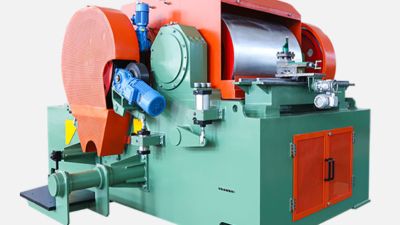
Ultra-fine double roller crushers can significantly improve grinding efficiency in clay brick factories by producing more consistent raw material particles. Designed for processing clay and shale, the equipment uses two precision rollers with adjustable gaps at the micron level. This allows operators to control the crushing process accurately and reduce the uneven particles that often affect later production stages.

The crusher can process raw materials into uniform particles ranging from 0.5 to 3 mm. A stable particle size helps clay and shale mix more evenly with water and additives, creating a smoother and more workable material. During extrusion, the improved consistency supports better shaping, reduces pressure fluctuations, and helps produce bricks with fewer surface defects. The controlled crushing action also minimizes the need for repeated processing, which can lower energy consumption and improve overall production efficiency.

For factories seeking reliable clay processing equipment, the ultra-fine double roller design offers practical advantages in continuous operation. Its precision adjustment system enables production requirements to be changed without complicated procedures, while the robust structure is suitable for demanding factory environments. By improving the preparation of raw materials before mixing and extrusion, this crusher contributes to a more stable workflow and more consistent brick quality.

FAQS

Should I choose a machine by its advertised daily output?

No. Start with the product you need to make. A machine rated for 10,000 pieces may still have slow mold changes. Check usable output, rejected pieces, and downtime. I have seen capacity figures hide practical delays.

What is the difference between bricks, blocks, pavers, and interlocking units?

Bricks are smaller and commonly used for walls. Blocks are larger and need strong vibration and accurate mold filling. Pavers need dense surfaces, sharp edges, and stable color. Interlocking units require precise profiles for even pavement alignment.

How should the mold match my product?

Confirm the target dimensions, shape, and acceptable tolerance. Small errors can create uneven joints between interlocking units. Ask for samples made with your own materials. Brochure samples may look better than local results.

Why are vibration and hydraulic pressure important?

Vibration helps fill the mold and reduce internal gaps. Hydraulic pressure affects density, edges, and demolding stability. More pressure is not always better. Excessive force can increase wear or produce uneven surfaces.

What should I check in the control system?

Look for repeatable control of mixing, molding, vibration, and fault alarms. Request a clear wiring diagram and a protected control cabinet. Maintenance should be simple. A confusing cabinet can slow repairs during a long shift.

Is automatic palletizing suitable for every production site?

Not always. Check the gripper, stacking pattern, pallet size, and emergency stop response. Floor height differences can disturb stacking accuracy. Small plants may prefer simpler equipment with easier technical support. Full automation can become expensive trouble.

How can I test machine performance before purchasing?

Request test pieces made with your cement, aggregates, and local water. Measure dimensions, weight, surface quality, and compressive strength after curing. Observe feeding, demolding, noise, and maintenance access at a working site. Real materials behave differently.

What support should a reliable supplier provide?

Ask for clear specifications, installation guidance, training, spare-part information, and performance records. Check future mold availability and seasonal material changes. Compare energy use and labor savings, not only the lowest quotation. No choice is perfect. Leave room for mistakes.

Conclusion

Choosing the right Auto Brick Machine requires more than comparing purchase prices. First, define the products you plan to manufacture, including bricks, concrete masonry units, pavers, or interlocking units, because each product may require different molds and forming conditions. Set clear strength targets, noting that ASTM C90 specifies an average CMU compressive strength of 13.8 MPa, and review density classes based on the 1,680 and 2,000 kg/m³ thresholds. Your production target should also be converted into blocks per hour and mold cycles to determine the appropriate machine capacity.

Automation and long-term operating value are equally important. Evaluate PLC control, hydraulic pressure stability, automatic palletizing, and production consistency. Request safety documentation covering ISO 12100, IEC 60204-1, and applicable CE requirements. Finally, calculate total ownership cost by considering electricity consumption, mold and die replacement, routine maintenance, warranty coverage, and spare-parts availability. A machine selected through these criteria can better match product requirements, output goals, safety expectations, and sustainable operating costs.
Clara

Clara

Clara is a dedicated marketing professional at We Henan Cadier Green Building Technology Co., Ltd., a company committed to providing comprehensive solutions for large-scale production lines of new energy-saving and environmentally friendly wall materials since 2009. With an extensive knowledge of......
Previous 7 Tips for Buying an Auto Brick Machine?