So you’re choosing a Brick Drying Machine in 2026? Honestly, it takes a lot more than comparing price tags and whatever capacity the brochure advertises. The machine has to fit your clay, your brick size, how fast you produce, the local climate, and what fuel you can actually get. A setup that runs great in a dry area can really struggle on a humid coast. And yeah, small mistakes? They matter.
Most experienced operators I know check moisture distribution first—before they even start talking about automation. If drying is uneven, you can end up with surface cracks, warped edges, or weak spots hidden inside the brick. Sometimes those problems only show up after firing, and by then fixing them is expensive. A dependable Brick Drying Machine should give you stable airflow, temperature you can control, and consistent humidity removal in every drying zone. It’s the details that decide.
This guide walks through the practical stuff: chamber design, heat recovery, energy use, maintenance access, and how accurate the control system really is. It also looks at whether the supplier helps with testing, installation advice, spare parts, and operator training. A cheap purchase price can hide bigger fuel bills or maintenance headaches later. That assumption can fail. So ask for operating data from similar plants—don’t just trust lab claims. And check how the machine performs with your own clay and through your seasons. No model is perfect. Even advanced equipment needs correct loading, regular inspection, and trained people running it. The most reliable choice balances output, product quality, lifecycle cost, and service support. In 2026, efficient drying matters—but predictable drying matters more. Think of this as a practical starting point: evaluate with professional care, measurable evidence, and realistic expectations.
Choosing a Clay Brick Drying Machine starts with production facts, not catalogue capacity. Define daily output, brick dimensions, moisture content, clay type, and available floor space. Record seasonal temperature and humidity, too. These details shape drying time and heat demand. The European Commission’s Ceramic Manufacturing BREF notes that drying may consume about 10–25% of a ceramic plant’s thermal energy. Small moisture differences can therefore become expensive.
Set measurable goals before comparing machines. A realistic target may include 95% crack-free bricks, stable moisture below 2%, and a defined cycle time. Check whether production is continuous or batch-based. Also calculate fuel use per tonne, fan electricity, labor, and rejected products. The International Energy Agency reports that industry uses about 37% of global final energy, according to its Energy End-uses and Efficiency Indicators data. Efficiency matters, but maximum speed can weaken quality. That part is easy to underestimate.
Tips: Test representative bricks before purchase. Measure core moisture, not only surface dryness. Ask for airflow uniformity data and temperature records. A larger chamber is not automatically better. Poor air distribution may leave cold corners and wet brick centers. Review maintenance access, insulation condition, sensor accuracy, and operator training. A spreadsheet may look precise, yet clay behavior can change between batches. Leave room for that uncertainty.
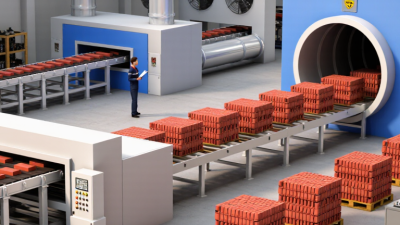
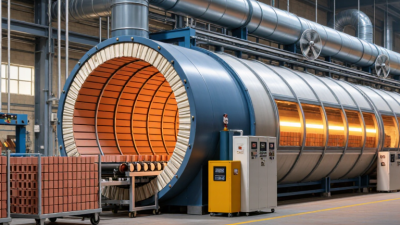
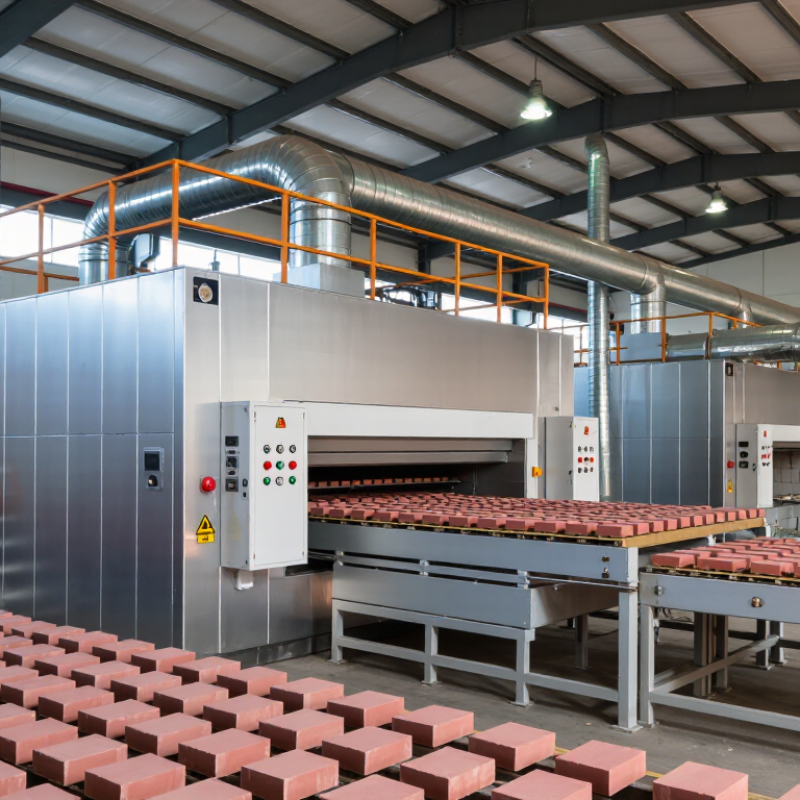
Choosing a brick drying machine in 2026 starts with the product, not the brochure. A chamber dryer suits small batches and frequent recipe changes. A continuous tunnel dryer fits stable, high-volume production. The Clay Brick Drying Machine Tunnel Dryer offers better material flow, but it needs accurate loading and strong air balancing. Poor airflow can leave cool cores inside apparently dry bricks.
Heating method changes operating risk. Gas-fired hot air is responsive and remains practical where fuel infrastructure is reliable. Biomass can reduce fossil fuel use, but moisture and ash require closer maintenance.
Electric heating offers precise control and cleaner onsite operation, especially with renewable electricity. Solar-assisted systems can preheat air, although they still need backup heat during cloudy periods. Hybrid designs are often more realistic than fully renewable systems.
The 2019 European Commission JRC ceramics BREF reports typical total energy consumption of about 1.5–3.5 GJ per tonne for brick products, depending on product and process. This figure includes firing, not drying alone. That distinction matters. The International Energy Agency also identifies process efficiency and heat recovery as major industrial energy-saving opportunities. In plant trials, I would measure moisture variation, exhaust temperature, fan power, and daily fuel use before choosing equipment. My first selection would not always be the most automated model. Data can expose that uncomfortable truth.
Choosing a brick drying machine in 2026 requires more than reading its hourly output. The European Commission’s Ceramic Manufacturing BREF identifies drying and firing as major thermal energy users in brick production. The International Energy Agency also reports that industry consumes about 37% of global final energy. Capacity, therefore, must match both output and available heat.
Start with wet brick weight, not finished-product weight. A machine rated at 10 tonnes per hour may struggle when clay enters with higher moisture. Measure the daily forming rate, stacking pattern, and trolley loading height. Drying speed matters, but excessive speed can create surface cracks while the core remains damp.
Watch the edges of green bricks. They reveal problems early.
Moisture control needs several checkpoints. Inlet air temperature, humidity, airflow, and exhaust moisture should be recorded throughout each cycle. The BREF recommends process control and heat recovery where practical, yet many plants still rely on manual adjustments. That is not ideal. A reliable Clay Bricks Making Drying Machine Tunnel Dryer Brick Oven setup should use sensors near the inlet, middle, and outlet zones. Keep a small batch for testing. My experience suggests that a slightly slower cycle often produces fewer rejects, although this must be verified with local clay. A perfect specification can still fail in winter.
Choosing a brick drying machine in 2026 starts with the Brick Drying Process, not the machine’s advertised output. A dryer that moves 20,000 bricks hourly may waste energy if airflow is poorly balanced. During site checks, measure clay moisture, ambient humidity, loading density, and drying temperature. These figures reveal whether heat is reaching the brick core. A moisture meter and several temperature probes provide stronger evidence than a sales estimate.
Compare electricity, natural gas, LPG, biomass, and recovered process heat against local prices and supply reliability. Electric heaters offer clean control, but peak tariffs can raise operating costs sharply. Gas systems often heat quickly, while biomass may need more storage, feeding control, and ash handling. Recovered heat can reduce fuel use when kiln exhaust remains stable. Ask for measured consumption per thousand bricks, not only installed burner capacity. Also check insulation thickness, fan efficiency, automatic humidity control, and heat recovery design. A small leak around a door can quietly waste energy every hour.
I would test the machine through several loads before approving a purchase. Record fuel input, drying time, rejected bricks, and temperature variation. One trial is not enough. Seasonal conditions can change the result. My own judgment can be wrong when the clay mix changes. Request independent test records and verify maintenance access, operator training, and spare-part availability. The cheapest fuel is not always the best choice if supply interruptions stop production. During testing, note whether the final bricks dry evenly near the chamber walls and at the center.
Choosing a brick drying machine in 2026 requires more than comparing output figures. Inspect welds, chamber insulation, fan balance, and sensor placement. A reliable machine should maintain even airflow across every rack, not only near the heating inlet. Ask for moisture readings from different brick positions. One reading is not enough. Request trial data using your clay body, brick size, and target moisture level. Experienced operators know that impressive laboratory results can change on a dusty production floor. Check whether doors seal tightly and whether temperature recovery remains stable after loading.
Automation should reduce guesswork, not remove human judgment. Look for adjustable temperature zones, humidity monitoring, alarm records, and recipe control. A clear interface helps operators identify a blocked duct or drifting sensor before cracks spread. Remote access may be useful, but it should not replace local safety controls. Review data logs during a full cycle. They reveal uneven heating, repeated manual corrections, and energy waste. I would avoid systems that hide settings behind complicated menus. Fancy controls can age poorly.
Tips: Calculate maintenance access before installation. Leave room to inspect belts, clean filters, and replace heating elements safely. Confirm spare-part availability, sensor calibration procedures, and technician response times in writing. Schedule routine checks around actual production hours, not ideal estimates. Keep a simple log of cracks, cycle duration, and energy use. It exposes patterns. A monthly inspection may sound sufficient, yet heavy dust or continuous loading can demand weekly cleaning. That detail is easy to underestimate.
Practical comparison benchmarks for selecting a non-branded brick drying system
| Assessment Dimension | Recommended Benchmark | Chamber or Batch Dryer | Continuous Tunnel Dryer | What to Verify Before Purchase |
|---|---|---|---|---|
| Production Pattern | Select the dryer according to daily output, product mix, and operating hours. | Suitable for intermittent production, multiple brick sizes, and frequent recipe changes. | Suitable for stable, high-volume production with consistent green-brick dimensions. | Confirm rated capacity using the actual brick dimensions, loading pattern, initial moisture, and target drying time. |
| Usable Capacity | Plan normal operation at approximately 70–90% of the stated maximum capacity. | Usually lower throughput, but flexible loading and easier trial production. | Higher throughput and better utilization when the line operates continuously. | Request a capacity calculation based on kilograms of water removed per hour, not only the number of bricks per hour. |
| Drying Temperature Control | Multi-zone control with a stable operating range commonly around 80–150°C, depending on clay, shape, and process design. | Simple temperature control is possible, but batch temperature changes can be slower. | Independent zones provide better control of preheating, constant-rate drying, and final drying. | Check sensor accuracy, control stability, alarm limits, and whether each zone has independent adjustment. |
| Moisture Uniformity | Aim for a final moisture variation of no more than about 2 percentage points across tested bricks, subject to product requirements. | Uniformity depends heavily on loading arrangement and air circulation inside the chamber. | Generally provides more repeatable results when airflow, spacing, and zone control are properly designed. | Carry out a moisture mapping test at the front, middle, rear, top, and bottom positions of the dryer. |
| Airflow Management | Use adjustable fans, dampers, and air-return paths to prevent stagnant zones and excessive surface drying. | Airflow can be adjusted for each batch, but manual settings may vary between operators. | Recirculation and cross-flow systems support stable production, especially with variable-speed fans. | Inspect fan capacity, damper response, air velocity distribution, and the availability of variable-frequency drives. |
| Automation Level | A PLC with HMI, recipe management, automatic temperature control, trend display, and fault alarms is recommended. | Basic automation may be sufficient for small or flexible production. | Advanced automation is strongly recommended for multi-zone continuous operation. | Confirm data logging, remote diagnostics, password levels, emergency-stop functions, and manual override procedures. |
| Energy Efficiency | Prioritize insulated ducting, low-leakage doors, heat recirculation, and automatic exhaust control. | Can be efficient at partial loads when heating and ventilation are controlled by batch demand. | Usually benefits more from continuous heat recovery and stable operating conditions. | Compare energy per kilogram of water removed and request test data at the intended production rate. |
| Mechanical Construction | The frame, casing, racks, rails, and supports should withstand heat, humidity, dust, and repeated thermal cycles. | Fewer moving components can simplify inspection and repair. | Requires robust conveyors, kiln cars, seals, bearings, and alignment control. | Check material thickness, corrosion protection, insulation quality, access panels, and spare-part availability. |
| Maintenance Workload | Daily visual inspection, regular cleaning, and planned lubrication should be possible without extended shutdowns. | Typically easier to access, with fewer continuous-motion components. | Needs scheduled inspection of drives, conveyor components, seals, fans, dampers, and sensors. | Request a maintenance schedule, lubrication chart, recommended spare-parts list, and access-time estimate. |
| Dust and Exhaust Handling | The layout should control dust accumulation and safely discharge humid air. | Exhaust configuration is generally simpler but may require frequent cleaning in dusty environments. | Requires coordinated exhaust, recirculation, and pressure control across multiple zones. | Verify clean-out points, exhaust fan capacity, condensate management, and compliance with local workplace requirements. |
| Safety and Compliance | Use guarding, emergency stops, over-temperature protection, interlocks, and clear operating procedures. | Safety controls are simpler but must protect operators during loading and unloading. | Requires coordinated guarding and emergency-stop coverage along the complete line. | Check electrical documentation, risk assessment, grounding, guarding, emergency shutdown logic, and applicable local regulations. |
| Best Choice by Operating Need | Choose the simplest system that can meet the required quality, capacity, and expansion plan. | Best for low-to-medium output, flexible products, pilot production, or variable schedules. | Best for medium-to-high output, stable product specifications, and long daily operating periods. | Base the final decision on a documented production trial rather than the equipment specification sheet alone. |
| Note: Capacity, temperature, moisture, and energy figures are engineering selection benchmarks rather than universal operating limits. Actual values depend on brick composition, dimensions, green-brick moisture, stacking density, ambient conditions, fuel or heat source, and the required firing process. All performance claims should be validated through a site-specific trial using representative production material. | ||||
Choosing a brick drying machine in 2026 starts with numbers, not attractive brochures. Measure daily green brick output, moisture content, fuel use, electricity demand, and labor hours. Ask for test data using bricks similar to yours. A machine that dries quickly may still damage edges or create uneven moisture. That cost appears later.
Calculate total cost over five years: purchase, freight, installation, foundations, ducts, training, energy, maintenance, spare parts, and downtime. Use local prices, not optimistic estimates. An $180,000 machine may need $35,000 for installation and $22,000 yearly energy. If it saves $48,000 annually, simple payback is $237,000 divided by $48,000, or about 4.9 years. But that figure is incomplete. Include financing interest, commissioning losses, and rejected bricks. A common review error is omitting weekend labor.
Supplier support can change payback more than a small fuel-saving claim. Require written response times, remote diagnostics, stocked wear parts, technician availability, and operator training. Request references from plants using similar clay, climate, and output. Check whether troubleshooting remains available after warranty expiration. Ask what happens when the main fan fails on a humid Friday. That answer matters. Keep a contingency of 10 to 15 percent for early repairs and design changes. Some assumptions will be wrong. Review them monthly after installation.
A chamber dryer usually fits small batches and frequent recipe changes. It offers flexible cycle control. Output may be slower.
A tunnel dryer suits stable, high-volume production. It supports steady material flow. Accurate loading and balanced airflow remain essential.
Poor airflow may dry the surface while leaving cool, damp cores. Check bricks near the trolley center. They can reveal hidden moisture.
Electric heating provides precise temperature control and cleaner onsite operation. It works best where electricity is reliable. Costs may still be high.
Gas-fired hot air responds quickly and suits reliable fuel infrastructure. Fuel prices and supply interruptions need careful review.
Biomass may reduce fossil fuel use. However, variable moisture and ash increase maintenance. Fans, burners, and ducts need regular cleaning.
Usually, no. Solar systems can preheat incoming air. Cloudy weather still requires backup heating, especially during winter production.
Measure wet brick weight, not finished-product weight. Record forming rates, stacking patterns, and trolley heights. Rated output can mislead.
Record inlet temperature, humidity, airflow, and exhaust moisture. Use sensors near inlet, middle, and outlet zones. Keep a small test batch.
Include purchase, freight, installation, foundations, ducts, training, energy, maintenance, spare parts, and downtime. Add financing costs and rejected bricks. Estimates will be imperfect.
Choosing the right Brick Drying Machine in 2026 begins with clearly defining your brick type, daily output, target moisture level, available space, and production schedule. Compare suitable machine designs and heating methods based on your materials, climate, fuel availability, and desired drying consistency. Capacity and drying speed should match actual production needs without causing uneven moisture, cracking, or unnecessary energy use. Reliable temperature, humidity, and airflow control are especially important for maintaining stable product quality.
Next, evaluate energy efficiency and whether the machine can operate with practical fuel options, such as electricity, natural gas, biomass, or other approved sources. Inspect build quality, automation features, safety systems, maintenance access, spare-parts availability, and operator requirements. Finally, calculate the complete investment, including installation, energy consumption, labor, maintenance, and potential downtime. Comparing the expected payback period and the supplier’s technical support, training, warranty, and response capability will help you select a dependable Brick Drying Machine that supports long-term production goals.