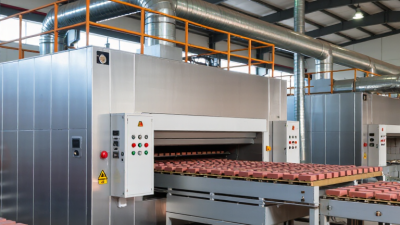
Picking the right tunnel dryer for brick isn’t just about buying equipment. It’s a production decision. Clay moisture, wall thickness, green strength, airflow, firing capacity—they all have to pull in the same direction. A dryer can pull water out fast and still leave you with cracks, warping, or uneven shrinkage. That’s the tricky part.
The European Commission’s Ceramic Manufacturing BREF points to drying temperature, air velocity, humidity control, and heat recovery as key process variables. And the International Energy Agency says industry used about 37% of global final energy in 2022. Those numbers are a good reminder: thermal efficiency deserves real attention. Still, saving energy doesn’t automatically mean a dryer design is good.
Dr. Michael J. Dondi, a well-known ceramic materials researcher, puts it simply: 'The dryer must respect the clay, not merely remove water.' That kind of practical thinking matters right there by the loading area. Operators should check temperature zones, fan pressure, exhaust moisture, and brick surfaces every shift. A steady 80°C zone can act differently when winter air gets into the plant.
Clay Brick Drying Machine Tunnel systems can keep production moving, sure. But the results come down to commissioning and daily control. Tunnel length, car spacing, burner arrangement, and recycled air all need to match the clay body. Small mistakes show up fast.
Honestly? The decision is rarely perfect.
This guide looks at dryer layouts, heat-recovery options, control systems, maintenance demands, and operating risks. It also pushes back on common assumptions. The cheapest dryer might not give you the lowest cost per saleable brick. What should guide the final call? Reliable evidence, plant experience, and measured moisture profiles.
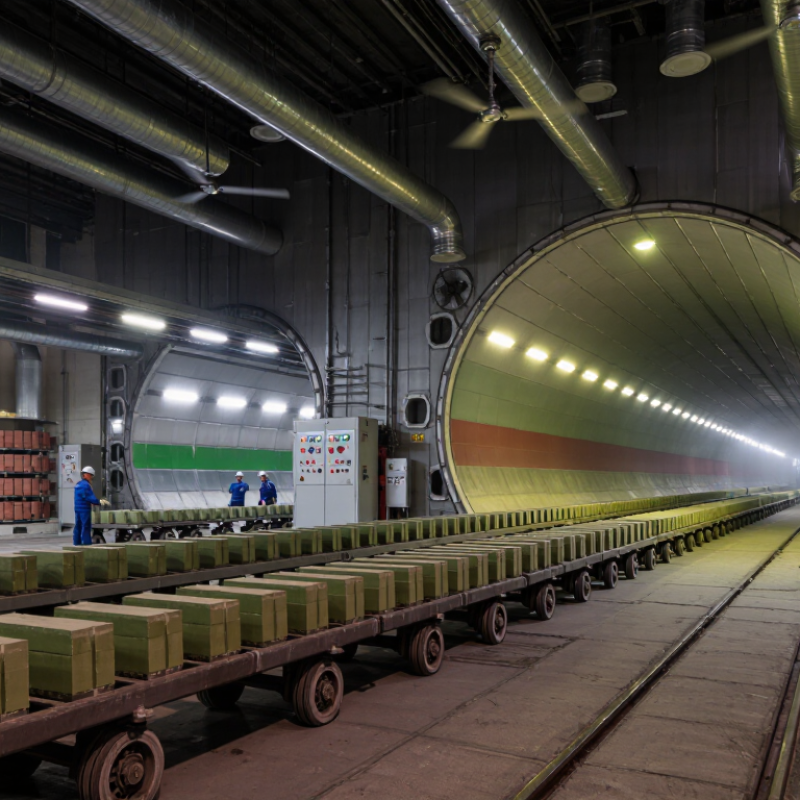
Choosing the best tunnel dryer starts with the brick, not the machine. Clay type, moisture content, brick size, and daily output determine the drying requirements. Freshly molded bricks often contain 18–25% moisture, but the exact figure changes with the forming method. Measure it.
A tunnel dryer must provide steady airflow, controlled heat, and enough residence time. Uneven air can dry outer edges quickly while the brick center remains wet. This creates cracks, warping, or weak corners during firing.
For reliable production, monitor temperature and humidity at several tunnel points. Record results from each batch. Small differences matter. Fuel efficiency also depends on insulation, air circulation, loading density, and exhaust control. A Clay Bricks Making Drying Machine Tunnel Dryer should match the kiln schedule, plant layout, and local climate. A model designed for a dry region may perform poorly during a humid season.
Test a sample batch before full installation. Place simple moisture checks near the tunnel entrance and exit. Leave enough space between setting rows for airflow. Do not chase maximum speed.
I have seen rushed drying create more rejected bricks than expected.
Review the results with operators, because practical observations often reveal problems that instruments miss. A dependable design should allow airflow adjustment, safe maintenance access, and future capacity changes. Overlooking these details can make an efficient dryer difficult to operate.
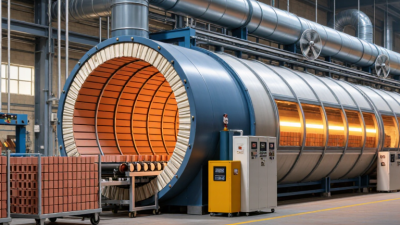
A Tunnel Dryer is a continuous system designed for steady brick production.
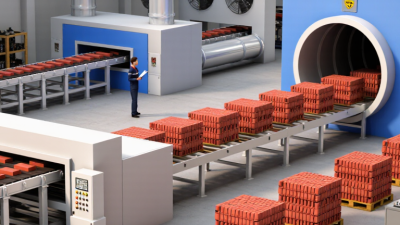
Freshly formed bricks enter on kiln cars and move through controlled drying zones. Warm air flows across the brick surface, removes moisture, and then recirculates through ducts. Temperature and humidity usually rise gradually, reducing surface cracking.
Batch chamber dryers work differently.
They dry fixed loads inside one insulated room. This design suits smaller plants or frequent product changes. Continuous tunnel systems often provide better output stability, but they require accurate loading and airflow control.
The EU Joint Research Centre’s Ceramic Manufacturing BREF reports that ceramic drying energy commonly varies by product, moisture content, and equipment design. Reported industrial ranges can reach roughly 0.3–1.2 GJ per tonne of product. Real results may differ.
Tips:
Measure moisture at the dryer entrance and exit. Keep airflow balanced across each brick row. A handheld infrared thermometer can reveal cold zones near the wall. Do not select capacity from peak production alone. Leave room for seasonal moisture changes.
Energy reports from the U.S. Department of Energy also emphasize heat recovery and recirculated air as practical efficiency measures. I would still test local clay first. Laboratory results can look perfect, while uneven green bricks behave badly at full scale.
Choosing a tunnel dryer starts with output, not the dryer’s advertised chamber size. Calculate hourly green-brick feed first. For example, 100,000 bricks per day at 2.5 kilograms each equals 250 tonnes daily. With 22 operating hours, the line needs about 11.4 tonnes of green bricks per hour.
Moisture removal matters more than fired output. The European Commission’s Ceramic Manufacturing BREF reports that brick production commonly uses about 1.5–4.0 GJ of thermal energy per tonne of fired product. Its technical guidance also highlights green-body moisture as a major drying variable. If green bricks contain 10% removable water, this example requires roughly 1.14 tonnes of evaporation hourly. Allowing 15–25% spare capacity can protect production during rainy weather, mold changes, or uneven feeding. Do not size the dryer from nominal kiln capacity alone.
Practical checks are essential. Measure moisture at the extruder, after drying, and before kiln entry. A 1% moisture increase can quietly overload the drying zone. The U.S. EPA’s AP-42 guidance treats drying emissions and fuel use as process-dependent, supporting site measurements over simple catalog comparisons. I would not trust a perfect spreadsheet without three weeks of operating data. Bricks may crack near the door, while the center remains damp. That weak point deserves attention. A smaller dryer with stable airflow can outperform a larger chamber running below its effective temperature and humidity range.
| Production Scale | Target Fired Brick Output (t/day) |
Typical Green-Brick Moisture (% wet basis) |
Estimated Wet Green-Brick Feed (t/day) |
Recommended Dryer Rated Capacity (t/day) |
Estimated Water Evaporation (t/day) |
Typical Drying Residence Time (hours) |
Indicative Dryer Arrangement |
|---|---|---|---|---|---|---|---|
| Small Production Line | 50 | 18–22 | 61–64 | 67–70 | 11–14 | 18–30 | Single-zone or compact multi-zone tunnel |
| Medium Production Line | 100 | 18–22 | 122–128 | 134–141 | 22–28 | 20–36 | Multi-zone tunnel with recirculation |
| Large Production Line | 150 | 18–22 | 183–192 | 201–211 | 33–42 | 24–42 | Long multi-zone tunnel with heat recovery |
| Selection Factor | Recommended Planning Guideline | Why It Matters |
|---|---|---|
| Capacity Margin | Select a rated capacity approximately 10% higher than the calculated average wet-brick feed. | Provides room for moisture variation, short-term production peaks and minor operating interruptions. |
| Drying Temperature | Common operating ranges are approximately 40–120°C, depending on brick type, size and drying stage. | A gradual temperature increase helps reduce cracking, warping and uneven moisture removal. |
| Air Velocity | Use adjustable airflow, commonly around 1–3 m/s near the product, subject to product trials. | Air velocity affects drying uniformity, surface moisture removal and energy consumption. |
| Heat Consumption | A preliminary planning range is about 1.1–1.8 MJ per kilogram of water evaporated. | Actual consumption depends on ambient conditions, exhaust losses, insulation, heat recovery and fuel type. |
| Moisture Measurement | Install or use regular sampling at the dryer inlet, middle zones and outlet; target final moisture is often below 1–2% before firing. | Moisture feedback helps prevent over-drying, under-drying and excessive fuel use. |
| Kiln Coordination | Match the dryer’s continuous output to the kiln’s continuous green-brick demand rather than its maximum hourly rating. | Balanced equipment avoids kiln starvation, green-brick accumulation and unnecessary dryer idling. |
Calculation basis: Wet green-brick feed = fired brick output ÷ (1 − green-brick moisture fraction). The recommended dryer capacity includes an approximate 10% operating margin. Values are preliminary engineering ranges; final sizing should be confirmed through material testing and a full heat-and-mass balance.
Choosing the best Tunnel Dryer Machine starts with heat source evaluation, not catalog specifications. The International Energy Agency reports that industry consumed about 37% of global final energy in 2022. Brick drying therefore deserves careful engineering attention.
A reliable dryer should match the plant’s fuel availability, brick moisture, and production schedule. Gas-fired systems offer rapid temperature response and stable heat control. Electric systems can support lower site emissions when powered by cleaner electricity. Waste heat from kiln exhaust can reduce fuel demand, but only after checking temperature, dust, and seasonal availability. The EU Joint Research Centre’s Ceramic Manufacturing BREF identifies heat recovery and optimized drying control as established best available techniques.
Airflow often decides whether energy savings become real. Measure air velocity across several dryer zones, not just near the fan. Uneven flow can leave cold corners, damp brick cores, and cracked edges. Variable-speed fans may reduce unnecessary electricity use, especially during partial loads. The U.S. Department of Energy’s brick-industry energy guidance also highlights insulation, leakage control, and exhaust-air management as practical efficiency opportunities.
Keep doors closed.
A useful test compares gas or electricity consumption per tonne of dried brick. Record inlet moisture, outlet moisture, cycle time, and reject rates. My first calculation would probably overvalue fuel efficiency and undervalue airflow balance. That mistake is common. A dryer using less heat may still waste energy through long cycles, over-drying, or unstable production.
Evaluating Heat Sources, Airflow, and Energy Efficiency
The chart compares representative engineering benchmarks for comparable green-brick drying duties. Lower specific heat demand indicates better energy performance, higher thermal efficiency reduces fuel losses, and a lower temperature coefficient of variation indicates more uniform airflow and drying.
Values are typical planning benchmarks rather than manufacturer specifications. Actual results depend on brick moisture, dryer insulation, residence time, airflow design, and heat recovery.
A tunnel dryer for brick production should match the clay body, plant layout, and firing schedule. Structure affects stability before automation affects speed. The European Commission’s Ceramic Manufacturing BREF reports typical brick firing energy near 1.5–3.0 GJ per tonne. Uneven drying can increase this burden through cracks, rejected bricks, and longer firing cycles.
Choose a dryer with adjustable zones, reliable air recirculation, and accessible inspection doors. A longer chamber is not always better. It may reduce temperature shock, but it also requires more floor space and heat management. In practice, operators should check moisture readings across the brick stack, not only at the outlet. The BREF also identifies heat recovery and controlled drying air as important efficiency measures.
Small changes matter.
Automation should follow process maturity. Basic systems can control fan speed, temperature, and damper positions. Advanced systems can connect moisture sensors with kiln data and adjust each zone automatically. The International Energy Agency’s Energy Efficiency 2023 report stresses the value of digital monitoring for industrial heat management, but automation cannot repair poor airflow design. I have seen plants purchase complex controls before stabilizing stacking patterns. That choice created expensive alarms, not better bricks. Keep manual override functions. Train operators to question sensor readings, especially after clay composition changes. A sensible system is measurable, maintainable, and slightly conservative.
Choosing the best Brick Dryer requires more than comparing the purchase price. Installation costs can change sharply with building height, foundation strength, gas lines, electrical capacity, and local transport. A compact dryer may appear economical, yet limited access can make delivery and assembly expensive.
I once underestimated the cost of extending a concrete foundation. That mistake delayed commissioning and increased contractor hours. Now, I request a complete installation list before approval. It should include lifting equipment, ductwork, insulation, control wiring, testing, and operator training. Site measurements matter. So does airflow planning.
Maintenance affects production stability. Ask whether inspection doors are easy to reach and whether common parts can be replaced without removing large panels. Belts, sensors, fans, seals, and burner components need clear service access. A maintenance schedule should identify cleaning intervals and temperature checks. Keep critical spare parts nearby. Small delays can become costly when wet bricks wait beside the kiln.
Service support deserves equal attention. Reliable suppliers provide installation supervision, commissioning records, troubleshooting guidance, and practical training. Response time should be written into the agreement, not left to verbal promises. Remote support is useful, but complex faults may require an experienced technician on site. Check references from plants with similar brick sizes and fuel systems. Some support plans look strong on paper, but their field coverage may be limited. Ask difficult questions before signing.
Start with hourly green-brick feed, not chamber size. For 100,000 bricks daily at 2.5 kilograms each, production reaches 250 tonnes daily. With 22 operating hours, the dryer needs about 11.4 tonnes hourly.
Drying capacity depends on removable water, not only finished brick volume. At 10% removable moisture, the example requires roughly 1.14 tonnes of evaporation hourly. Moisture is the real workload.
Allow about 15–25% spare capacity for rain, mold changes, and uneven feeding. Do not size the dryer from nominal kiln output alone. That shortcut can fail quietly.
Measure moisture at the extruder, after drying, and before kiln entry. A one-percent moisture increase can overload the drying zone. Check airflow across multiple zones, including corners.
Match the heat source with available fuel, brick moisture, and production schedules. Gas systems usually respond quickly and control temperature steadily. Electric systems may reduce site emissions with cleaner electricity.
Recovered kiln heat can reduce fuel demand when temperature and dust levels are suitable. Seasonal availability also matters. Measure it before designing around it.
Balanced airflow helps prevent damp cores, cold corners, and cracked edges. Variable-speed fans may reduce electricity use during partial loads. Keep doors closed.
Request costs for foundations, lifting equipment, ductwork, insulation, wiring, testing, and training. Ensure inspection doors provide easy access to belts, sensors, fans, seals, and burners. Keep critical spare parts nearby.
Require commissioning records, troubleshooting guidance, operator training, and written response times. Remote help is useful, but serious faults may need an on-site technician. Ask for references from plants with similar bricks and fuel systems.
A spreadsheet may overvalue fuel efficiency and undervalue airflow balance. A low-heat dryer can waste energy through long cycles or over-drying. Three weeks of operating data would be safer.
Selecting the best Tunnel Dryer For Brick production begins with understanding the brick type, moisture content, production volume, and required drying quality. Tunnel dryers generally move bricks through controlled drying zones, while air circulation, temperature, and humidity are adjusted to prevent cracks, deformation, and uneven moisture removal. Capacity should match the kiln and forming line, allowing stable output without creating bottlenecks or excessive idle space.
When comparing options, evaluate heat sources, airflow design, insulation, and energy-saving features to estimate long-term operating costs. The dryer structure should suit the available site, brick handling system, and future expansion plans. Automation can improve temperature control, production consistency, and labor efficiency, although a higher initial investment may be required. Installation cost, maintenance accessibility, spare-part availability, technical support, and service response should also be considered. A well-matched dryer balances drying performance, energy consumption, reliability, and total ownership cost rather than focusing only on the purchase price.