请留言
    
0%

Picking the best clay brick tunnel kiln? It’s not just about going for the biggest furnace or the flashiest control system. It’s really a production decision—one that touches clay prep, brick shape, fuel quality, drying capacity, worker skills, and whether maintenance teams can actually get to what they need. A kiln that runs beautifully in Germany might struggle in a plant dealing with wetter clay, shaky gas pressure, or extrusion that’s all over the place.

The European Commission’s Ceramic Manufacturing Industry BREF points to firing efficiency, heat recovery, and process control as big performance factors in brick production. It also makes clear why energy benchmarks deserve a cautious look: raw materials and product formats can swing consumption quite a bit. The U.S. EPA’s AP-42 data are handy for emissions and fuel references, but they’re not a full purchasing spec. In the end, real factory trials still matter.

Brickmaking consultant Harry Sturrock put it well: “A tunnel kiln is only as good as the preparation of its clay and the control of its firing.” That idea still holds up today. Moisture gradients can crack bricks near the kiln entrance. Uneven stacking can leave pale corners and over-fired centers. And at continuous production speed, small mistakes get expensive fast.

A reliable Tunnel Kiln Clay Brick evaluation should compare daily output, specific energy use, firing uniformity, how deep the automation really goes, spare-part availability, and operator training. Ask for measured results, not glossy brochures. And go inspect a working plant if you can.

There’s no universal best kiln. The honest answer depends on your clay, your products, your climate, and your budget. A careful buyer might find that the “perfect” design needs a few revisions before it’s truly dependable.
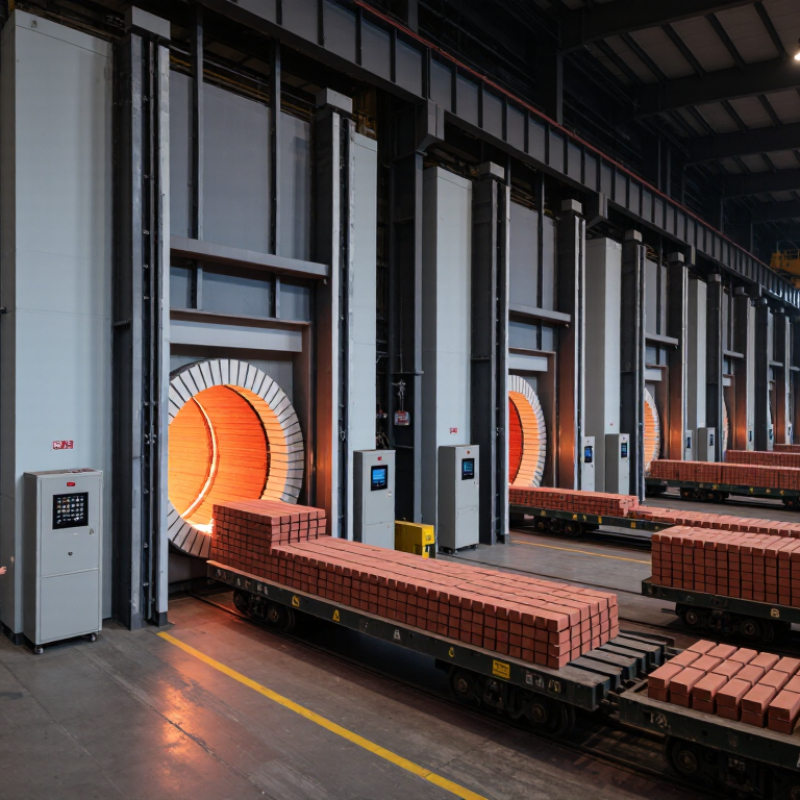
How to Choose the Best Clay Brick Tunnel Kiln?

Define Your Clay Brick Production Requirements

Choosing the best Clay Brick Tunnel Kiln starts with defining your production requirements, not comparing equipment brochures.

Record your target output in tonnes per day, brick dimensions, moisture content, firing temperature, and expected operating hours. A small factory may need flexibility more than maximum capacity. A large plant usually needs stable, continuous feeding and automated temperature control.

Fuel availability matters greatly. The European Commission’s Ceramic Manufacturing BREF reports structural clay products often using roughly 1.5–3.5 GJ of thermal energy per tonne, depending on product and plant conditions. Treat this range as a reference, not a promise.

Measure your own green brick moisture and firing curve. A difference of only 2% moisture can increase drying demand and disrupt kiln balance.

It sounds minor.

Check clay behavior before selecting kiln length or burner capacity. Laboratory tests should examine plasticity, shrinkage, particle size, and cracking after firing. The World Bank Group’s Environmental, Health, and Safety Guidelines for Ceramic Manufacturing identify kiln emissions, dust, and fuel handling as important control areas.

Therefore, include ventilation, heat recovery, filtration, and safe maintenance access in the original design.

Your production plan should also define acceptable breakage, color variation, loading method, and future capacity. Industry experience shows that unstable forming quality can reduce kiln performance, even when temperature control is excellent.

I have seen theoretical capacity look impressive on paper, while irregular brick stacking created cold zones.

That is easy to overlook.

Build decisions around measured clay data, local fuel costs, labor skills, and verified trial results.

Compare Tunnel Kiln Types and Firing Technologies

Choosing a clay brick tunnel kiln starts with comparing kiln structure and firing technology. The right choice depends on brick size, daily output, fuel access, and factory space.

A car-type tunnel kiln carries bricks on kiln cars through preheating, firing, and cooling zones. It suits large batches and varied brick shapes. Its cars require regular inspection, especially around seals and wheel alignment. A roller kiln moves carefully stacked bricks on ceramic rollers. It offers faster firing and precise temperature control for thin, uniform products. However, uneven loading can cause cracks or roller marks. It is less forgiving with heavy or irregular bricks.

Fuel selection also changes kiln performance. Natural gas usually provides clean flame control and quick temperature adjustment. Solid fuels may reduce energy costs, but ash and uneven combustion can affect brick color and strength. Electric heating offers accurate control in selected zones, though installation costs and grid capacity deserve careful review. Oxygen levels, burner position, and exhaust pressure must be tested during commissioning. Small temperature differences matter.

Use calibrated thermocouples, not only the control screen. Check moisture at the dryer outlet and inspect fired bricks from several kiln positions. A practical trial should record fuel use, firing time, water absorption, strength, and visible warping. Do not trust one successful batch. Clay chemistry can change between suppliers, and a kiln designed too tightly around one formula may later become a limitation. Safety systems, emissions controls, and local operating requirements must be verified before production.

How to Choose the Best Clay Brick Tunnel Kiln? - Compare Tunnel Kiln Types and Firing Technologies

Comparison Dimension Conventional Car Tunnel Kiln High-Efficiency Gas-Fired Car Tunnel Kiln Roller-Hearth Tunnel Kiln Electric Tunnel Kiln Regenerative or Low-NOx Gas Firing System
Primary Product Range Standard facing bricks, common bricks, perforated bricks and engineering bricks Facing bricks, engineering bricks, dense structural units and products requiring consistent color Thin bricks, brick slips, roof tiles, facade panels and other dimensionally stable products Small or medium batches of specialty bricks, laboratory products, decorative units and low-emission production Suitable for many standard and facing-brick products when integrated into a gas-fired tunnel kiln
Typical Firing Temperature 900–1,150°C 950–1,150°C 950–1,200°C 900–1,200°C 950–1,150°C, depending on the clay body and product specification
Typical Firing Cycle 18–36 hours, including preheating, firing and cooling 16–30 hours, depending on product size, moisture and kiln design 1–8 hours for thin products; longer cycles may be required for thicker units 8–30 hours, depending on batch size, loading density and temperature profile Comparable to the host gas-fired kiln; improved heat recovery can shorten or stabilize the cycle
Typical Production Scale Approximately 100–500 tonnes per day for medium to large brick plants Approximately 150–600 tonnes per day for continuous industrial production Approximately 20–250 tonnes per day, depending on product geometry and line speed Usually below 20 tonnes per day for specialty or flexible production Commonly used in medium and large continuous plants rather than as a separate kiln type
Main Energy Source Natural gas, biogas or other suitable gaseous fuels; some designs can use liquid or solid fuel systems Natural gas or biogas, supported by precise burner and combustion-air control Natural gas, liquefied petroleum gas or electricity, depending on the kiln configuration Electricity supplied through resistance or other electric heating elements Natural gas or biogas with heat recovery, staged combustion and controlled exhaust-gas recirculation
Indicative Specific Energy Consumption 1.2–2.5 GJ per tonne of fired product 1.0–1.8 GJ per tonne of fired product when the kiln is well insulated and properly loaded 0.8–1.8 GJ per tonne for thin, fast-firing products Highly dependent on the electricity mix; typically 250–550 kWh per tonne May reduce fuel consumption by approximately 5–15% compared with a similar conventional combustion system
Temperature Uniformity Good when the kiln is correctly zoned and the cars are evenly loaded Very good because burner output, air flow and pressure can be controlled automatically Very good for thin products with uniform thickness; less suitable for large differences in product mass Very good, particularly for small chambers and carefully controlled loads Very good when combustion, oxygen level and kiln pressure are continuously monitored
Atmosphere Control Moderate to good; reducing or neutral firing requires suitable burners and accurate air control Good to very good; oxygen sensors and automatic air-fuel ratio control are commonly used Good; especially suitable for products requiring consistent surface color and controlled oxidation Very good because there is no combustion gas from the heating elements Very good; staged combustion and flue-gas recirculation can help control oxygen concentration and NOx formation
Automation Level Medium to high, with automatic car movement, temperature monitoring and kiln pressure control High, including programmable firing curves, burner management, oxygen monitoring and fault alarms High, including roller speed, temperature zones, atmosphere and product tracking High, although production capacity is usually more limited High, requiring integrated combustion controls, sensors and exhaust-gas management
Loading Flexibility Medium to low; best performance is achieved with products of similar thickness and firing behavior Depends on the underlying tunnel-kiln design and the burner control system
Capital Investment Medium to high High because of advanced burners, controls and heat-recovery equipment High for industrial lines, including precision rollers and product handling equipment Low to medium for small systems; high for large-capacity electric installations Additional investment is required for regenerative burners, heat exchangers, sensors and control equipment
Maintenance Requirements Regular maintenance of kiln cars, refractories, burners, seals and drive systems Regular burner, sensor, refractory, seal and automation maintenance; specialist support is beneficial Precision maintenance of rollers, bearings, drives, seals and alignment systems Heating elements, electrical controls, insulation and temperature sensors require periodic inspection Burners, valves, heat exchangers, fans, sensors and flue-gas channels require scheduled maintenance
Emission Considerations CO₂, NOx and other emissions depend on fuel type, combustion efficiency and clay raw materials Lower fuel-related emissions are possible through efficient combustion and heat recovery Potentially efficient because of short cycles, but emissions still depend on fuel, product and operating conditions No direct combustion emissions at the kiln; overall emissions depend on the electricity generation mix Designed to lower NOx and fuel consumption, but actual results depend on burner settings and raw-material chemistry
Key Advantages Proven technology, broad product compatibility, continuous operation and relatively straightforward operation High product consistency, lower fuel use, strong automation and better control of firing defects Fast firing, compact layout and excellent productivity for thin, uniform products Clean local operation, accurate temperature control and convenient recipe changes for specialty products Improved fuel efficiency, reduced NOx potential and better use of waste heat from the kiln
Main Limitations Large footprint, significant refractory and car maintenance, and higher energy use than optimized systems Higher initial cost, greater control-system complexity and dependence on reliable fuel quality Less suitable for thick, heavy or highly variable products; roller and handling systems can be sensitive Electricity demand can be costly, and large-capacity systems may require substantial grid infrastructure Higher system complexity and the need for trained personnel to optimize combustion and pressure balance
Best Choice When You need a versatile, continuous kiln for standard clay-brick production with varied product formats You mainly produce thin bricks, brick slips, tiles or facade products and need short firing cycles You produce specialty items, operate at smaller scale or prioritize local emissions-free heating You want to modernize an existing gas-fired kiln and reduce fuel consumption or NOx emissions

Note: The performance figures are indicative industrial ranges. Actual results vary with clay mineralogy, product dimensions, green-body moisture, setting density, kiln insulation, fuel quality, firing curve, ambient conditions and plant automation.

Evaluate Fuel Options, Energy Use, and Temperature Control

Choosing the best clay brick tunnel kiln begins with fuel reliability, not only purchase price. Natural gas and LPG can provide clean, adjustable heat, while biomass may reduce fuel costs where dry supply is dependable. However, wet biomass creates unstable flames and more smoke. Electricity offers precise control, but its operating cost depends heavily on local tariffs. Ask for measured fuel consumption per fired tonne, not general efficiency claims.

Energy use also depends on brick moisture, loading density, insulation, and kiln length. A well-insulated kiln should maintain steady heat without constantly increasing burner output.

Temperature control is critical near the preheating, firing, and cooling zones. Use calibrated thermocouples and review temperature records from each zone. Small differences matter.

Uneven heating can leave dark cores, cracked edges, or underfired surfaces. In practical operation, operators often adjust airflow after observing brick color and kiln pressure. That experience remains valuable, though it should support data rather than replace it.

Tips:

Test the kiln with your actual clay mixture and brick size. Check temperature uniformity across the car width, not only along the tunnel.

Compare fuel use during normal production, not a perfect demonstration run. Leave room for doubt.

Supplier figures may not match your weather, moisture levels, or working habits. A short trial can reveal more than a polished specification sheet.

Check Kiln Capacity, Automation, and Production Flexibility

How to Choose the Best Clay Brick Tunnel Kiln?

A Fired Clay Brick Tunnel Kiln should match your actual production plan, not an optimistic sales forecast. Check daily output, firing cycle length, brick size, and seasonal demand. A kiln rated for 100,000 bricks may perform differently with heavy, perforated, or unevenly dried products. Ask for test-firing data from similar clay bodies. Inspect temperature records, fuel consumption, and rejection rates. These details often reveal more than capacity claims.

Automation should improve control without making maintenance mysterious. Look for automatic temperature zones, pressure monitoring, fuel regulation, and alarm records. Operators still need clear access to sensors and manual controls. A reliable system should show temperature changes across the kiln, not only one average number. Production flexibility also matters. Confirm whether the kiln can handle different brick dimensions, firing temperatures, and loading patterns without long changeover periods.

Tips: Walk through the loading area before choosing equipment. Measure trolley spacing, dryer output, and storage room. Request a small production trial, then compare fired color, strength, water absorption, and warpage. Keep spare sensors and critical components available locally. Automation can reduce mistakes, but it cannot correct poorly prepared clay. My practical concern is simple: early capacity estimates are often too confident. Review them after real trials, because the first firing may expose moisture problems, uneven airflow, or slower unloading than expected.

Assess Brick Quality, Maintenance, and Operating Safety

Choosing a Clay Brick Firing Tunnel Kiln requires more than comparing capacity and fuel use. Brick quality should remain consistent from the first car to the last. Check firing temperature records, moisture control, and kiln atmosphere across different zones. Uneven color, warped edges, or soft centers may indicate poor heat distribution.

Ask for test bricks from several kiln positions. Measure compressive strength, water absorption, size variation, and visible cracking. A clean surface is not enough. Inspect the kiln car seals, burner condition, insulation, and temperature sensors. Small air leaks can waste fuel and create unstable firing. The control display may look accurate, but sensors still need regular calibration.

Maintenance planning protects both output and workers. Keep a written schedule for burner cleaning, refractory repairs, fan inspection, and electrical testing. Look for loose bricks above walking areas. Check doors, guards, handrails, and emergency exits before operation. Carbon monoxide monitoring is essential in enclosed service spaces. Operators should use heat-resistant PPE and follow isolation procedures before repairs. Never rely on habit alone.

Some inspection decisions remain uncertain. A kiln can perform well during a short demonstration and decline under continuous production. Request operating data from different seasons and loading conditions. Leave room for honest review. No system is perfect. 海南天天中彩票

Review Supplier Expertise, Installation Support, and Total Cost

Choosing a Clay Brick Burning Tunnel Kiln requires more than comparing heating capacity. Supplier expertise affects kiln stability, fuel use, and brick quality. Ask for documented installations using similar clay, product sizes, and daily output. Request operating records, not polished brochures.

The Ceramic Manufacturing Industry BREF from the European Commission emphasizes process control, insulation, and efficient firing practices. These details influence production every hour.

Installation support deserves equal attention. Confirm who will supervise foundation checks, kiln-car alignment, burner setup, drying, and commissioning. A skilled technician should train operators beside the control panel, where temperature curves become real production decisions. Ask about spare parts, remote diagnostics, and response times.

Small delays can leave racks of underfired bricks waiting in the yard.

Total cost includes construction, fuel, labor, maintenance, downtime, and rejected products. The International Energy Agency reports that industry consumed about 37% of global final energy in 2022, making energy performance financially important. Compare fuel consumption per thousand bricks under comparable moisture conditions.

A cheaper quotation may hide weak insulation or limited after-sales support. A spreadsheet can still lie. Review five-year costs with conservative assumptions, because local clay variation and inexperienced operators can change the result.

Full Automatic Clay Brick Packing Machine: Efficient Strapping and Packaging Solutions from China Suppliers

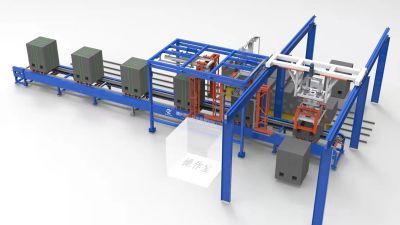
The Full Automatic Clay Brick Packing Machine offers an efficient strapping and packaging solution for modern fired-clay brick factories. Developed by China suppliers, the Automatic Arrow-Penetrating Strapping and Packaging System integrates brick handling, grouping, stacking, alignment, and automatic strapping in one continuous workflow. Its arrow-penetrating mechanism helps secure bundled bricks consistently, while automated positioning reduces manual intervention and supports stable packing quality across different production schedules.

Automation is increasingly important as manufacturers seek higher throughput, safer working conditions, and better resource control. The International Federation of Robotics reported 541,302 industrial robots installed worldwide in 2023, reflecting the broader shift toward automated production systems. In addition, the 2023 Global Status Report for Buildings and Construction from UNEP and the GlobalABC noted that the building sector accounted for approximately 37% of global energy demand and 34% of energy- and process-related carbon dioxide emissions in 2022. Although packaging equipment does not address these figures alone, precise stacking and strapping can help reduce handling damage, unnecessary rework, and packaging waste. With coordinated conveying, automatic grouping, and dependable bundle securing, this clay brick packing machine provides a practical upgrade for factories pursuing efficient, repeatable, and scalable packaging operations.

FAQS

What should determine the choice of a clay brick tunnel kiln?

Match the kiln with brick size, daily output, fuel access, and available factory space. A 100,000-brick rating may change with heavy or poorly dried bricks. Capacity forecasts can be too confident. Review them after real firing trials.

How does a car-type tunnel kiln differ from a roller kiln?

A car-type kiln carries bricks through preheating, firing, and cooling zones. It suits large batches and varied brick shapes. A roller kiln offers faster firing and precise control for thin, uniform products. Heavy or irregular bricks may damage rollers or develop marks.

Which fuel options should a factory compare?

Natural gas allows clean flame control and quick temperature adjustment. Solid fuel may lower energy costs, but ash can change brick color. Electric heating provides accurate zone control, though grid capacity requires review. No option is perfect.

How can operators verify kiln temperature accurately?

Use calibrated thermocouples, not only the control screen. Test oxygen levels, burner positions, and exhaust pressure during commissioning. Inspect several kiln positions because small temperature differences matter. One average reading is not enough.

What should a practical kiln trial measure?

Record fuel use, firing time, water absorption, strength, and visible warping. Check bricks from different positions inside the kiln. Do not trust one successful batch. Clay chemistry may change between suppliers.

How important are automation and manual controls?

Automation should manage temperature zones, pressure, fuel regulation, and alarms. Operators still need clear sensor access and manual controls. The system should display temperature changes across the kiln. Automation cannot repair poorly prepared clay.

What maintenance checks help protect kiln performance?

Inspect kiln car seals, wheel alignment, burners, insulation, fans, and sensors. Check for small air leaks around doors and kiln cars. Keep spare sensors and critical components available locally. Maintenance becomes harder when systems are too mysterious.

What safety details should be verified before production?

Check guards, handrails, doors, emergency exits, and walking areas. Monitor carbon monoxide in enclosed service spaces. Operators need heat-resistant protective equipment and isolation procedures. Loose bricks overhead are an avoidable danger.

How can a factory judge fired brick quality?

Test compressive strength, water absorption, size variation, cracking, color, and warpage. Inspect bricks from the first car to the last. A clean surface can hide a soft center. Short demonstrations may not reveal seasonal or continuous-production problems.

Conclusion

Choosing the best Clay Brick Tunnel Kiln begins with a clear understanding of your production requirements, including brick types, daily output, raw material characteristics, and available space. Compare different kiln structures and firing technologies to identify a system that provides stable heat distribution, efficient fuel use, accurate temperature control, and reliable performance. Fuel availability, energy consumption, and environmental operating conditions should also be considered to support consistent production costs and product quality.

A suitable kiln should match your required capacity while offering practical automation, flexible production control, and easy operation. Evaluate how well it protects brick quality, reduces defects, simplifies maintenance, and ensures workplace safety. Finally, review the supplier’s technical expertise, installation services, training, spare-parts support, and overall project cost. Considering both initial investment and long-term operating expenses will help you select a Clay Brick Tunnel Kiln that delivers dependable performance, efficient production, and sustainable value for your facility.


Evelyn

Evelyn

Evelyn is a dedicated marketing professional at We Henan Cadier Green Building Technology Co., Ltd., where she has been instrumental in promoting the company’s innovative solutions in energy-saving and environmentally friendly wall materials since 2009. With a deep understanding of the industry and......
Previous What Is an Automatic Brick Production Line?