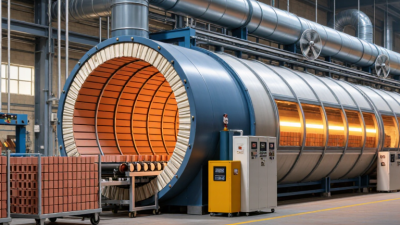
Picking out the right Brick Drying Machine isn’t just about comparing capacity and price. Honestly, the best choice really depends on a bunch of other factors—like the type of bricks you’re making, how much moisture they start with, how much you need to produce, and even your local weather conditions. A good machine should dry the bricks evenly, avoiding issues like surface cracks, warped edges, or weak spots—that stuff really matters once you're on the factory floor.
Most seasoned operators usually start by setting their drying goals. They’ll check the moisture level of the green bricks, jot down drying times, monitor the chamber temperature, and verify the final moisture contents. It’s also crucial to make sure airflow reaches all stacks—yes, even those bricks tucked near the walls of the chamber. If airflow isn’t even, you might end up with damp bricks in the middle while the outer ones look pretty dry. Don’t just assume it’ll be fine; it pays to double-check.
When evaluating your options, you really should consider how much fuel the machine uses, whether it recovers heat effectively, how precise the controls are, ease of maintenance, and whether spare parts are easy to get. Don't hesitate to ask manufacturers for test data, details about installation, and references from other brick plants—getting a glimpse of real-world results matters more than glossy brochures. If possible, try to do a short trial run—it often reveals issues that specs alone won’t show.
And don't forget to think about how the machine connects to your kiln, the loading process, available floor space, and training for your operators. Even if a machine matches your target capacity, it could still cause delays during loading or unloading. Safety features, insulation quality, and clear operating procedures are also key points—most dependable suppliers will honestly tell you about limitations, instead of promising perfection.
Honestly, there’s no one-size-fits-all answer here. A smaller tunnel dryer might be perfect for a tiny setup, while a continuous dryer could handle bigger, high-volume production smoothly. Even experienced buyers can overlook factors like seasonal humidity changes or shifts in clay composition. So, take a close look at your data again before making a decision. The right brick drying machine should give you consistent quality, predictable operating costs, and reliable performance day in and day out, for years to come.
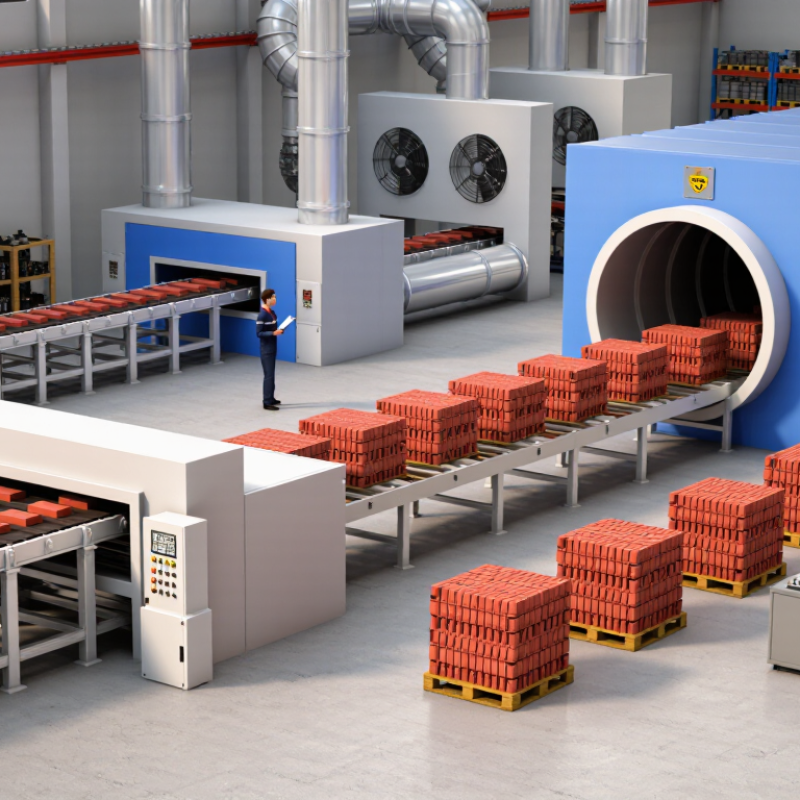
A Clay Brick Drying Machine removes moisture before firing, protecting bricks from cracks, distortion, and sudden steam pressure. In practical production, the dryer controls temperature, humidity, and airflow across stacked green bricks. Uneven airflow can leave soft corners on one side and dry surfaces on the other. That small difference becomes costly inside the kiln.
The European Commission’s Ceramic Manufacturing BREF identifies drying and firing as major energy-consuming stages in ceramic production. It reports that drying demand varies widely with clay moisture, product design, and heat recovery. The International Energy Agency’s Energy Technology Perspectives 2024 also states that industry uses about 37% of global final energy. This makes efficient heat use important, even for medium-sized brick plants. Look for insulated chambers, adjustable airflow, waste-heat recovery, and sensors that measure brick moisture rather than air temperature alone. A dryer running at maximum heat is not automatically efficient.
Production experience matters here. Test the machine with your actual clay, brick size, stacking pattern, and seasonal humidity. Ask for moisture-uniformity records, not only rated capacity. Some specifications look impressive on paper. They may fail during rainy weeks. I would also examine maintenance access, fan noise, and control response. These details are easy to overlook, yet operators face them every shift. A careful trial may reveal that slower drying produces stronger green bricks and fewer rejected batches.
Choosing a Clay Brick Drying Machine Tunnel Dryer starts with the brick, not the machine. Soft-mud bricks often retain more moisture than stiff-extruded units. Their drying cycle needs gentler airflow and lower initial temperatures. The European Commission’s Ceramic Industry BREF identifies drying and firing as major energy-consuming stages in ceramic production. Therefore, moisture removal deserves measured attention.
Record brick length, width, wall thickness, and green weight before selection. A thick engineering brick may dry unevenly, even when its surface feels firm. The dryer should provide adjustable air velocity, temperature zones, and humidity control. Uniform airflow matters. It reduces edge cracking and internal stress. For hollow bricks, air must reach cavities without creating harsh pressure differences. The JRC BREF also reports broad thermal energy consumption ranges for ceramic products, showing why heat recovery and insulation deserve evaluation.
Measure twice. Guessing is expensive.
Production data should guide capacity. Compare hourly output, seasonal humidity, loading density, and acceptable moisture variation. The U.S. Department of Energy’s industrial energy assessments repeatedly emphasize monitoring, heat recovery, and process control as practical efficiency measures. Yet no report can replace a plant trial. Clay mineralogy changes from one site to another. A setting that worked last year may fail after raw-material changes. I would test several loads, inspect the brick cores, and review temperature logs before approving the final design. Perfect drying curves rarely survive real production.
Choosing a brick drying machine starts with comparing designs, not reading output claims. The search phrase Clay Bricks Making Drying Machine Tunnel Dryer Brick Oven covers several different systems.
A continuous tunnel dryer suits large factories with steady production. Green bricks move on cars through controlled temperature zones.
Chamber dryers offer greater flexibility for changing brick sizes and seasonal demand. They usually require more handling and longer loading time.
The European Commission’s Ceramic Manufacturing BREF reports tunnel kiln firing energy at roughly 1.5–3.5 GJ per tonne, depending on product and operating conditions. Drying performance directly affects this energy balance. Recovered kiln heat can reduce fuel demand, but poor airflow may leave dark, damp cores.
I have seen surfaces become dry while the center remained weak. That defect is easy to miss. Check fan distribution, humidity sensors, insulation thickness, and exhaust control. Ask suppliers for moisture-uniformity records, not only hourly capacity.
Tips: Test representative clay before purchase. Measure moisture at the surface and center. Compare cycle time, heat consumption, labor, and maintenance access. A chamber design may outperform a tunnel dryer when production changes often. A tunnel design may be better when output stays stable. The best choice depends on clay plasticity, brick thickness, local fuel costs, and available floor space. Even reliable calculations can fail when loading patterns change. Allow room for adjustment.
Choosing a brick drying machine starts with matching capacity to the Brick Drying Process, not only reading the hourly output. Calculate green brick weight, moisture content, operating hours, and seasonal demand. A machine rated at 20 tonnes per hour may underperform when clay moisture rises after heavy rain. Leave practical headroom, usually 10–15%, for loading delays and maintenance. Small details matter. Measure pallet spacing, airflow resistance, and the distance between the dryer and kiln.
Energy efficiency deserves equal attention. The European Commission’s Ceramic Manufacturing BREF reports typical ceramic drying energy consumption near 0.2–0.5 GJ per tonne, depending on moisture and equipment design. Compare machines using energy per tonne of removed water, not only installed motor power. Heat recovery from kiln exhaust can reduce fuel demand, but dirty air ducts may weaken performance. The International Energy Agency identifies industrial heat efficiency as a major decarbonisation opportunity. However, efficiency claims need site measurements.
Drying performance appears in moisture uniformity, crack rates, and cycle stability. Ask suppliers for test data using clay similar to yours. Check moisture at the brick centre, not just its surface. A stable outlet moisture range often matters more than a fast cycle. Infrared sensors can help, yet calibration errors remain common. My selection rule is imperfect: the lowest energy figure may hide higher maintenance costs. Record fan power, drying time, rejected bricks, and heat loss during a real production trial. Evaluate weekly results, not one impressive demonstration.
How to Choose the Best Brick Drying Machine?
Automation should match your production rhythm, not just your output target. A reliable brick drying machine can control temperature, humidity, airflow, and drying time with limited manual adjustment. Check whether sensors respond accurately when weather conditions change. Simple controls are often better than complicated systems that operators rarely understand. Remote monitoring can reduce delays, but it should not replace trained workers. I once focused too heavily on automatic settings and overlooked loading consistency. That mistake caused uneven moisture levels.
Maintenance affects both productivity and operating costs. Inspect fans, heating elements, sensors, belts, and insulation before purchasing. Ask how quickly common parts can be replaced. Easy access to service areas can save hours during a breakdown. Safety guards, emergency stops, stable wiring, and clear temperature limits are essential. Operators should receive practical training, not only a manual. Heat can be dangerous. Never assume experience prevents accidents.
Tips: Compare energy use under normal and peak loads. Request maintenance schedules and realistic service intervals. Watch a full drying cycle if possible. Record fuel or electricity consumption for several batches. Lower purchase prices can hide higher repair costs. Also, leave room for human judgment. Automation is helpful, but imperfect settings still need review.
Comparison of common industrial drying configurations for clay bricks. Figures are typical planning ranges and should be verified against brick size, moisture content, fuel prices, local climate, and production targets.
| Drying Configuration | Typical Production Capacity | Automation Level | Drying Cycle | Typical Thermal Energy Use | Routine Maintenance | Safety Requirements | Labor Demand | Operating Cost Profile |
|---|---|---|---|---|---|---|---|---|
| Natural or Semi-Natural Chamber Dryer | 5,000–30,000 bricks per batch |
Low to Medium Manual loading with basic temperature monitoring |
24–72 hours, depending on weather and brick moisture | Approximately 0.8–1.5 MJ per kg of evaporated water when assisted by low-temperature heat | Inspect doors, racks, fans, vents, and temperature sensors weekly; clean dust and clay deposits | Guard hot surfaces, provide ventilation, and control carbon monoxide where combustion heating is used | Medium to High | Low equipment cost; higher labor and weather-related variability |
| Batch Hot-Air Dryer | 10,000–60,000 bricks per batch |
Medium Programmable temperature and fan controls |
16–36 hours | Approximately 1.0–1.8 MJ per kg of evaporated water | Clean filters and heat exchangers; inspect burners, belts, fans, dampers, and sensors every 1–4 weeks | Use over-temperature protection, emergency stops, burner interlocks, and guarded rotating parts | Medium | Moderate fuel and electricity cost; suitable for flexible batch production |
| Continuous Tunnel Dryer | 30,000–200,000+ bricks per day |
High Automatic temperature zones, airflow, conveying, and humidity control |
8–24 hours | Approximately 0.7–1.3 MJ per kg of evaporated water with heat recovery | Daily inspection of conveyors and fans; scheduled maintenance for bearings, seals, burners, ducts, and control systems | Requires interlocked access doors, emergency stops, heat shielding, fire protection, and lockout procedures | Low to Medium | Higher capital cost; lower unit labor cost and more consistent energy use at high utilization |
| Multi-Zone Continuous Dryer with Heat Recovery | 80,000–300,000+ bricks per day |
Very High PLC or computer-based control with automatic recipe management |
6–18 hours | Approximately 0.5–1.0 MJ per kg of evaporated water, depending on heat recovery efficiency | Continuous monitoring of fans, dampers, heat exchangers, sensors, and insulation; planned shutdown servicing is essential | Comprehensive guarding, alarm systems, exhaust monitoring, fire detection, and controlled access are required | Low | Lowest potential cost per brick at high capacity; higher controls and service requirements |
| Waste-Heat-Assisted Dryer | 30,000–200,000+ bricks per day |
Medium to High Automatic airflow and temperature control connected to the heat source |
8–24 hours | Approximately 0.4–1.0 MJ per kg of evaporated water when stable waste heat is available | Inspect ducts, heat exchangers, dampers, fans, filters, and condensate drains; check for corrosion and deposits | Prevent flue-gas contamination, monitor temperature and carbon monoxide, and protect against backflow | Low to Medium | Potentially low fuel cost; performance depends on the consistency and cleanliness of available waste heat |
| Electric Heat-Pump Dryer | 5,000–50,000 bricks per day |
High Automatic humidity, temperature, and airflow control |
12–36 hours | Approximately 0.25–0.60 kWh per kg of evaporated water, depending on operating temperature and heat-pump efficiency | Clean air filters and coils; inspect refrigerant circuits, condensate drainage, fans, and electrical connections | Requires electrical protection, refrigerant safety procedures, guarded fans, and adequate ventilation around the equipment | Low | Higher electricity dependence; efficient where electricity is reasonably priced and low-temperature drying is acceptable |
Selection guidance: Choose a batch dryer for variable production, a continuous tunnel dryer for stable high-volume output, a waste-heat-assisted system when a reliable heat source is available, and a heat-pump system when precise low-temperature control and reduced direct emissions are priorities. Actual operating cost should include fuel or electricity, labor, maintenance, downtime, ventilation, and rejected-brick losses.
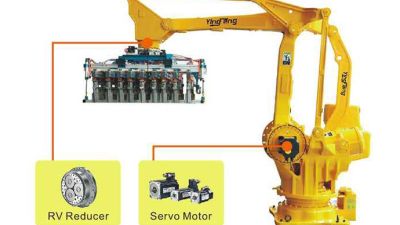
Automatic brick stacking robots are becoming an important solution for tunnel and rotary kiln production, where stable handling, accurate placement, and continuous operation are essential. Designed for superior load capacity, these systems can move and stack bricks at various working positions, expanding the operating range while maintaining high speed and precise positioning. Industry reports from IFR and Grand View Research highlight the growing role of robotics in improving automation, labor efficiency, and production consistency across demanding manufacturing environments.
As experienced China-based suppliers, we provide flexible robotic solutions for different brick sizes, stacking patterns, and kiln layouts. Our product range includes multiple robot configurations selected according to payload, reach, cycle time, and workspace requirements. We also specialize in complete project design for tunnel kilns and rotary kilns, adapting grippers, conveyors, control systems, and safety functions to each stacking condition. With reliable engineering support and practical integration capabilities, our factory helps manufacturers improve material handling, reduce repetitive work, and develop a more efficient brick production process.
It removes moisture from unfired bricks before kiln firing. This reduces cracks, distortion, and sudden steam pressure. Dry bricks carefully.
Uneven airflow can leave soft corners and overly dry surfaces. These differences may cause failures inside the kiln. Small gaps matter.
Clay moisture, brick size, stacking pattern, and seasonal humidity all influence drying time. Rainy weeks may expose weaknesses hidden during testing.
No. Heat alone is not efficiency. Insulation, airflow control, heat recovery, and moisture sensors can reduce wasted energy. Slower drying may produce stronger green bricks.
Look for controls covering temperature, humidity, airflow, and drying time. Sensors should respond when weather changes. Simple controls may outperform confusing systems.
Inspect fans, heating elements, sensors, belts, insulation, guards, and emergency stops. Keep service areas accessible for quick repairs. Heat can be dangerous.
Request drying curves, energy data, moisture-uniformity records, and similar-material test results. A sample trial is valuable. Sales promises are not enough.
State output, moisture targets, energy use, delivery dates, installation duties, and acceptance standards. Include training and fault procedures. Plan for spare parts.
Compare purchase price, fuel or electricity use, maintenance, spare parts, and downtime over three years. The cheapest quote may cost more later. My estimate could still change.
Choosing the right Brick Drying Machine is essential for achieving stable product quality, efficient production, and controlled operating costs. The selection should begin with a clear understanding of the brick types, dimensions, moisture levels, and required drying time. Different machine designs may suit different production scales and factory layouts, so it is important to compare airflow systems, heating methods, chamber structures, and material-handling processes. A suitable machine should provide even drying without causing cracks, deformation, or unnecessary energy consumption.
Capacity, energy efficiency, drying performance, automation, maintenance needs, and workplace safety should all be evaluated before making a decision. Consider whether the equipment can meet current output requirements while allowing for future expansion. Simple operation, accessible components, reliable temperature control, and reasonable maintenance costs can improve long-term value. Finally, select a dependable supplier that offers clear technical specifications, installation support, training, spare parts, and responsive service. A careful comparison of total ownership costs and production goals will help ensure a practical and lasting purchase.