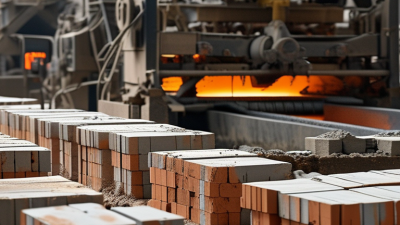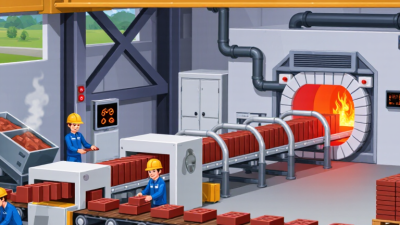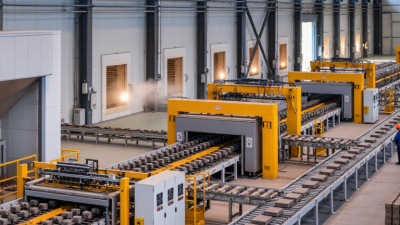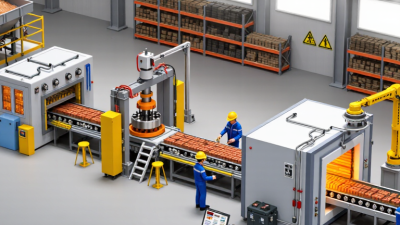
So, when you're actually looking to pick out a Brick Kiln Machine - and I mean really pick one, not just glance at the price tags - you've got to think about more than that. You know, everything from the kiln design to how precise the firing control is, even fuel consumption and the production capacity - it all adds up to what you'll get out daily. And here's the thing: Chinese manufacturers aren't one-size-fits-all. They offer all sorts of configurations, whether it's the full kiln system or just the ancillary machinery for brick making. Honestly, when you start looking into brick manufacturers, you'll quickly see that their capabilities and service arrangements can vary a whole lot. So this guide rounds up ten different manufacturers to get you started on your research. We're looking at things like product range, tech support, how much they can customize, and whether they've actually got experience working with brick producers. Now, these points are handy for comparison, but they're not a guarantee that any of these suppliers will be a perfect fit for your project. I mean, think about it – a small plant is going to need a completely different kiln layout than a high-volume factory. Plus, factors like how much moisture is in the clay, the dimensions of the bricks you're making, and what fuel is available locally can all throw a wrench in the works. The little details really do count, you know?
Alright, so when you're reviewing a supplier, you really want to get the specifics—clear specs, process drawings, and references from similar projects they've completed. And don't forget to ask what actually happens during commissioning and operator training; is it just a quick overview or do they really get into the nitty-gritty? Before you start comparing quotes, confirm they have spare parts in stock and get a sense of what maintenance will involve. If possible, check out a site where their equipment is already running, or at the very least, arrange an in-depth technical discussion. Honestly, a polished brochure just doesn't cut it.
Look, not everything is easy to verify from a distance. Rankings? They're a decent starting point, but don't just take them at face value. You really should confirm the important claims directly with each manufacturer. And check that the stated capacity actually fits your raw material and operating conditions – that's a big one. Sure, a careful review takes time, but it's time well spent. It can save you from costly mismatches between your equipment and what you're actually trying to produce.
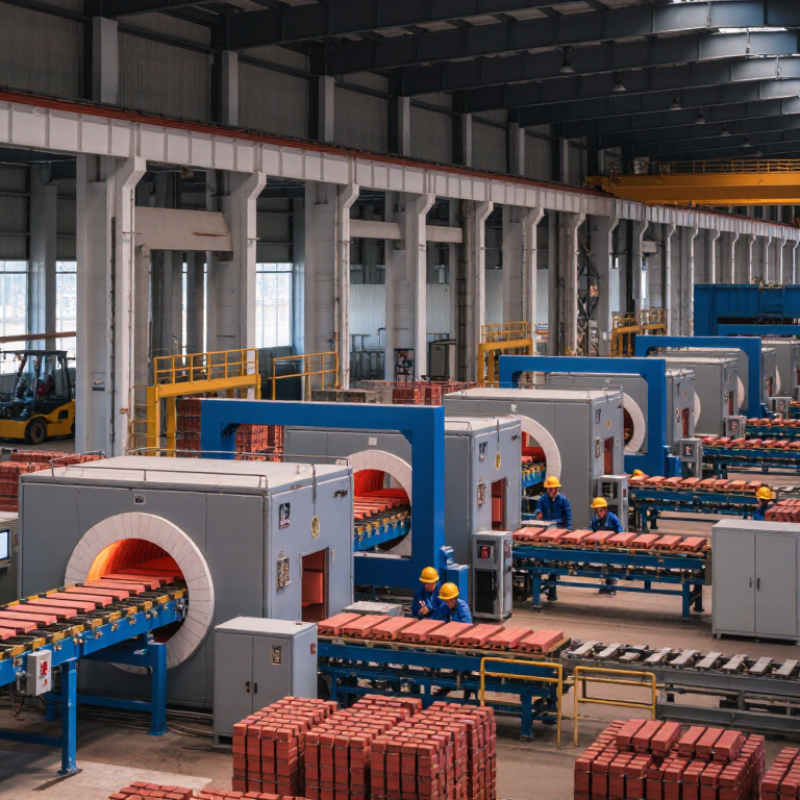
Brick kiln machines in China serve different production scales and clay mixes. Common systems include intermittent clamp kilns, continuous Hoffman and tunnel kilns, and zigzag kilns. Tunnel kilns suit steady, high-volume production: green bricks travel on cars through preheating, firing, and cooling zones. Smaller yards may favor simpler batch arrangements. The World Bank’s 2011 Bangladesh brick-sector assessment estimated about 17 billion bricks produced annually by roughly 5,000 kilns. That is a regional benchmark, not a China production figure. Still, it shows why fuel use and kiln consistency matter.
A working line combines clay crushers, mixers, extruders or presses, cutters, dryers, kiln cars, burners, and temperature controls. Each part affects the next. Uneven moisture can crack a brick before firing; poor airflow can leave pale, underfired pieces beside over-burned ones. Zigzag airflow can improve heat distribution, but only when operators manage fuel feeding and draft carefully. The IEA’s energy-efficiency guidance for industrial processes emphasizes measuring energy use and controlling process conditions; kiln operators can apply that principle through fuel records and temperature checks. Small details matter. A clean-looking control panel does not guarantee uniform bricks. Actual performance depends on clay, loading, maintenance, and operator skill.
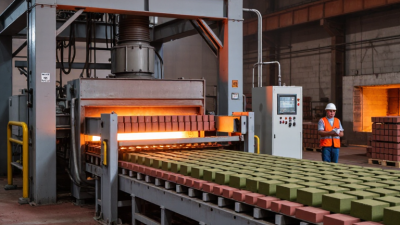
Brick firing is a controlled rise in heat, not simply reaching a target temperature. Many clay brick bodies are fired between 900°C and 1,100°C, but the suitable range depends on the clay’s mineral content and moisture. A Clay Brick Kiln Machine must heat the load evenly, since bricks near the flame may warm faster than those at the chamber’s edges. That matters.
During firing, temperature usually rises gradually. This allows remaining moisture to escape and reduces the risk of cracking. As the clay gets hotter, particles bond more closely, improving strength and reducing water absorption. The exact changes vary with the clay body, so a temperature reading alone cannot guarantee consistent results. Thermocouples and heat-indicating cones can help operators check conditions at different points in the kiln.
The soaking period near peak temperature also affects the finished brick. Too little time may leave some bricks underfired; excessive heat can cause warping or a glossy, distorted surface. Small shifts count. Operators should record heating rates, peak readings, and cooling behavior for each batch. Cooling too quickly can create stress, even after firing appears complete. Kiln schedules often need adjustment after inspecting real production results, because the load and airflow are rarely perfectly uniform.
When comparing brick kiln manufacturers, ask for verified output under a clearly stated clay type, brick size, and operating schedule. A quoted daily capacity means little if it excludes drying delays or rejected bricks. Request production records and check whether “output” means fired bricks or saleable products. Small difference, big impact.
Fuel use should be compared per thousand saleable bricks, not by fuel consumed per hour. Ask how moisture levels, firing temperature, and loading patterns affect the figure. A kiln may perform differently with local clay. This is where brochure numbers can mislead. The Auto Clay Brick Kiln Machine should also be assessed for control stability, sensor placement, and the time operators need to learn its system. More automation can improve consistency, but only when staff can respond to alarms and maintain components.
For emissions, request recent test results and confirm which pollutants were measured, under what load, and by whom. Compare the measurement conditions, not just the headline values. Inspect the kiln’s exhaust path and ask how fuel changes affect readings. A neat control panel is not proof of cleaner operation. I would also ask to observe a full production cycle, because brief demonstrations rarely reveal stoppages, uneven firing, or manual workarounds. Some details are easy to overlook.
Comparing ten Chinese manufacturers means looking beyond advertised output. Useful company profiles explain kiln type, firing capacity, automation, fuel options, and after-sales support. Ask for operating references and site-specific performance data. A kiln that suits one clay mix may perform poorly with another. Small details matter, like burner layout and how evenly heat reaches the kiln’s corners.
The International Energy Agency’s 2023 industry tracking report estimates that industry uses about 37% of global energy. That figure makes kiln efficiency a practical buying concern, not just a brochure claim. Compare each manufacturer’s measured fuel use, temperature-control range, brick consistency, and maintenance requirements. Also check whether its engineering team can adapt the design to local raw materials and production targets. Public profiles do not always disclose comparable test conditions. That gap deserves attention.
Tips: Request a sample production plan and a written efficiency basis. Confirm spare-parts availability before choosing.
GB/T 5101-2017 sets requirements for fired common bricks, including strength grades from MU10 to MU30. The MU number indicates the brick’s compressive-strength grade; it is not a complete measure of durability. When comparing suppliers, request test reports tied to the stated standard and grade. Check that the samples represent routine production, not just carefully selected pieces. A Kiln Machine can support consistent firing, but clay preparation, moisture control, stacking, and cooling also affect the finished bricks.
Tips: Confirm the grade, test date, and sampling details. Ask how production batches are monitored. Small differences matter.
For a practical assessment, inspect brick edges, surface cracks, and color variation, then compare these observations with laboratory results. Consistent color alone does not prove MU strength. Nor does a clean test report guarantee every delivery will match it. That part deserves scrutiny. Ask how the maker controls kiln temperature across different areas and handles rejected or borderline batches. Even capable producers may see variation when raw materials change; clear records and repeat testing help reveal whether quality remains stable.
When selecting a brick kiln machine, treat installation planning as part of the purchase, not an afterthought. Request a site layout showing foundation loads, feed routes, exhaust points, and maintenance clearance. Confirm who handles wiring, commissioning, operator training, and trial firing. Get acceptance criteria in writing, such as stable temperature readings and agreed output under stated feed conditions. Small details matter.
Ask how quickly technicians can respond and which parts are stocked locally. Clarify warranty exclusions, travel charges, remote support hours, and training for shift operators. A kiln that stops for one inexpensive sensor can still disrupt deliveries. Keep a starter set of wear parts, but avoid buying a large stock before actual consumption is known. That estimate may be wrong.
Compare total operating costs, not just the quoted machine price. Request expected fuel and electricity use per tonne, plus labor, lubrication, maintenance intervals, and planned downtime. Ask what assumptions support each figure; wet clay, uneven loading, or frequent starts can change consumption. If the plant also uses a Kiln Dry Machine, check whether its heat demand overlaps with kiln schedules. Measure during a trial month. Keep records. Revise the budget using meter readings and maintenance logs; supplier estimates are useful, but rarely perfect.
A practical comparison checklist, not a verified ranking of named manufacturers. Use the same questions and project assumptions for each supplier; kiln configuration, fuel, raw materials, local labor, and site conditions affect performance and cost.
| No. | Evaluation area | What to check | Evidence to request | Cost or risk to include |
|---|---|---|---|---|
| 1 | Production capacity | Confirm rated output and expected saleable output for the proposed brick size, product mix, and operating schedule. | Written capacity assumptions, product specifications, and a performance-acceptance procedure. | A quoted maximum may differ from sustained saleable production; clarify operating hours, rejects, and downtime assumptions. |
| 2 | Kiln type and process fit | Check whether the proposed kiln and material-handling system fit the required product, plant scale, fuel supply, and local operating conditions. | Process-flow diagram, equipment list, layout, and explanation of the proposed firing and cooling process. | Civil works, foundations, material handling, and utilities can add significantly to equipment-only quotations. |
| 3 | Raw-material compatibility | Establish how clay or other feedstock properties and the intended product affect preparation, forming, drying, and firing. | A list of required raw-material tests and, where available, test results or a trial-production plan using representative material. | Unsuitable feedstock assumptions can lead to extra preparation equipment, lower output, or higher reject rates. |
| 4 | Installation scope | Define which party handles unloading, erection, alignment, wiring, commissioning, and site supervision. | A responsibility matrix, installation schedule, site-readiness requirements, and a written list of exclusions. | Include travel, accommodation, local labor, lifting equipment, customs, and any repeat visits in the budget. |
| 5 | Commissioning and acceptance | Agree how output, product quality, operating stability, and training completion will be checked before final acceptance. | A commissioning plan with measurable test conditions, acceptance criteria, and a process for correcting deficiencies. | Unclear acceptance terms can make it difficult to resolve performance disputes or release milestone payments fairly. |
| 6 | Operator training | Check training coverage for normal operation, process control, routine maintenance, troubleshooting, and safety procedures. | Training agenda, language and duration, trainee requirements, and operation and maintenance manuals. | Budget for interpretation, training materials, operator time, and follow-up training if included or needed. |
| 7 | After-sales service | Confirm support channels, service hours, response commitments, remote-diagnosis capability, and availability of technicians for site visits. | Written service terms, escalation contacts, warranty process, and details of any local service partner. | Clarify whether remote support, travel, labor, and replacement components are charged separately. |
| 8 | Spare parts and wear items | Identify critical components, expected maintenance intervals, and items that are standard, custom-made, or sourced locally. | Recommended initial spare-parts list, part numbers, lead-time estimates, and warranty coverage for parts. | Include freight, import duties, storage, and the cost of production interruptions while critical parts are unavailable. |
| 9 | Operating costs and utilities | Compare estimated fuel, electricity, labor, maintenance, and consumables using the same local prices and production assumptions. | A written consumption estimate with units, measurement basis, fuel specification, throughput, and stated operating conditions. | Do not compare energy figures without matching product, moisture, fuel quality, plant utilization, and system boundaries. |
| 10 | Total installed cost and contract terms | Compare the full project scope, delivery terms, payment milestones, warranty, exclusions, and change-order process. | Itemized quotation, delivery schedule, warranty document, applicable shipping terms, and a list of buyer-supplied items. | Add site preparation, buildings, utilities, freight, insurance, taxes, customs, installation, commissioning, and contingency where applicable. |
Compare kiln type, firing capacity, automation, fuel options, and after-sales support. Ask for operating references and site-specific performance data. One clay mix may behave differently from another.
Request measured fuel and electricity use per tonne, with the test conditions clearly stated. Ask about temperature control and heat distribution. A brochure figure alone is not enough.
The MU number represents a compressive-strength grade under GB/T 5101-2017. It does not describe every aspect of durability. Check that test reports match the grade and sampling details.
Inspect edges, cracks, and color variation, then compare samples with laboratory results. Ask how batches are monitored and how borderline bricks are handled. Color alone proves little.
Request a site layout showing foundation loads, material routes, exhaust points, and maintenance clearance. Confirm who handles wiring, commissioning, training, and trial firing. Put acceptance criteria in writing.
Ask about technician response times, local spare parts, warranty exclusions, travel charges, and remote support hours. A small sensor can stop production. Keep a modest starter set of wear parts.
Include fuel, electricity, labor, lubrication, maintenance, and planned downtime. Ask what assumptions support each estimate. Wet clay and frequent starts can change the numbers.
Track meter readings and maintenance logs during a trial month. Compare actual use with the supplier’s estimate, then revise the budget. The first estimate may be off. Keep checking.
This guide explains the main types of brick kiln machines used in China, their typical applications, and the key components that support reliable firing. It outlines how kiln operation transforms shaped bricks through controlled heating, including the commonly used firing range of 900–1,100°C. Readers can also learn how to compare manufacturers by production capacity, fuel consumption, automation, and emissions management, with an overview of ten leading suppliers presented without relying on brand names.
The guide also introduces product quality benchmarks under GB/T 5101-2017 and the MU10–MU30 brick strength grades, helping buyers connect kiln performance with finished-product requirements. A practical purchasing checklist covers installation planning, after-sales support, maintenance, and operating costs. Together, these topics help readers assess a Brick Kiln Machine based on production needs, efficiency, quality control, and long-term service considerations.