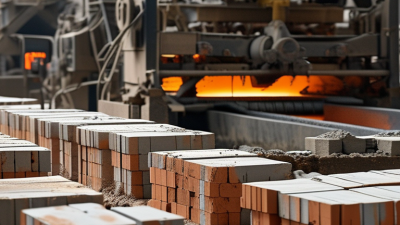
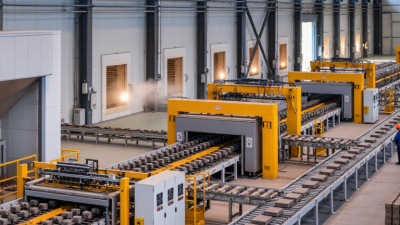
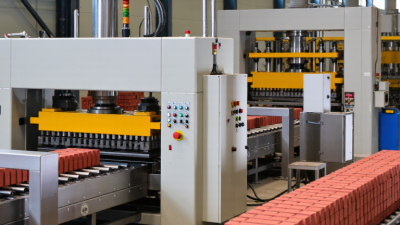
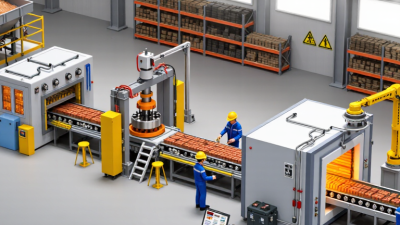
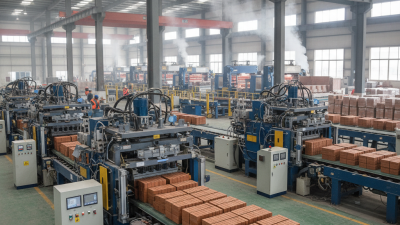
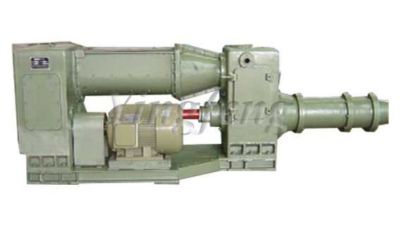
Think of a brick production line as the setup that turns raw clay, shale, or recycled mineral stuff into uniform masonry units. Usually, it goes through crushing the raw material, screening, mixing, extrusion, cutting, drying, firing, cooling, and finally packaging. Every stage has a say in things like strength, dimensions, color, and how much water the brick absorbs. Even small tweaks can matter. Honestly, just a few seconds of uneven drying can crack an entire batch.
These days, modern plants are focusing more and more on energy efficiency and keeping their processes under control. And according to the UNEP Global Status Report for Buildings and Construction 2023, buildings and construction used up around 34% of global energy back in 2022, while also producing 37% of energy-related and process emissions. So for brick manufacturers, it's kind of a no-brainer to keep tabs on kiln temperature, moisture levels, fuel consumption, and exhaust gases. So, companies like SACMI and Lingl bring in tech that helps with automation. And on top of that, lab testing is there to check whether things actually meet standards like ASTM C62 and EN 771-1.
But here’s the thing: equipment names can get pretty confusing. You might see some suppliers throw around “Ecp Production Line” in project docs, but it’s still a good idea for buyers to double-check what it actually means and what technical scope it covers. Reports from Grand View Research and Research and Markets point to steady demand for construction materials, thanks largely to urban growth and infrastructure spending. But here’s the thing: a growing market doesn’t automatically mean a factory will succeed. Things like local clay chemistry, the climate, available labor skills, how easy it is to get maintenance support, and even grid stability can all throw a wrench into the final outcome.
So that's the practical question behind this guide: how does a Brick Production Line actually work in real conditions? Well, the answer is a lot less perfect than a catalog diagram. It really comes down to controlled material preparation, disciplined operation, and honest testing of every finished brick.
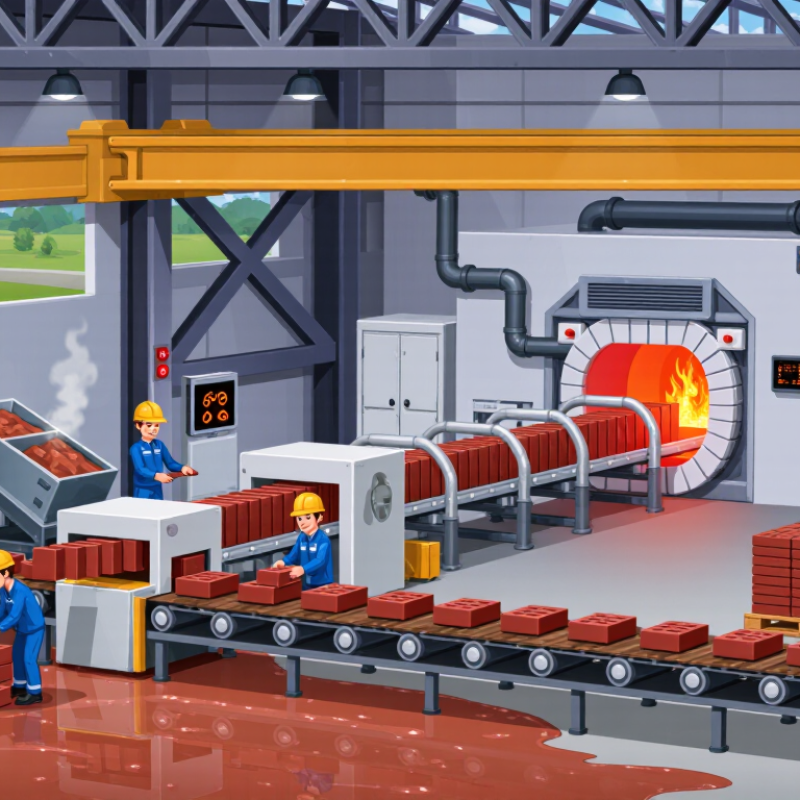
A brick production line turns natural minerals into durable masonry units through controlled preparation, forming, drying, and firing. Clay usually provides plasticity, while shale adds mineral content and helps control shrinkage. Sand can reduce stickiness and improve dimensional stability. Water activates the clay, but too much creates weak, slow-drying bricks.
The process begins with crushing and screening. Workers remove stones and adjust the material blend according to laboratory tests. Moisture must be measured carefully. A mixture that feels correct by hand may still vary inside the batch. This is where practical experience matters. The prepared materials enter a mixer, where water spreads through the particles. The blended mass then passes through a de-airing extruder, which shapes a continuous column. Cutting wires divide it into uniform green bricks.
Drying removes most of the water before firing. Poor air movement can cause cracks, especially near corners. The bricks then travel through a kiln, where gradual heating hardens the clay and develops strength. Firing temperature depends on mineral composition, brick size, and moisture content. Shale-rich mixes may respond differently from softer clay blends. Small adjustments matter.
Quality checks include dimensions, surface condition, water absorption, and compressive strength. A production line may look highly automated, yet raw materials remain unpredictable. Rain, quarry changes, and uneven mixing can affect the final result. That uncertainty deserves attention.
A brick production line converts raw clay into uniform bricks through preparation, forming, drying, and firing. Material preparation is the foundation of stable production. Clay may arrive with stones, roots, or hard lumps, so crushing removes oversized pieces before finer grinding begins. A vibrating screen can separate unwanted particles and protect downstream equipment.
Moisture control matters throughout this stage. After grinding, operators add water gradually and measure the mix at several points. Keeping moisture below 20% often improves feeding, shaping, and green-brick strength. However, one fixed setting rarely suits every clay deposit. A Brick Machine Fired Clay Brick Making Machine performs more reliably when technicians adjust pressure and water according to texture, temperature, and test results. The material should feel cohesive, not sticky. Small variations can become visible cracks later.
Tips: Test moisture from different stockpile areas, not one handful. Clean the crusher regularly. Watch motor load for sudden changes. Record each adjustment. Experience helps, but guessing still causes avoidable waste. A simple moisture meter is useful, although manual checks should not be ignored.
A brick production line converts prepared raw materials into uniform masonry units through controlled, connected stages. Clay, sand, and approved mineral additives are proportioned before entering a heavy-duty mixer. Water is added gradually, not all at once. The target is a plastic, workable mass with enough cohesion for extrusion.
Mixing removes dry pockets and distributes moisture throughout the material. The blended clay then enters a vacuum extruder. Inside the de-airing chamber, reduced pressure draws trapped air from the compacted mass. This step matters because hidden air pockets can weaken bricks, create cracks, or disturb dimensional accuracy during firing. The screw pushes the dense material through a shaped die, forming one continuous brick column. A cutting system then divides the column into consistent green bricks.
The process is precise, but not perfectly forgiving. A small moisture error can make the column swell, tear, or lose its shape. Excessive vacuum may also change how the material behaves at the die. Operators should monitor pressure, motor load, extrusion speed, and cut length together rather than trusting one reading. In practical production, visual checks remain useful: a clean column surface and sharp edges often reveal stable conditions. Still, appearance alone can mislead. Laboratory moisture tests and fired-strength checks are needed to confirm performance.
What Is a Brick Production Line and How Does It Work?
A brick production line converts prepared clay into uniform, unfired units called green bricks. The process usually includes crushing, mixing, extrusion, cutting, drying, and firing. The U.S. Environmental Protection Agency’s AP-42 report identifies forming, drying, and firing as key stages in structural clay production. Each stage affects the next one. Small moisture differences can create weak edges during handling.
Cutting and handling are especially important at 10–30 pieces per minute. A wire cutter divides the extruded clay column into fixed lengths. Sensors check spacing, while a soft gripper or vacuum system transfers the green bricks onto drying boards. The movement must be firm but gentle. Fresh bricks can contain roughly 15–25% moisture, depending on the clay blend and operating conditions. Too much pressure leaves fingerprints. Too little control causes gaps and fallen pieces.
The European Commission’s Ceramic Manufacturing BREF emphasizes controlled drying and firing because uneven moisture increases cracking and energy losses. A Brick Kiln receives the dried units later, often at temperatures above 900°C, depending on the product specification. Operators should inspect cut faces every shift. Theory looks clean. Production is not. Worn wires, changing clay plasticity, and minor conveyor vibration can reduce accuracy. The 10–30-piece rate is useful, but it should never replace real-time quality checks.
In a brick production line, drying is the quiet stage that protects the product before firing. Freshly molded bricks, called green bricks, contain enough water to deform or crack. A tunnel dryer moves them through controlled zones on kiln cars or platforms. Warm air passes around each brick, while fans manage circulation.
The target is usually about 2–6% residual moisture before firing. This range is practical, not absolute. Clay type, brick size, stacking pattern, and local climate can change the requirement. Operators commonly monitor temperature, air speed, and moisture samples from different dryer positions.
The brick surface may feel dry while its center remains damp. That mistake is costly. Uneven drying can create corner cracks, warping, or hidden weakness during firing. Slower heating often works better for dense shapes, although production pressure may encourage faster settings.
Tips: Leave clear air channels between stacked bricks. Check samples from the front, middle, and rear zones. Reduce airflow if surfaces dry too quickly. Record moisture results daily, because memory is unreliable. Small adjustments matter. A simple handheld moisture meter can support these checks, but operators should verify readings through regular testing. Tunnel dryers are efficient, yet they are not automatic problem-solvers. They need thoughtful loading, steady maintenance, and careful observation.
Firing is the critical stage in a brick production line. Kilns heat shaped bricks to approximately 900–1,100°C. This intense heat transforms fragile clay into a strong, water-resistant building material. Before firing, bricks must lose most of their moisture. If drying is incomplete, trapped steam may crack the brick inside the kiln.
The kiln usually contains preheating, firing, and cooling zones. In the preheating area, warm air gradually raises the brick temperature. The firing zone provides the highest heat and controls the final colour and strength. Sensors monitor temperature, airflow, and kiln pressure throughout the process. Skilled operators adjust these conditions when the clay responds unexpectedly. Small changes matter. A few minutes of overheating can darken the surface or create distortion.
After firing, bricks cool slowly inside the kiln. Sudden cooling can produce internal stress and visible cracks. Production teams inspect samples for shape, soundness, colour, and absorption. A clear ringing sound often suggests proper firing, although laboratory testing remains more reliable. The same principle applies to a Brick Oven, where heat distribution affects the durability of its masonry. No firing schedule is perfect for every clay mixture. Operators often refine the curve after reviewing failed pieces, fuel use, and temperature records.
What Is a Brick Production Line and How Does It Work?
A brick production line converts prepared clay into shaped, dried, fired, and packaged products. After molding, freshly formed bricks travel on conveyors toward drying chambers. Controlled temperature and airflow reduce moisture before firing begins. A Brick Maker monitors pressure, moisture, and mold alignment throughout production. Small variations can create cracks, uneven edges, or weak corners. These defects often appear during sorting, not molding.
Sorting and packaging now rely on cameras, sensors, and robotic handling systems. Cameras check color, dimensions, surface damage, and chipped edges. Acceptable bricks move forward, while defective units are separated automatically. Palletizers stack bricks in stable patterns before wrapping and labeling. High-capacity lines can produce up to 30,000 bricks per hour. Actual output depends on brick size, kiln timing, layout, and maintenance. Speed sounds impressive. Yet one misaligned conveyor can interrupt the entire flow.
Tips: Keep sensors clean, especially near dusty transfer points. Check conveyor tension every shift. Record rejected bricks by defect type, not only by quantity. This reveals recurring problems faster. Operators should also inspect sample packs manually. Automation improves consistency, but it does not replace judgment. Some surface marks look harmless under bright lighting, then become obvious after delivery. Careful reviews remain necessary, even when production targets appear stable.
| Production Stage | Main Function | Typical Operating Data | Indicative Throughput | Important Quality or Control Factors |
|---|---|---|---|---|
| Raw Material Preparation | Crushes, screens, blends, and homogenizes clay or shale before forming. | Particle size: generally below 2–3 mm after fine preparation Moisture: approximately 10–18% |
20–80 tonnes of prepared material per hour | Consistent particle size, moisture content, plasticity, and removal of oversized particles. |
| Extrusion and Forming | Uses a vacuum extruder to remove air and form a continuous clay column. | Forming pressure: commonly 1.5–3.5 MPa Extrusion speed: approximately 0.5–2.0 m/s |
5,000–20,000 green bricks per hour | Vacuum level, die condition, column density, dimensional stability, and surface quality. |
| Wire Cutting | Cuts the extruded column into individual green bricks with controlled dimensions. | Cutting accuracy: typically within ±1–2 mm Cut length is adjusted to the product format |
6,000–24,000 green bricks per hour | Uniform brick length, clean edges, synchronized conveyor speed, and minimal deformation. |
| Automatic Setting | Arranges green bricks on kiln cars or dryer supports to allow airflow. | Typical spacing: 10–50 mm between units Stacking pattern varies by brick size |
5,000–25,000 bricks per hour | Stable stacking, balanced airflow, reduced contact points, and avoidance of sticking or collapse. |
| Drying | Removes free moisture before firing to prevent cracking and bursting. | Drying cycle: approximately 18–48 hours Final moisture: commonly below 2–4% |
Usually matched to kiln capacity | Temperature and humidity profile, controlled air circulation, drying uniformity, and crack prevention. |
| Firing in a Tunnel Kiln | Fires dried bricks to develop strength, durability, and dimensional stability. | Peak temperature: approximately 900–1,100°C Firing cycle: about 12–36 hours |
5,000–30,000 fired bricks per hour | Temperature profile, atmosphere, fuel-air ratio, kiln speed, water absorption, and compressive strength. |
| Cooling | Gradually reduces brick temperature before inspection and handling. | Controlled cooling from firing temperature to below approximately 80°C | Designed to match kiln output | Cooling rate, thermal shock control, heat recovery, and prevention of cracking or color variation. |
| Automatic Sorting and Inspection | Detects and separates cracked, chipped, misshapen, or incorrectly colored bricks. | Inspection may include visual, dimensional, and weight checks Reject rate depends on raw material and process control |
Up to 30,000 bricks per hour | Sensor calibration, dimensional tolerance, surface defects, color consistency, and rejection accuracy. |
| Stacking and Packaging | Groups accepted bricks into stable bundles for storage and transport. | Typical bundle size: 300–600 bricks Packaging may use strapping, film, or both |
10,000–30,000 bricks per hour | Bundle count, stack stability, strap tension, package protection, and pallet load limits. |
| Overall Automated Line | Links preparation, forming, drying, firing, inspection, and packaging into a continuous process. | Common commercial range: 5,000–30,000 bricks per hour Actual capacity depends on brick format and kiln design |
Approximately 40,000–240,000 bricks per 8-hour shift | Line balance, equipment availability, changeover time, maintenance, product size, and reject percentage. |
| Indicative values are typical industrial ranges for standard clay brick production. Actual performance varies with brick dimensions, clay properties, moisture content, kiln configuration, automation level, and local operating conditions. | ||||
The Industrial De-airing Pug Mill TCYF25 Series is designed to improve consistency in porcelain and ceramic production by combining clay homogenization with efficient air removal. Ceramic World Review’s annual industry statistics place global tile production at approximately 16 billion square metres, highlighting the need for stable, high-throughput preparation systems. In this environment, variations in clay plasticity or trapped air can lead to laminations, pinholes, warping, and cracking during forming and firing.
The TCYF25 is calibrated for clay mud containing 21–23% moisture, a range that supports workable plasticity while maintaining process stability. During operation, the pug mill thoroughly blends the material and removes entrained air before the clay reaches the forming stage. This helps create a denser, more uniform clay column, reducing internal weaknesses and improving dimensional consistency. Its controlled de-airing process is particularly valuable for porcelain bodies, which require careful preparation because their fine particle structure can amplify defects caused by uneven moisture or poor mixing.
Production engineers can integrate the TCYF25 into continuous ceramic lines to support more predictable extrusion, pressing, and firing results. Consistent feed quality also assists manufacturers in meeting the dimensional and performance expectations associated with ISO 13006 ceramic tile classifications. By stabilizing moisture distribution and minimizing air pockets at the preparation stage, the equipment helps reduce avoidable rejection, improve material utilization, and maintain reliable output across extended production cycles.
It changes prepared clay into uniform, unfired units called green bricks. The process includes crushing, mixing, extrusion, cutting, drying, and firing.
A wire cutter can separate about 10–30 pieces per minute. The actual speed depends on clay behavior, equipment condition, and product size.
Fresh bricks may contain roughly 15–25% moisture. Excessive pressure leaves fingerprints, while weak control causes gaps or fallen pieces.
Sensors check spacing before transfer. Soft grippers or vacuum systems move the bricks firmly, but gently.
Operators should check cut faces every shift. Worn wires, changing clay plasticity, and conveyor vibration can reduce cutting accuracy.
Most moisture must leave before heating. Trapped steam can crack a brick inside the kiln.
Kilns commonly heat bricks to approximately 900–1,100°C. The exact schedule depends on clay composition and product requirements.
Bricks pass through preheating, firing, and cooling zones. Sensors monitor temperature, airflow, and pressure throughout the process.
They inspect shape, colour, soundness, and absorption. A clear ringing sound may help, but laboratory testing is more reliable.
Not always. Operators may adjust the heating curve after reviewing cracks, dark surfaces, distortion, fuel use, and temperature records.
A Brick Production Line is an integrated system that transforms natural raw materials into finished construction bricks through a series of controlled stages. Clay, shale, sand, and water are first selected and prepared by crushing, grinding, and moisture adjustment, keeping the material moisture below 20%. The prepared mixture is then blended and passed through a vacuum extruder, which removes trapped air and forms a continuous column of brick material.
The column is cut into individual green bricks at approximately 10–30 pieces per minute and carefully handled to prevent deformation. Tunnel dryers gradually reduce their moisture content to about 2–6%, preparing the bricks for firing. Inside the kiln, temperatures of approximately 900–1,100°C harden the bricks and develop their final strength. After cooling, automated sorting and packaging equipment organizes the finished products, with modern lines capable of producing up to 30,000 bricks per hour.