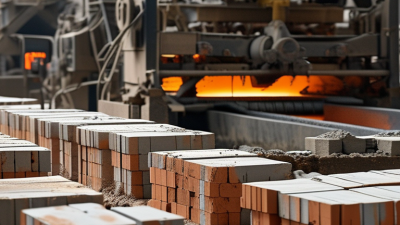
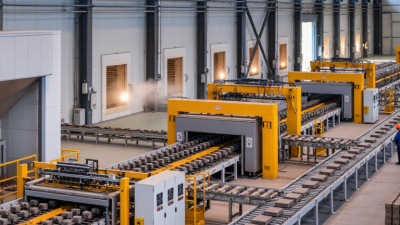
So, you're looking at clay brick production lines in 2026 — yeah, the headline capacity number is tempting, but honestly that's just the starting point. What works for one buyer might completely flop for someone else, because it all depends on your local clay, what fuel you can actually get, the brick sizes you need, how skilled your crew is, and whether you can count on local maintenance. A line that runs beautifully in one plant can be a nightmare in another. And it's often the little things that trip you up: how moist the clay is when it goes in, the exact shape of the extruder die, even how steady the kiln temperature stays throughout. Pay attention to those.
You’ll sometimes hear people in the industry say something like, “A reliable brick line is proven by consistent bricks, not by its brochure speed.” I think a plant engineer named Alex Morgan gets credited with that line, but honestly, it’s not a verified quote—more of a practical rule of thumb. And it’s a good one. So don’t just take the sales pitch at face value. Ask for reference projects, do test runs, and go through the technical documentation carefully. Also, ask the supplier how they handle spare parts, operator training, dust control, and quality checks—and get all of that in writing.
Okay, take a closer look. You really need to compare the whole process—from how the raw materials are prepped all the way to how finished bricks are handled. Sure, an Ecp Production Line might sound like a great fit for one project, but honestly, its real value depends on verified specs and what's actually happening on site. So don't just take it at face value—ask for measurable data, like output range, energy use, and expected reject rates, if they're available. So, once you’ve got those figures, sit down and compare them with your actual clay and production targets. Look, no machine is going to eliminate every risk—that’s just not realistic. You can plan a line perfectly, but after commissioning, you’ll probably still need to tweak things. And honestly, that’s worth talking about openly. The right system isn’t necessarily the biggest or the cheapest one either. It’s the one your team can actually run, keep up, and improve over time.
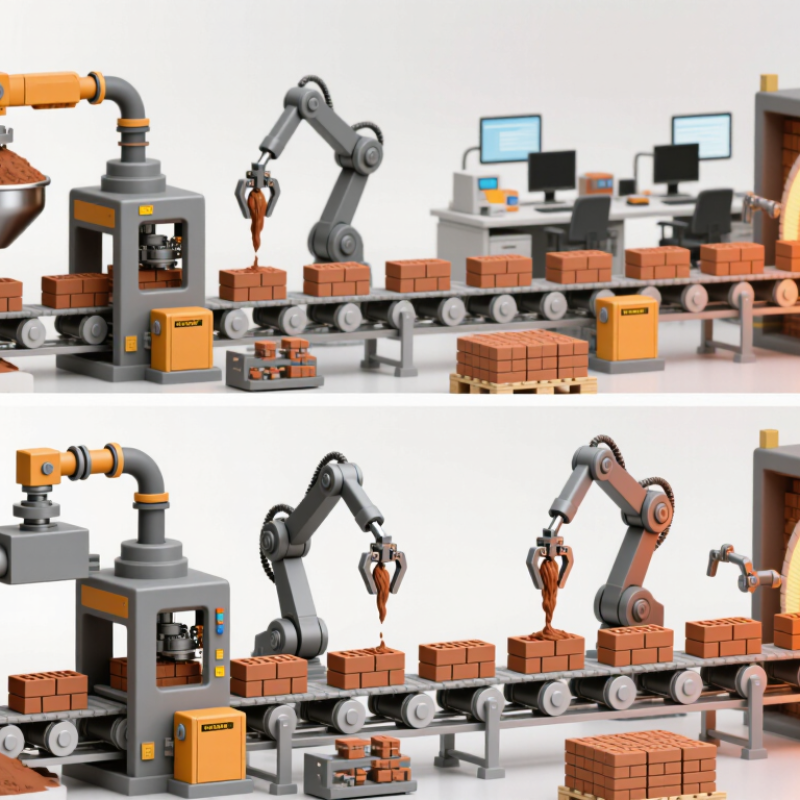
A clay brick production line is an integrated system that turns natural clay into durable building bricks. It normally includes raw material preparation, crushing, screening, mixing, forming, cutting, drying, firing, cooling, and quality inspection. Each stage affects the final product.
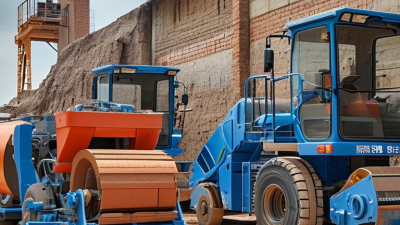
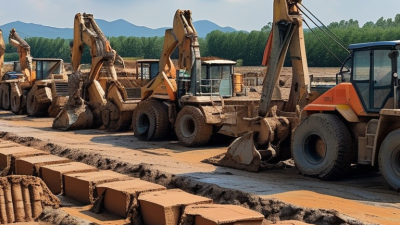
In practical operation, excavated clay is first checked for moisture, plasticity, and unwanted stones. A crusher and mixer create a more consistent material. The prepared clay then passes through an extruder, which shapes a continuous column. A wire cutter divides it into uniform bricks. Fresh bricks are fragile, so controlled drying is essential. Uneven airflow can cause cracks or bending.
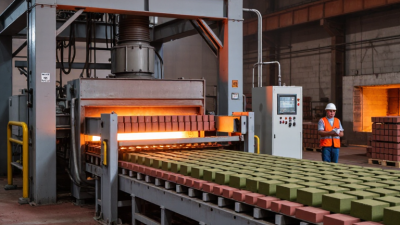
The dried bricks enter a kiln for firing. Temperature and heating speed must match the clay composition and brick size. After cooling, workers inspect dimensions, color, surface defects, and strength. Automated sensors improve consistency, but they cannot replace experienced judgment. A clay brick production line is not simply a collection of machines. It is a coordinated process requiring suitable equipment, trained operators, stable utilities, and realistic production planning.
In practice, the process is less perfect than diagrams suggest. Raw clay can change between seasons. Energy costs also affect the final design. Buyers should request material tests and sample bricks before selecting a complete line. This step may seem slow, but it prevents expensive adjustments later.
Clay brick manufacturing begins with controlled raw material preparation.
Producers crush, screen, and blend clay with water until it reaches a consistent plastic condition. Moisture often sits near 18–25%, depending on the clay type and forming method. Vacuum extrusion removes trapped air before cutting the column into uniform green bricks. The phrase Brick Machine Fired Clay Brick Making Machine commonly describes equipment used across forming, drying, and firing operations.
Drying removes free water gradually. Uneven drying can create edge cracks, especially around doors and corners. Tunnel dryers may use recycled kiln heat, reducing fuel waste. The European Commission’s Ceramic Manufacturing BREF identifies drying and firing as major energy-consuming stages.
Reported firing energy varies widely, often around 1.5–4.0 GJ per tonne, depending on kiln design, product density, and fuel. Firing usually occurs between 900°C and 1,100°C. Small temperature changes matter. Quality control should check moisture, dimensions, compressive strength, and water absorption after cooling.
Tips:
Keep clay moisture stable before extrusion. Calibrate cutters every shift. Inspect kiln temperature records, not only finished bricks.
The International Energy Agency reported that buildings and construction accounted for about 37% of global energy and process-related emissions in 2022. This figure is broader than brickmaking, but it highlights why heat recovery deserves attention.
In practice, the fastest line is not always the best line. I would challenge any design that ignores local clay testing. Raw material behavior can disappoint even experienced operators.
A modern clay brick production line begins with controlled raw material preparation. A box feeder meters clay into a primary crusher. Roll crushers reduce oversized lumps. A pan mill or fine grinder improves particle consistency. Moisture matters. Too little water causes cracks, while excess water reduces strength. A pug mill mixer blends clay, water, and additives evenly. In practice, operators check moisture by hand and with sensors because readings can drift.
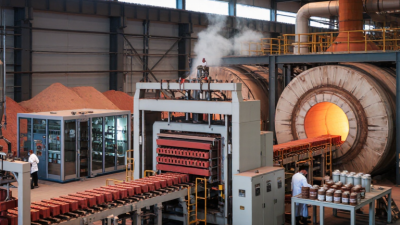
The prepared clay enters a vacuum extruder, which removes trapped air and forms a dense column. A wire cutter divides it into uniform green bricks. Transfer tables and conveyors move them without damaging edges. Some plants use automatic stacking systems, but manual inspection remains useful. Small deformations may indicate worn dies, uneven moisture, or poor alignment. The dryer removes water gradually through controlled airflow and temperature. Fast drying saves time, yet it can create corner cracks.
The heart is the Clay Brick Kiln, designed for continuous firing and stable heat distribution. Kiln cars, burners, temperature sensors, and exhaust controls must work together. A programmable control system records firing curves and alarms. This evidence supports quality checks and maintenance decisions. Dust collection equipment protects workplace air near crushing and mixing areas. Energy recovery from hot exhaust can improve efficiency, although its value depends on plant layout. No line is perfect. Experienced teams should review fuel use, breakage rates, and rejected bricks weekly. Some designs look efficient on paper, but real clay behavior can disagree.
A modern clay brick production line usually starts with clay, shale, sand, and process water. Some plants also add grog, which is crushed fired brick. It improves drying control and reduces shrinkage. The European Commission’s Ceramic Manufacturing BREF identifies brick firing temperatures of approximately 850–1,200°C. Raw material quality matters greatly. Excessive clay plasticity may cause cracking during drying. High sand content can weaken bonding if the mix is poorly adjusted.
Most lines use box feeders, crushers, roller mills, mixers, vacuum extruders, cutters, dryers, and tunnel kilns. Extrusion creates a continuous column, while wire cutting produces consistent brick lengths. Drying commonly uses recovered kiln heat, but temperature must rise gradually. Some moisture remains. That shortcut often fails. The US EPA’s AP-42, Chapter 11.3, recognizes clay, shale, and grog handling as key emission sources in structural clay products. Dust control therefore requires enclosed transfer points, extraction systems, and suitable filtration.
For 2026 purchasing decisions, buyers should compare fuel consumption per tonne, drying uniformity, firing stability, and reject rates. European Commission data also shows that kiln performance depends strongly on insulation, airflow, and product geometry. A high-capacity line is not automatically efficient. Local clay chemistry, climate, electricity reliability, and labor skills can change the result. Pilot testing is still wise, even when the equipment specification looks complete.
| Production Dimension | Common Industry Data or Option | Recommended Practice for Global Buyers | Technical Notes |
|---|---|---|---|
| Primary Raw Material | Brick-making clay, shale, or a blended mineral mixture containing clay minerals, silica, and alumina. | Select locally available clay after laboratory testing. | The chemical and mineral composition determines plasticity, drying behavior, firing temperature, color, and final strength. |
| Typical Clay Composition | Clay minerals commonly form about 20%–50% of the raw mix; sand and silt-sized particles provide additional silica and structure. | Adjust the blend to balance plasticity and shrinkage. | Exact proportions vary substantially by deposit. Excessive clay may increase drying cracks, while excessive sand may reduce green strength. |
| Corrective Materials | Sand, grog, shale, fly ash, or other compatible mineral additives may be used where permitted by local standards. | Use corrective materials only after testing their effect on strength, absorption, emissions, and durability. | Regulations may restrict certain industrial by-products, especially where soluble salts, heavy metals, or uncontrolled contaminants are present. |
| Raw Material Preparation | Extraction, weathering, crushing, screening, magnetic separation when required, and controlled stockpiling. | Use covered or managed storage to maintain consistent moisture and composition. | Aging or weathering can improve workability by allowing moisture to distribute through the clay mass. |
| Primary Crushing | Roll crushers, toothed crushers, or hammer mills reduce large lumps before fine processing. | Choose equipment according to feed size, hardness, abrasiveness, and required production capacity. | Removing stones and oversized particles helps protect downstream equipment and reduces surface defects in finished bricks. |
| Fine Grinding and Screening | Fine preparation commonly targets a controlled particle size, often with most particles below approximately 2–3 mm for extrusion-based products. | Use screening and blending to maintain uniform feed quality. | The optimum particle size depends on product geometry, forming method, clay type, and desired surface finish. |
| Mixing and Moisture Adjustment | Water is added in a mixer or pug mill until the material reaches forming consistency. | For stiff-plastic extrusion, a practical starting range is commonly about 15%–22% total moisture. | The correct moisture level must be established through trials; it changes with clay mineralogy, temperature, and equipment design. |
| Main Forming Method | Vacuum extrusion is widely used for perforated bricks, hollow blocks, facing bricks, and many standard masonry units. | Use vacuum extrusion when consistent dimensions and continuous production are required. | Vacuum de-airing improves plasticity and reduces internal voids, but it does not replace proper raw-material preparation. |
| Alternative Forming Methods | Soft-mud molding, stiff-plastic extrusion, dry pressing, and semi-dry pressing are established production methods. | Match the method to raw-material moisture, product shape, surface requirements, and investment level. | Soft-mud molding uses wetter clay; dry and semi-dry pressing use lower moisture and require suitable pressing equipment and molds. |
| Cutting and Product Handling | Wire cutting is commonly used after extrusion; automated transfer systems move green bricks to drying equipment. | Use synchronized cutting and gentle handling to control dimensional variation and edge damage. | Cutting accuracy depends on extrusion pressure, column stability, wire condition, and consistent moisture. |
| Drying Stage | Artificial chamber or tunnel drying is used to remove forming water before firing. | Use controlled air temperature, humidity, and circulation rather than rapid uncontrolled drying. | Drying schedules commonly range from approximately 24 to 48 hours, but the actual time depends on brick size, moisture, airflow, and dryer design. |
| Drying Temperature | Industrial dryers often operate with air temperatures approximately between 40°C and 120°C. | Begin with a gradual drying profile and validate it with moisture and crack inspections. | The green brick must be sufficiently dry before entering the kiln to prevent cracking, spalling, or excessive fuel consumption. |
| Kiln Type | Continuous tunnel kilns are widely used for medium- and large-scale production; intermittent kilns may suit smaller or variable-output plants. | Select a continuous kiln for stable high-volume production and consistent firing control. | Kiln choice affects automation, thermal efficiency, product uniformity, maintenance requirements, and plant layout. |
| Firing Temperature | Many common clay masonry products are fired at approximately 900°C–1,100°C. | Set the firing curve according to clay composition, product density, and required performance. | Over-firing can cause deformation or bloating, while under-firing may result in low strength, high absorption, and poor durability. |
| Firing Cycle | A complete tunnel-kiln cycle, including preheating, firing, and cooling, often takes approximately 18–36 hours. | Optimize the schedule through kiln profiling and temperature monitoring. | Cycle duration varies with kiln length, firing temperature, brick size, loading density, and fuel system. |
| Common Fuels | Natural gas, biogas, LPG, coal, biomass-derived fuels, and electricity may be used depending on local availability and regulations. | Evaluate fuel cost, calorific value, supply reliability, emissions, and combustion-control requirements together. | Fuel selection should comply with local air-quality, carbon, workplace-safety, and kiln-emission regulations. |
| Typical Product Formats | Solid bricks, perforated bricks, hollow blocks, facing bricks, paving units, and special-shaped ceramic masonry products. | Design the line around the target product range and mold or die-change frequency. | Product dimensions and permitted void percentages are governed by the applicable national or regional standard. |
| Production Capacity | Small and medium plants may produce approximately 10,000–100,000 standard-size bricks per day; larger automated lines can exceed this range. | Base capacity on saleable output, not only theoretical machine throughput. | Actual output depends on product size, kiln loading, operating hours, reject rate, maintenance, and seasonal raw-material conditions. |
| Quality-Control Tests | Dimensional tolerance, compressive strength, water absorption, efflorescence, freeze-thaw resistance where relevant, and visual quality. | Test both raw materials and finished products according to the destination-market standard. | Testing requirements differ between structural masonry, facing products, paving units, and local building-code categories. |
| Process Automation | Automatic batching, moisture control, extrusion, cutting, stacking, kiln firing, unloading, and palletizing can be integrated. | Prioritize automation at bottlenecks that affect consistency, safety, labor availability, and product handling. | A phased automation plan may reduce initial investment while leaving room for future capacity expansion. |
| Dust and Emission Control | Enclosed transfer points, local exhaust ventilation, bag filters, combustion control, and kiln-stack monitoring are commonly applied. | Design environmental controls together with the process equipment and building layout. | Applicable limits for particulate matter, nitrogen oxides, sulfur compounds, carbon monoxide, and other pollutants depend on local law and fuel type. |
| Energy-Efficiency Measures | Recovering kiln cooling air for dryer use, improving insulation, reducing air leakage, and optimizing loading can lower energy consumption. | Use heat recovery and continuous monitoring as core design features. | Energy performance is strongly influenced by brick moisture, kiln sealing, firing curve, fuel quality, and production stability. |
| Sustainable Material Options | Selected recycled mineral materials or suitable industrial by-products may partially replace virgin raw materials. | Approve substitutes only after laboratory, durability, leaching, and regulatory evaluation. | Material substitution can change firing behavior, color, strength, absorption, emissions, and the classification of the final product. |
| Recommended Line Configuration | Raw-material storage → crushing → screening and blending → mixing → vacuum extrusion or pressing → cutting → drying → tunnel firing → sorting and packaging. | Use a modular layout with accessible maintenance zones and future expansion space. | The best configuration depends on local clay properties, product standards, labor costs, utilities, climate, and target annual output. |
| Key Buyer Evaluation Criteria | Raw-material test results, guaranteed saleable capacity, product range, energy use, emissions compliance, spare parts, training, and after-sales support. | Request performance guarantees based on the buyer's actual clay and target products. | A reliable technical proposal should include process flow, utility requirements, layout, quality targets, commissioning conditions, and acceptance-test procedures. |
When comparing a clay brick production line, look beyond the advertised daily output. Ask whether that figure assumes continuous operation, a specific brick size, and ideal raw materials. A line rated for 100,000 bricks per day may produce less when clay moisture varies or drying slows. Request production records from a comparable installation, including shift hours, rejected units, and planned maintenance. Real numbers matter.
Automation should match the buyer’s skills and service resources. Check which tasks are automatic: clay feeding, mixing, pressing, cutting, kiln loading, and packaging. A Clay Brick Maker with automated controls can reduce repetitive handling, but sensors and drives still need trained operators. Ask to see an operating sequence, alarm history, and the time needed to change brick dimensions. Look closely. Can local technicians replace a worn belt or calibrate a moisture sensor without waiting weeks for support? That detail is easy to overlook.
Compare energy use, labor per shift, and downtime alongside capacity. Walk through the proposed layout, from raw-clay storage to finished pallets, and note where forklifts or workers may create bottlenecks. Request a trial using your clay, not only a supplier’s sample. Even then, results can vary. That uncertainty deserves a place in the budget and commissioning plan.
2026 Best Clay Brick Production Line for Global Buyers
A supplier should be judged beyond the Clay Brick Machine price. The production line must match local clay, moisture, fuel, electricity, and labor conditions. A trial using the buyer’s own clay is essential. It can reveal cracking, poor drying, or unstable firing before installation. Ask for tested output, rejected-brick rates, kiln temperature records, and hourly energy consumption.
Energy deserves serious attention. The 2023 UNEP Global Status Report states that buildings consumed about 34% of global energy and produced 37% of energy and process emissions in 2022. Brick factories are only one part of this figure, but inefficient dryers and kilns still raise operating costs. The European Commission’s Ceramic Manufacturing BREF also identifies drying and firing as major energy-demand stages. A supplier should provide heat-recovery options, insulation details, burner controls, and measured fuel data. Marketing claims are not enough.
Reliability is equally practical. Request references from sites with similar clay and climate conditions. Check whether spare parts are locally available and whether remote support has clear response times. Review installation supervision, operator training, warranty limits, and maintenance schedules. Production capacity should be verified under normal working conditions, not only during a short demonstration. A cheaper line may need more manual correction than expected. That risk is easy to underestimate. I would also require independent inspection of critical components and documented quality procedures, preferably aligned with ISO 9001. Some suppliers may resist detailed disclosure. That hesitation deserves careful reflection.
Clay is crushed, screened, mixed with water, extruded, cut, dried, and fired. Cooling follows.
Moisture commonly stays near 18–25%, depending on the clay and forming method. Too little water causes cracks. Too much can weaken the brick.
A box feeder meters clay into crushers. Roll crushers reduce lumps. A fine grinder improves particle consistency. A mixer then blends clay, water, and additives.
A vacuum extruder removes trapped air and forms a dense clay column. A wire cutter divides it into equal bricks. Calibrated cutters matter.
Dryers gradually remove free water with controlled airflow and temperature. Fast drying saves time, but corners may crack.
Firing usually occurs between 900°C and 1,100°C. Small temperature changes affect strength, absorption, color, and dimensional stability.
Common equipment includes feeders, crushers, grinders, mixers, vacuum extruders, wire cutters, conveyors, dryers, and continuous kilns.
Inspectors measure moisture, dimensions, compressive strength, and water absorption after cooling. They should also review firing records.
Recycled kiln heat can support drying and reduce fuel waste. The benefit depends on plant layout and operating conditions.
Deformed bricks may reveal worn dies, uneven moisture, or poor alignment. Finished bricks alone do not tell the whole story. Real clay can surprise experienced teams.
A Clay Brick Production Line brings together the machinery and processes needed to turn suitable clay and other mineral materials into finished bricks. Production typically includes preparing and blending raw materials, shaping the mixture, drying the formed bricks, firing them in a kiln, and handling the final products. Modern lines may include crushers, mixers, feeders, extruders or presses, cutting equipment, dryers, kilns, conveyors, and packaging systems.
For global buyers, choosing a suitable line means comparing production capacity, automation level, product requirements, energy use, and the characteristics of locally available raw materials. Buyers should also assess the production method, equipment configuration, installation and training support, maintenance needs, and availability of spare parts. A careful comparison helps match the line to the project’s budget and operating conditions while supporting consistent brick quality and efficient production.