请留言
    
0%

Picking the right supplier for a 2026 automatic brick production line isn’t just about comparing machine prices. That’s only part of the picture. You’ll want to dig into forming pressure, curing control, how much automation is really built in, energy consumption, spare parts availability, and—maybe most important—local technical support.

W. Edwards Deming, who knew a thing or two about manufacturing quality, once warned: “Quality comes not from inspection, but from the improvement of the production process.” That idea maps pretty neatly onto brick production. A stable line should mean less thickness variation, fewer surface cracks, fewer rejected pallets, and fewer headaches for operators who’d otherwise be constantly tweaking settings.

This guide looks at suppliers like Zenith, QGM, Hess, Masa, Lontto, and Wangda through a practical buying lens. Their equipment is all over the map. Some are built for high-output concrete blocks. Others offer integrated systems for pavers, hollow blocks, and cured bricks. So a serious comparison means watching production videos, checking factory references, looking closely at control-system details, and asking how fast after-sales support actually responds.

The small stuff matters too. Does the vibration table stay stable over long cycles? How quickly can molds be changed? Will the curing chamber cope with local humidity and temperature? And ask for documented output data—not just the shiny numbers in a brochure.

You might also run into the phrase Ecp Production Line in supplier searches, though it can mean different kinds of equipment depending on who’s using it. Before requesting quotes, verify the technical terminology. A lower upfront price can hide expensive molds, slow spare parts, or awkward software updates.

Truth is, no supplier is perfect. Even strong manufacturers can have regional service gaps. So this review treats “top” as context-dependent, not absolute. Your production volume, brick design, site conditions, and budget should shape the final call. And supplier claims? They deserve testing. Real factory evidence matters more.
2026 Top Automatic Brick Production Line Suppliers?

Define Automatic Brick Lines and Their 2026 Market Scope

2026 Top Automatic Brick Production Line Suppliers?

Define Automatic Brick Lines and Their 2026 Market Scope

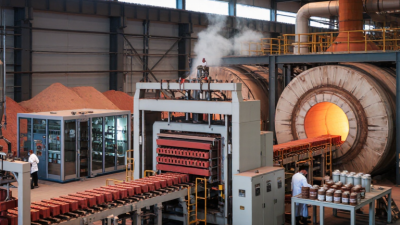
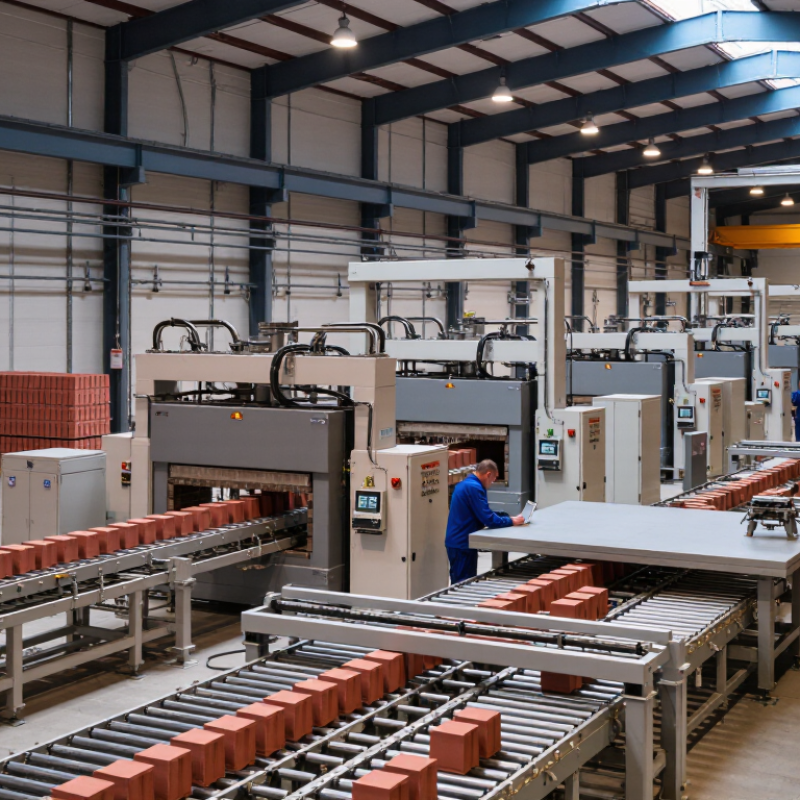
An automatic brick production line connects batching, mixing, molding, drying, firing, and packaging. Sensors regulate moisture, pressure, temperature, and conveyor speed. Operators mainly supervise alarms, samples, and maintenance. A modern line may produce hollow blocks, paving bricks, or insulation units with limited manual handling.

Its 2026 market scope extends beyond machinery. It includes automation software, kiln efficiency, recycled aggregates, spare parts, training, and after-sales engineering. UN DESA’s World Urbanization Prospects projects that about 68% of people may live in urban areas by 2050. This supports long-term demand for affordable masonry products. However, demand will differ sharply between fast-growing cities and mature construction markets. The IEA reports that cement production creates roughly 7% of global energy-related and process CO2 emissions. Brick manufacturers therefore face growing pressure to reduce fuel use and reject rates. The brick sector is not identical to cement. Still, the efficiency lesson is relevant.

Tips: Compare output using actual clay moisture, not brochure figures. Request kiln fuel data, cycle time, rejection rates, and local service response. Check whether sensors survive dust, vibration, and high heat. A fully automatic line can still underperform when maintenance skills are weak. That part is often overlooked. Also, market forecasts remain estimates, not guarantees; local housing policy and electricity costs can change the investment case quickly.

Compare Supplier Capacities from 10,000 to 100,000 Bricks per Day

Choosing an Automatic Brick Machine requires matching output with real project demand. Supplier capacities commonly range from 10,000 to 100,000 bricks per day. A 10,000-brick line suits small housing projects and regional contractors. A 100,000-brick line needs steady clay supply, larger yards, and stronger logistics.

The 2024 Global Cement Report recorded approximately 4.1 billion tonnes of cement production worldwide in 2023. This signals continuing construction demand, but cement data does not directly measure fired-brick consumption. That distinction matters. Market reports often combine concrete blocks, clay bricks, and related equipment, making supplier comparisons less precise. I would request production records using the same brick size, moisture level, and curing method.

At 10,000 to 30,000 bricks daily, a compact line may reduce labor and simplify maintenance. Expect manual loading points and more frequent pauses. Lines producing 50,000 to 100,000 bricks daily need automated batching, stable power, and trained technicians. The World Bank’s logistics indicators also show why delivery planning matters: output is useless when pallets wait beside an unpaved road. Some brochures promise maximum capacity, not tested capacity. That is a weakness worth challenging. Ask for hourly production data, reject rates, energy use, mold-change time, and documented performance from comparable climates.

2026 Top Automatic Brick Production Line Suppliers: Capacity Comparison

Indicative automatic brick production capacity bands, ranging from 10,000 to 100,000 bricks per day. Actual output depends on brick size, raw materials, curing time, automation level, and operating hours.

Capacity is shown as bricks produced per day under standard continuous-production conditions.

Evaluate Pressing Systems Against ASTM C62 and ASTM C216 Standards

In 2026, selecting an automatic brick production line should begin with standards, not glossy output figures. A pressing system must produce units suitable for ASTM C62 and ASTM C216 evaluation. ASTM C62 covers building brick. ASTM C216 addresses facing brick. The distinction matters when appearance, absorption, strength, and dimensions are specified. An experienced evaluator watches the full cycle, from pug moisture to mold release. Small changes matter.

During supplier audits, request records from comparable clay bodies and firing schedules. Inspect green bricks for chipped arrises, lamination, uneven density, and sticking marks. Then verify finished units through qualified laboratory testing. Check compressive strength, absorption, saturation coefficient, and dimensional tolerances. ASTM compliance is not proven by a machine brochure. It depends on process control, calibrated instruments, and repeatable pressing pressure. Ask how the line handles moisture variation between morning and afternoon batches.

A reliable supplier should explain corrective actions when test results miss the target. That answer reveals more than a polished demonstration. Still, caution is necessary. A pilot run may look excellent while hidden voids appear after firing. I would sample across several shifts, not one perfect pallet. Keep photographs, batch data, and laboratory reports linked to each trial. One weakness remains easy to overlook: local clay can change unexpectedly. Recheck the formulation before approving the press, kiln, and automation package.

Assess Automation Levels, Cycle Times, and Labor Requirements

2026 Top Automatic Brick Production Line Suppliers?

Automation level matters more than a supplier’s brochure. A Brick Machine Automatic system may include robotic palletizing, automatic material feeding, and closed-loop moisture control. Yet some lines still need operators near the press, kiln, or packaging area. The International Federation of Robotics reported 553,052 industrial robots installed worldwide in 2023. That figure shows automation’s direction, not brick-line performance. Buyers should request task-level labor data, not a single “fully automatic” label.

Cycle time must be tested with the actual mix. A line producing standard blocks may cycle faster than one handling textured bricks or frequent mold changes. Ask for measured outputs over an eight-hour shift, including stoppages, cleaning, and rejected pieces. One supplier may claim 10 seconds per cycle, while practical output falls after pallet changes. The uncomfortable part is that advertised capacity often excludes these interruptions. Energy use, curing time, and maintenance access also affect the real cost per brick.

Tips: Request a factory acceptance test using your raw materials. Record cycle time, changeover minutes, rejected units, and operators per shift. Compare hourly good output, not press speed. The International Energy Agency’s Energy Efficiency 2023 analysis stresses that industrial efficiency depends on operating conditions, not equipment ratings alone. Leave room for human inspection. Full automation sounds efficient, but poor calibration can create thousands of uniform defects. A careful supplier should disclose assumptions, limits, and test results.

Compare Kiln Designs, Fuel Use, and Firing Temperatures Near 1,000°C

Choosing an Automatic Brick Making Machine requires more than comparing output per hour. Kiln design controls heat consistency, fuel demand, and product strength. Tunnel kilns usually provide continuous firing and stable temperature zones. Hoffman-style kilns can suit smaller or flexible operations, but may lose more heat during loading and unloading. The European Commission’s Ceramics BREF reports typical ceramic firing energy near 1.5–3.5 GJ per tonne, depending on product, moisture, and kiln efficiency. Actual figures vary, sometimes sharply.

Most common clay bricks fire between 950°C and 1,050°C. Higher temperatures do not always mean better bricks. Over-firing can cause warping, bloating, or dark cores. Natural gas offers clean temperature control, while solid fuels may reduce cost but increase ash and maintenance. UNEP’s 2024 Global Status Report notes that buildings and construction still account for about 37% of global energy-related emissions, making kiln efficiency a practical investment, not just a technical detail. I would question any supplier claiming one fuel rate for every clay body.

Tips: Request a fuel-use test with your own clay. Record moisture before extrusion, kiln exit temperature, and rejected bricks. Ask for temperature mapping across the kiln width. A smooth-looking chart can still hide cold edges. Also compare heat recovery, insulation thickness, burner control, and downtime support, not only the advertised production capacity.

2026 Top Automatic Brick Production Line Suppliers? - Compare Kiln Designs, Fuel Use, and Firing Temperatures Near 1,000°C

Automatic Line / Kiln Configuration Typical Production Range Kiln Design Typical Firing Temperature Typical Specific Fuel or Energy Use Temperature Control and Automation Product Suitability Main Advantages Key Limitations
Tunnel kiln with natural-gas firing 60,000–250,000 bricks/day Continuous kiln with cars moving through preheating, firing, and cooling zones 950–1,100°C Approximately 1.2–2.5 MJ/kg of fired product PLC or SCADA control, automatic zone burners, thermocouples, pressure sensors, and programmable firing curves Common solid-clay bricks, perforated bricks, facing bricks, and many hollow blocks Higher initial investment; requires stable gas supply and accurate drying control
Tunnel kiln with coal or powdered-coal firing 50,000–200,000 bricks/day Continuous tunnel kiln using controlled solid-fuel combustion and hot-air circulation 950–1,100°C Approximately 1.8–3.2 MJ/kg of fired product Automated feeders, draft control, combustion monitoring, and zoned temperature measurement Standard structural bricks and products manufactured where solid fuel is readily available Lower fuel cost in regions with economical coal; suitable for large-scale production Higher particulate and sulfur-control requirements; fuel preparation and ash handling add complexity
Tunnel kiln with biomass or alternative solid fuel 40,000–180,000 bricks/day Continuous tunnel kiln adapted for controlled biomass combustion or approved alternative fuels 900–1,100°C Approximately 2.0–4.0 MJ/kg of fired product Automatic metering, moisture monitoring, draft regulation, and multi-zone temperature control Clay bricks where local biomass quality and emissions compliance are consistent Can reduce fossil-fuel dependence and use locally available fuel resources Fuel moisture, particle size, ash content, and supply consistency strongly affect kiln stability
Hoffmann ring kiln with automated firing controls 20,000–100,000 bricks/day Intermittent-zone continuous kiln with a circulating firing front through connected chambers 900–1,050°C Approximately 1.8–3.5 MJ/kg of fired product Automatic burner sequencing, draft fans, zone thermocouples, and digital firing records Small to medium plants producing standard and perforated clay bricks Flexible chamber operation, moderate capital cost, and easier capacity expansion than a full tunnel system Usually less uniform than a modern tunnel kiln; loading and unloading can remain partly labor-intensive
Modern zigzag kiln 30,000–150,000 bricks/day Continuous or semi-continuous kiln with a zigzag flue-gas path that improves air–fuel mixing 900–1,050°C Approximately 1.4–2.5 MJ/kg of fired product Automatic or semi-automatic fuel feeding, forced draft, temperature sensors, and oxygen or pressure monitoring Common clay bricks and hollow bricks in plants upgrading from traditional fixed-chimney kilns Better combustion and lower fuel use than many traditional straight-line designs Performance depends on precise kiln geometry, loading density, operator training, and fuel quality
Electric batch or chamber kiln 1,000–30,000 bricks/day Insulated batch chamber with electric resistance heating and programmable temperature ramps 950–1,100°C Approximately 0.35–0.75 kWh/kg, equivalent to 1.3–2.7 MJ/kg Very precise programmable control, independent heating zones, data logging, and automatic cooling profiles Specialty, laboratory, facing, artistic, or low-volume products Clean point-of-use operation, accurate temperature control, and low noise Electricity cost and grid capacity can make it unsuitable for high-volume commodity brick production
High-speed tunnel line with robotic handling 100,000–350,000 bricks/day Continuous gas-fired tunnel kiln integrated with automatic setting, kiln-car transfer, unloading, and palletizing 980–1,100°C Approximately 1.1–2.2 MJ/kg of fired product Central SCADA, recipe management, machine vision, robotic stacking, automatic defect detection, and energy monitoring Large-scale production of consistent structural, facing, and perforated bricks Highest capital cost; requires qualified maintenance personnel and stable utilities
Data note: Production capacity and energy figures are typical engineering ranges for automatic clay-brick lines, not guaranteed performance values. Actual results vary with brick format, raw-material moisture, green-brick density, kiln loading, fuel calorific value, insulation condition, ambient climate, and local operating practices. “Near 1,000°C” is a general firing reference; each clay body requires laboratory testing to determine its optimum firing curve.

Comparison criteria for evaluating automatic brick production lines in 2026: kiln efficiency, firing stability, automation depth, fuel availability, emissions control, product consistency, and total cost of ownership.

Verify ISO 9001, EN 771-1 Compliance, Warranties, and Service Networks

2026 Top Automatic Brick Production Line Suppliers

Choosing a leading automatic brick production line supplier requires more than comparing machine prices. Ask for a valid ISO 9001 certificate, issued by an accredited certification body. This standard supports controlled processes, but it does not guarantee perfect equipment. Request factory audit records, inspection plans, and traceable component lists. During a site visit, observe pallet movement, mold changes, dust control, and emergency stops. Small details often reveal daily operating discipline.

EN 771-1 compliance also needs careful verification. Ask whether the finished masonry units meet the relevant performance requirements, not merely whether the machine can produce bricks. Review laboratory reports for dimensions, strength, water absorption, and freeze-thaw performance where applicable. Test samples from actual production conditions. Paperwork is not proof. A supplier should explain testing limits clearly, including results that were not ideal.

Tips: Compare warranty terms line by line. Check coverage for motors, control systems, molds, and installation labor. Confirm response times, spare-parts stock, remote diagnostics, and technician availability in your region. A two-year warranty may sound strong, yet exclude most wear parts. Service networks are often more valuable than impressive brochures. Ask for two recent customer references, then verify delivery timing and after-sales support directly. No supplier is flawless; honest answers about delays, maintenance, and previous failures can be more reliable than polished claims.

Rank 2026 Suppliers by Output, Quality Control, Energy Efficiency, and Cost

2026 Top Automatic Brick Production Line Suppliers?

The strongest suppliers in 2026 should be ranked by verified performance, not impressive brochures. Output matters, but production speed must match stable brick quality. A practical comparison should examine 10,000 to 30,000 bricks per day, depending on product size and curing time.

Quality control begins with consistent soil testing and moisture measurement. Reliable suppliers provide pressure records, mold inspection reports, and sample testing results. During a factory visit, inspect edge sharpness, surface cracks, and dimensional variation. An Automatic Mud Brick Making Machine should maintain similar pressure across each cycle. Small deviations can create large losses after several production weeks.

Energy efficiency deserves equal attention. Compare electricity use per 1,000 bricks, motor efficiency, hydraulic pressure, and curing energy. Ask for measured data from a similar installation, not only laboratory figures.

Cost should include molds, installation, training, spare parts, maintenance, and downtime. The lowest quotation is not always economical. Sometimes it hides expensive replacement parts.

A dependable supplier also explains limitations clearly. That matters. Request customer references, warranty terms, response times, and independent performance records. The ranking may change by region because soil, labor, power prices, and transport costs differ. This is an imperfect comparison, but transparent evidence is more useful than a polished sales claim.

China JKY Red Clay Brick Making Machine: Industry Insights from Grand View Research and Mordor Intelligence Reports

China’s red brick manufacturing sector is adapting to broader trends identified in global construction-material industry research, including urban development, infrastructure investment, production automation, and rising expectations for consistent product quality. Manufacturers are increasingly seeking equipment that can improve output stability, reduce material waste, and support efficient large-scale operations. Within this environment, advanced vacuum extrusion technology offers a practical solution for factories aiming to produce durable bricks with accurate dimensions and reliable structural performance.

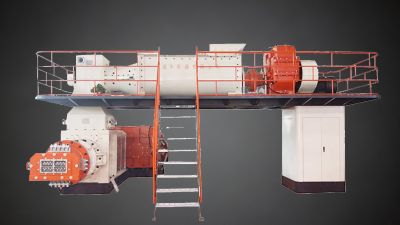
The twin-stage vacuum extruder is designed for demanding production lines and high-volume plants. Its vacuum processing helps improve the compactness and uniformity of the clay, while the two-stage structure supports smooth extrusion and dependable shaping. Built from high-quality steel, the machine features a robust and practical design suited to continuous industrial use. Key axles and gears are manufactured from carbon steel and alloy steel, then strengthened through modulation and quenching heat treatments to improve wear resistance and extend service life.

For manufacturers in China and international markets, this type of red brick making machine combines production efficiency with long-term operational reliability. Its stable performance can help factories maintain consistent brick quality, optimize workforce utilization, and respond to the construction industry’s growing demand for standardized building materials.

FAQS

What does an automatic brick production line include?

It connects batching, mixing, molding, drying, firing, and packaging. Sensors monitor moisture, pressure, temperature, and conveyor speed.

What products can an automatic line produce?

It may produce hollow blocks, paving bricks, insulation units, and building bricks. Product range depends on molds and process settings.

What should buyers examine beyond machine output?

Check kiln fuel use, cycle time, rejection rates, and local service response. Brochure figures can mislead.

How should pressing systems be evaluated?

Test green bricks for chipped edges, lamination, uneven density, and sticking marks. Then verify fired units in a qualified laboratory.

Which performance results matter for finished bricks?

Review compressive strength, water absorption, saturation behavior, dimensions, and freeze-thaw performance where applicable.

How can buyers verify quality management claims?

Request a valid quality certificate, factory audit records, inspection plans, and traceable component lists. Paperwork alone proves little.

What warranty and service details deserve close attention?

Check coverage for motors, controls, molds, installation, and wear parts. Confirm spare-parts stock and technician response times.

Why should testing continue across several production shifts?

Clay moisture can change between morning and afternoon batches. One perfect pallet may hide later defects.

What practical conditions can reduce line performance?

Dust, vibration, high heat, weak maintenance skills, and changing electricity costs can reduce reliability. Automation is not magic.

What should a supplier explain after a failed test?

They should identify the cause and corrective action clearly. Honest weakness is useful, though not always comfortable.

Conclusion

An Automatic Brick Production Line is an integrated system that shapes, dries, and fires bricks with limited manual intervention. In 2026, the market is expected to serve projects ranging from small facilities producing about 10,000 bricks per day to large plants exceeding 100,000. Supplier evaluation should compare pressing systems, mold accuracy, cycle times, automation levels, and labor requirements, while checking whether finished products can meet ASTM C62 and ASTM C216 performance expectations.

A complete assessment should also examine kiln design, fuel consumption, temperature control near 1,000°C, and the consistency of firing results. Buyers should verify ISO 9001 quality systems, EN 771-1 compliance where applicable, warranty coverage, spare-parts availability, and service network strength. The most reliable 2026 suppliers can be ranked by production capacity, quality control, energy efficiency, operating cost, and long-term support. This approach helps purchasers select equipment that balances output, product durability, energy use, and investment value.


Evelyn

Evelyn

Evelyn is a dedicated marketing professional at We Henan Cadier Green Building Technology Co., Ltd., where she has been instrumental in promoting the company’s innovative solutions in energy-saving and environmentally friendly wall materials since 2009. With a deep understanding of the industry and......
Previous China Best Tunnel Kiln Price for Global Buyers?